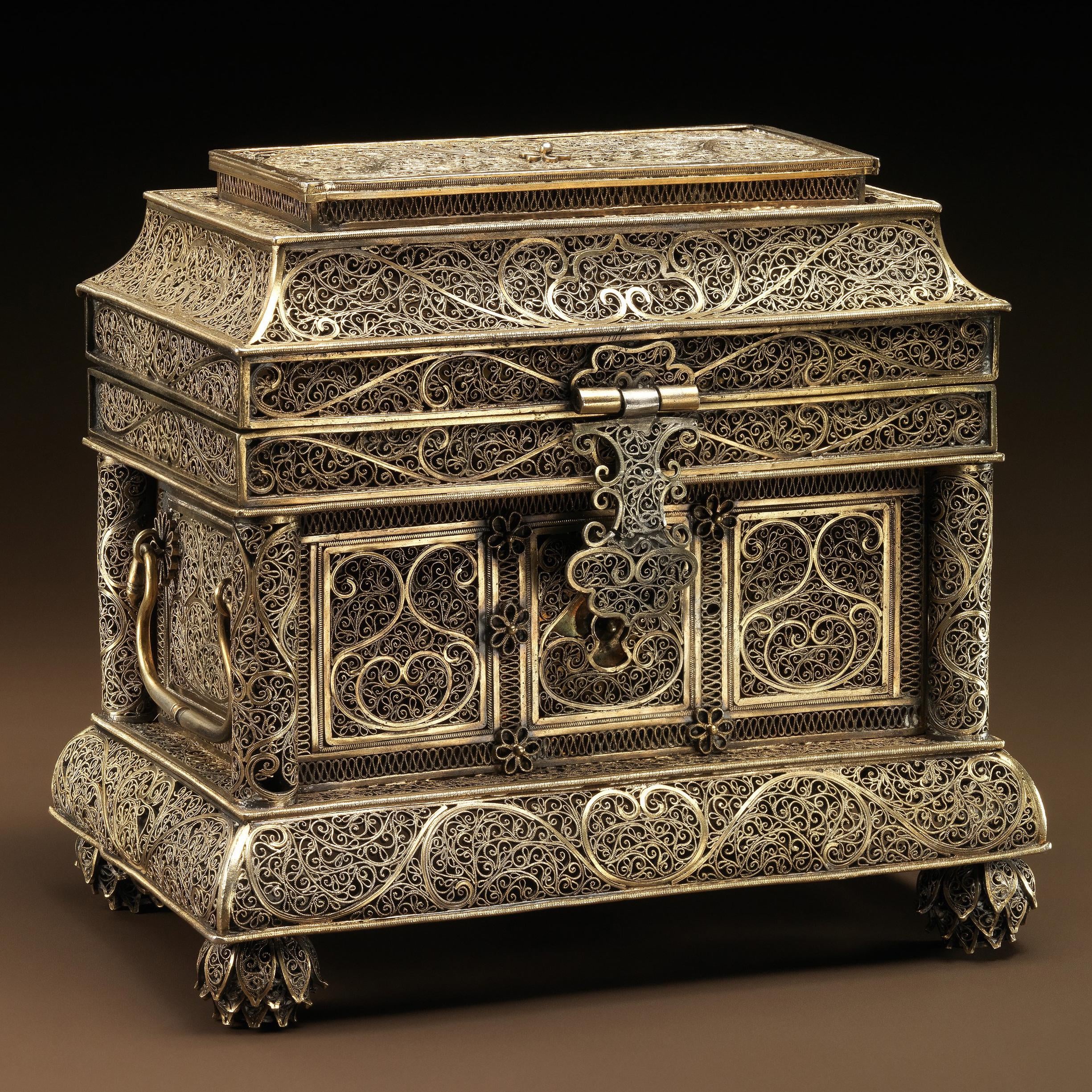
[Museum](https://www.metmuseum.org/art/collection/search/646829). While filigree was an established tradition in the Deccan in the middle ages, with the cultural presence of the Portuguese in the 16th century, Deccani craftsmen were exposed to a new wave of objects, which were imported from Europe. Finely drawn wires of gold and silver filigree were shaped into a variety of scrolling forms, including the buta, or flame motif, which even is present on the ornamented interior of this object. The lid of this box contains a secret compartment which slides open to hide a prized object, possibly the key.

2 Comments
[Museum](https://www.metmuseum.org/art/collection/search/646829). While filigree was an established tradition in the Deccan in the middle ages, with the cultural presence of the Portuguese in the 16th century, Deccani craftsmen were exposed to a new wave of objects, which were imported from Europe. Finely drawn wires of gold and silver filigree were shaped into a variety of scrolling forms, including the buta, or flame motif, which even is present on the ornamented interior of this object. The lid of this box contains a secret compartment which slides open to hide a prized object, possibly the key.
How is it secret if it has a huge handle?