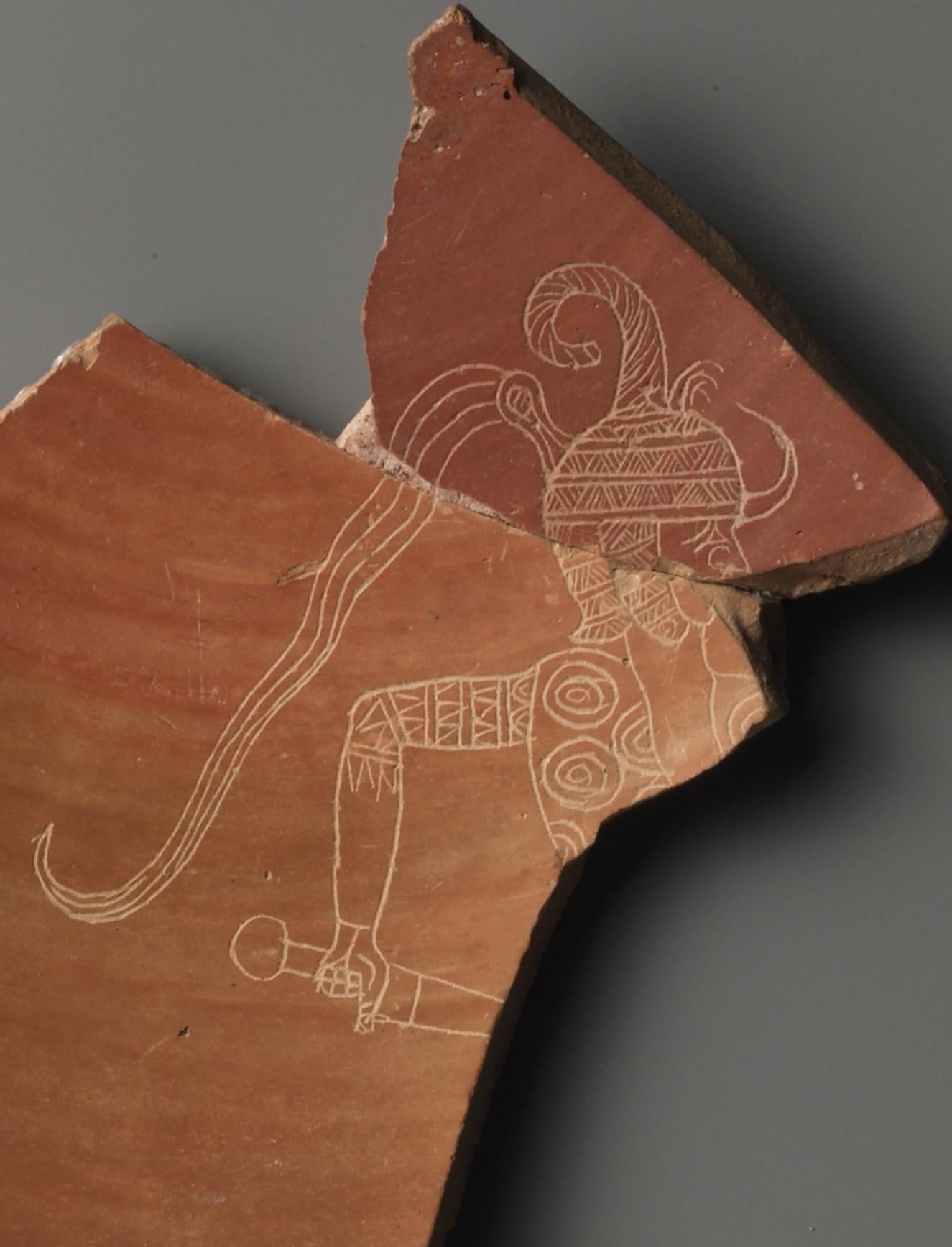
A Hittite pottery fragment from Hattusa dated to 1400 BCE ca. It’s considered depicting a Mycenaean [Ahhiyawa] warrior. Çorum Archaeological Museum, Turkey [1325 x 1735]
>”…most important is a fragmentary Hittite bowl, also found at Hattusas in a fifteenth-fourteenth century BC context, which is incised with a drawing of what appears to be a Mycenaean warrior in full battle array, complete with plumed and horned helmet very reminiscent of the ‘zoned’ helmets worn by Aegean warriors depicted in a variety of media at a number of sites around the late bronze age Aegean.”
>”The two joining sherds from this bowl were found in a late 15th-early 14th cent. BC level at Hattusas – a context which may well correlate with the reign of Tudhaliya II.”
>from Aššuwa and the Achaeans: the ‘Mycenaean’ sword at Hattušas and its possible implications, by E. H. Cline, 1996, p. 147
>”The potsherd from Hattusa dates to ca. 1400 BC, i.e. the time of the clash between Attarissija and the Hittite forces. What appears to be a Mycenaean warrior carrying a sword and covered with elaborately decorated body armor is incised on its outer surface. He is wearing a plumed helmet with horns, which finds its closest parallel in the helmets of a group of warriors on the (LH IIIC) warrior vase from Mycenae. Thus this incised artwork seems to be a Hittite expression of the earliest Mycenaean military incursions into Anatolia.”
>from The Kingdom of Mycenae, by Jorrit Kelder, 2010, p. 40

1 Comment
>”…most important is a fragmentary Hittite bowl, also found at Hattusas in a fifteenth-fourteenth century BC context, which is incised with a drawing of what appears to be a Mycenaean warrior in full battle array, complete with plumed and horned helmet very reminiscent of the ‘zoned’ helmets worn by Aegean warriors depicted in a variety of media at a number of sites around the late bronze age Aegean.”
>”The two joining sherds from this bowl were found in a late 15th-early 14th cent. BC level at Hattusas – a context which may well correlate with the reign of Tudhaliya II.”
>from Aššuwa and the Achaeans: the ‘Mycenaean’ sword at Hattušas and its possible implications, by E. H. Cline, 1996, p. 147
>”The potsherd from Hattusa dates to ca. 1400 BC, i.e. the time of the clash between Attarissija and the Hittite forces. What appears to be a Mycenaean warrior carrying a sword and covered with elaborately decorated body armor is incised on its outer surface. He is wearing a plumed helmet with horns, which finds its closest parallel in the helmets of a group of warriors on the (LH IIIC) warrior vase from Mycenae. Thus this incised artwork seems to be a Hittite expression of the earliest Mycenaean military incursions into Anatolia.”
>from The Kingdom of Mycenae, by Jorrit Kelder, 2010, p. 40