
Data Sources:
• FRED – Federal Reserve Economic Data (https://fred.stlouisfed.org/)
• Series used: UNRATE, CPIAUCNS, FEDFUNDS
Tools:
• R (tidyverse, ggplot2) + FRED API
• Graphic layout in Affinity Designer
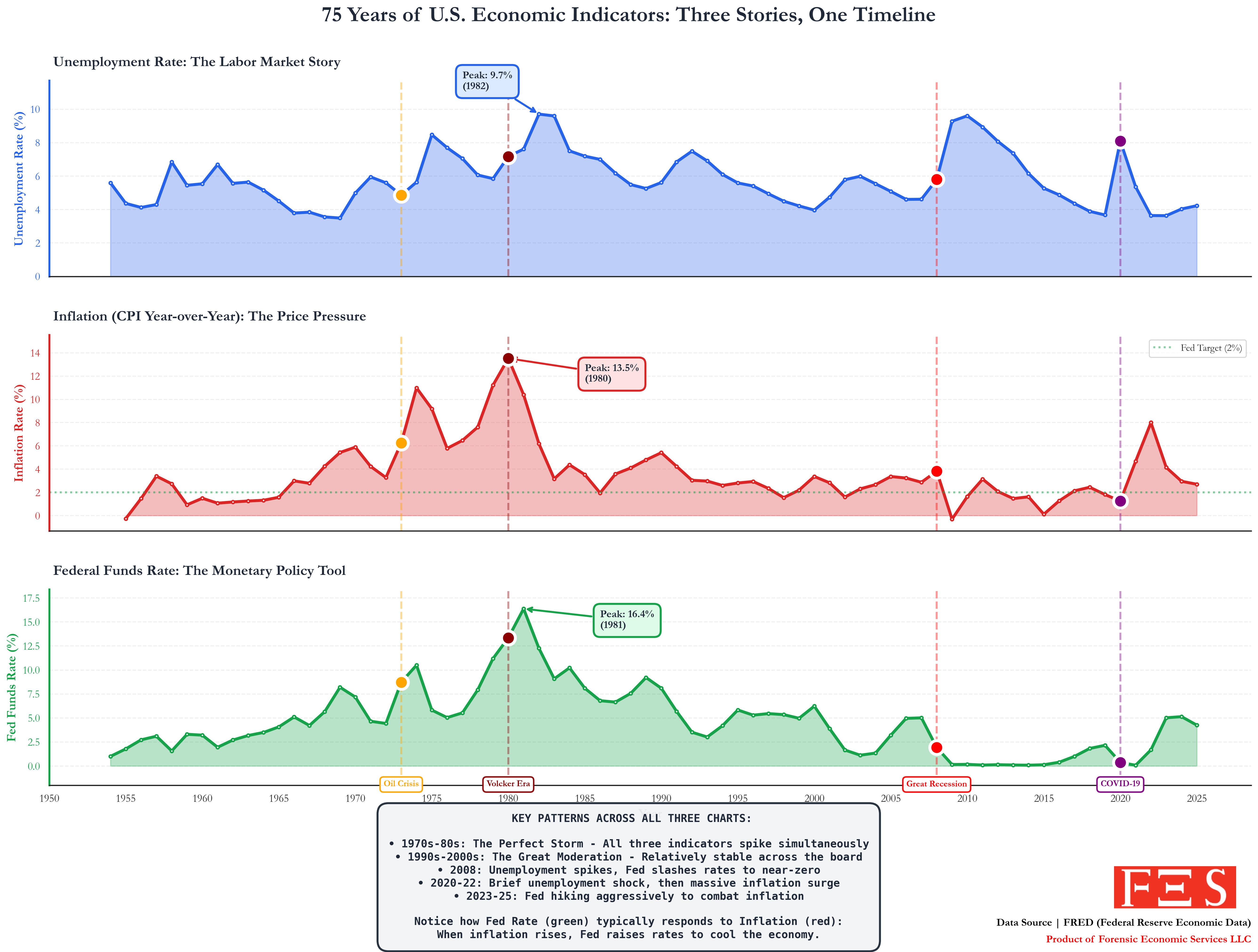
What the chart shows:
This is a 75-year timeline of three major U.S. economic indicators on one visual:
• Unemployment Rate (labor market conditions)
• Inflation (CPI, YoY%) (price pressure & purchasing power)
• Federal Funds Rate (monetary policy lever)
Plotted together, the relationship becomes clearer:
📌 1970s–1980s: A “perfect storm” — unemployment, inflation, and interest rates all spike simultaneously.
📌 1990s–2000s: A long stretch of relative stability — the "Great Moderation."
📌 2008: Unemployment spikes as the Fed slashes rates toward 0% to support the economy.
📌 2020-22: Rates drop to near-zero again, then increase aggressively to combat post-pandemic inflation.
Key pattern:
When inflation rises, the Fed often raises interest rates to slow the economy, which can lead to higher unemployment later — a feedback loop of policy vs. economic reality.
Made by: Forensic Economic Services LLC, rule703.com
(product credit only, not a solicitation)
by forensiceconomics