
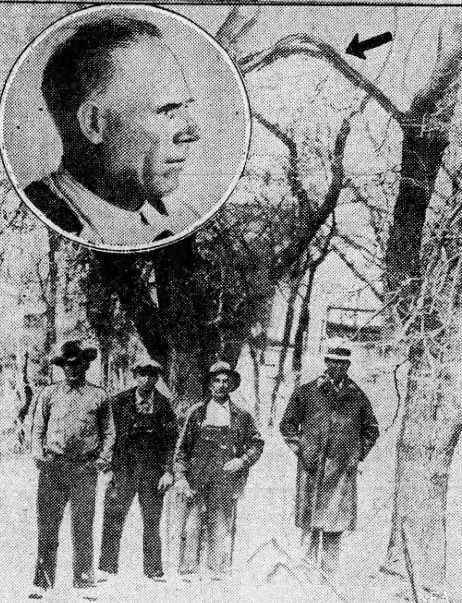
The tree where Pleasant Richard Read, 53, was lynched by a mob of 200 farmers after he kidnapped, raped, and murdered an 8-year-old girl. Standing in front of the tree are four men who helped locate his body. Read was the last person to be lynched in Kansas (Rawlins County, 1932) [462 x 603].
by lightiggy
2 Comments
[The lynching of Richard Read](https://strangefruitandspanishmoss.blogspot.com/2015/04/april-18-1932-richard-read.html) (yes, this was a white-on-white lynching)
[The girl’s name was Dorothy Hunter](https://www.findagrave.com/memorial/29327289/dorothy-hunter)
Her mother was too traumatized to attend her funeral. After learning about what happened to Richard Read, her father simply said, “I only wish I could have been there. Read had been dragged from his cell, pleading for mercy. After realizing there was no way out and he was going to die, he said, “I am guilty, you are hanging the right man. I was drunk when I took Dorothy. If I had been sober, I wouldn’t have done such a thing.”
[UNDER A FULL MOON Gallery](https://wildbluepress.com/under-a-full-moon-gallery/)
The lynching of Richard Read stood out in several ways:
* It was a white-on-white lynching (rare by the 1930s)
* Read was the first person to be lynched in Kansas since 1920
* Read was the last person to be lynched in Kansas
* This was not Read’s first encounter with a lynch mob
* In 1916, Read raped 15-year-old Pauline Weisshaar in Kit Carson, Colorado. A mob of 150 people nearly killed him after his arrest, but were talked out of it by the sheriff. Read later pleaded guilty to rape. After a discussion over whether he should be sent to prison or an asylum (he had genuine psychiatric issues and was intellectually stunted), he was sentenced to 15 to 20 years in prison. Read served six years and was paroled in 1922.
* Read was lynched 16 years to the day of his guilty plea.
* Not to condone vigilantism, but in hindsight, Read either should’ve been committed to an asylum or just killed right then and there.
* The lynching was a factor in Kansas reinstating the death penalty
* Kansas had executed nine people between 1861 and 1870 and formally ended hanging in 1903; however, dozens of lynchings took place
* A year earlier, Governor Harry Hines Woodring had vetoed legislation to reinstate the death penalty. His decision was later harshly criticized by the author of the legislation, Donald Muir, after the lynching. Muir said that had his legislation been approved, “the good people of northwestern Kansas would not have the blood of this fiend on their hands.” Worried about rising crime rates, Muir had previously warned Woodring that unless it was approved, there was a risk that lynching would make a comeback.
More like Unpleasant Richard Read