
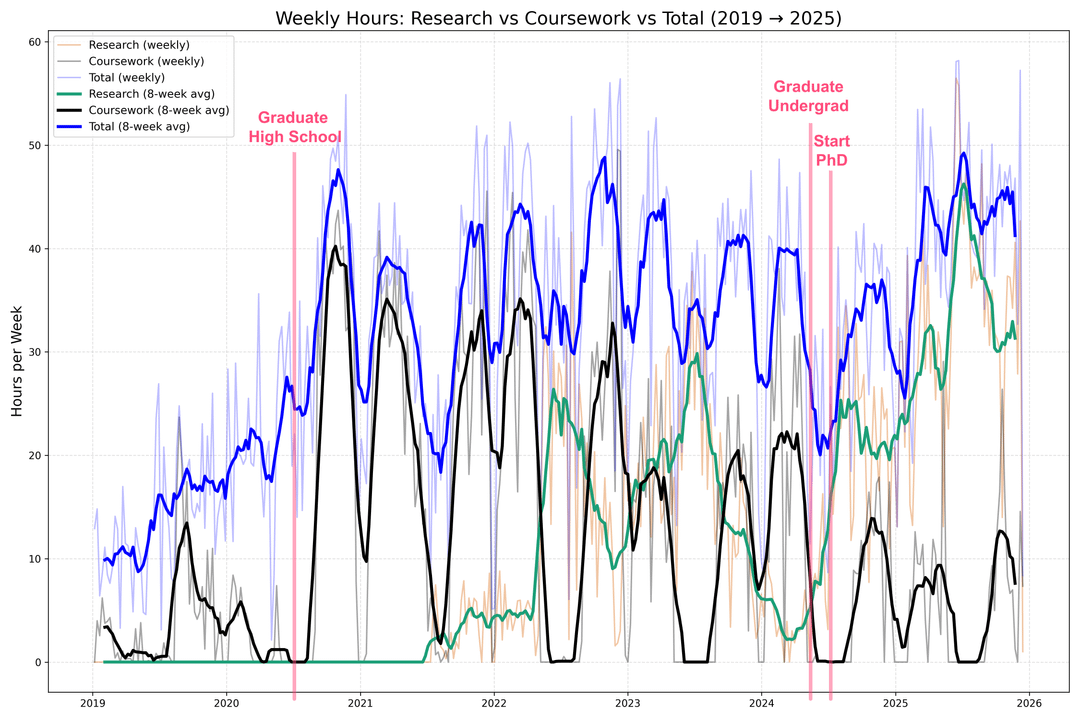

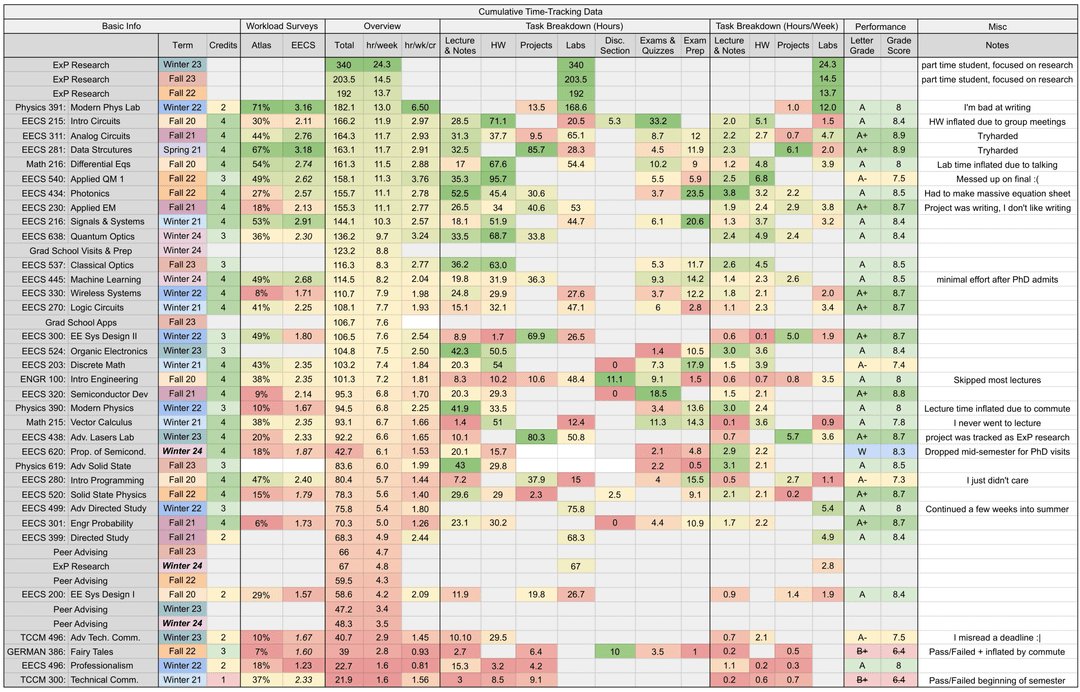
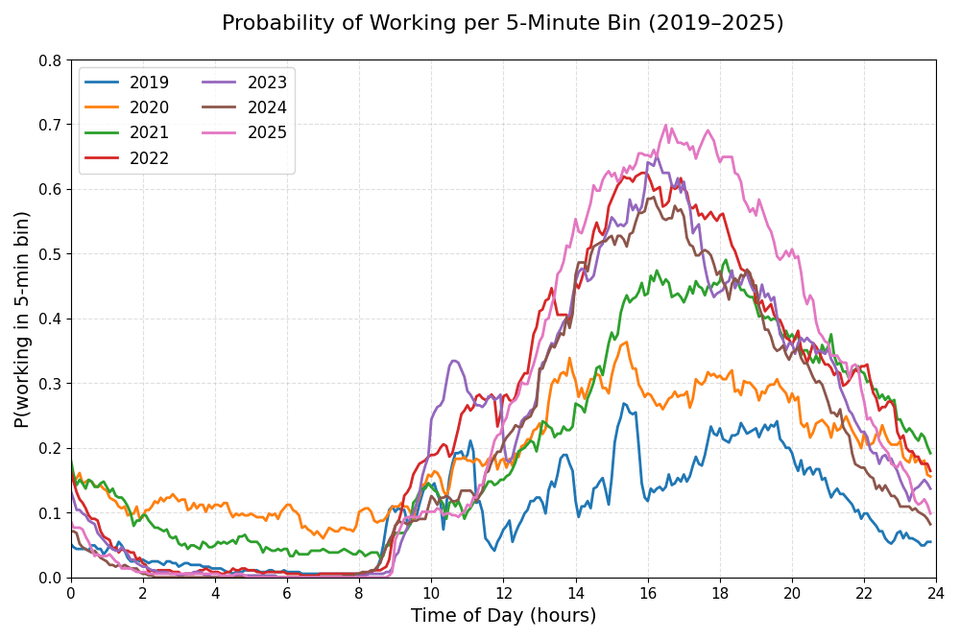
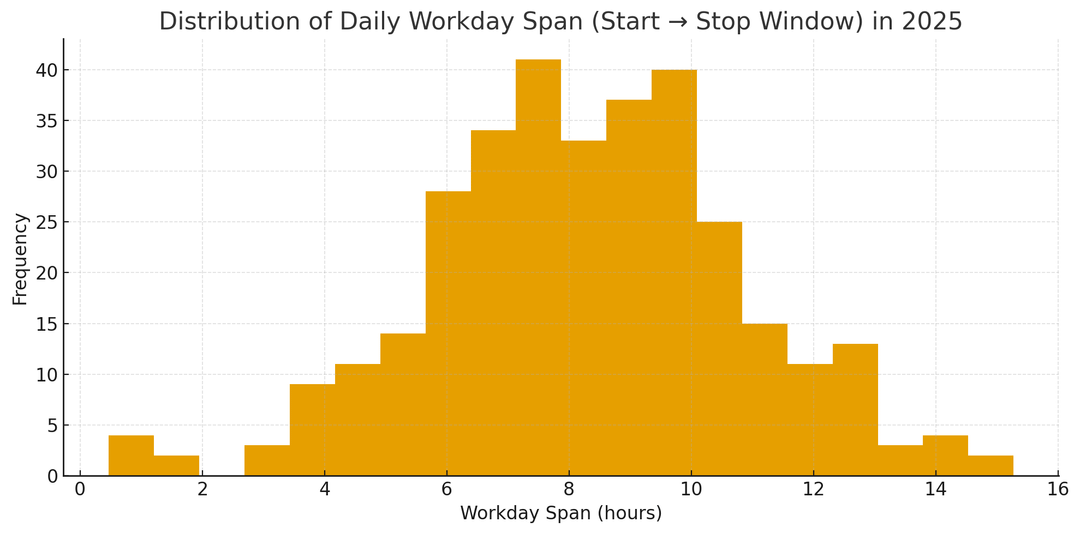
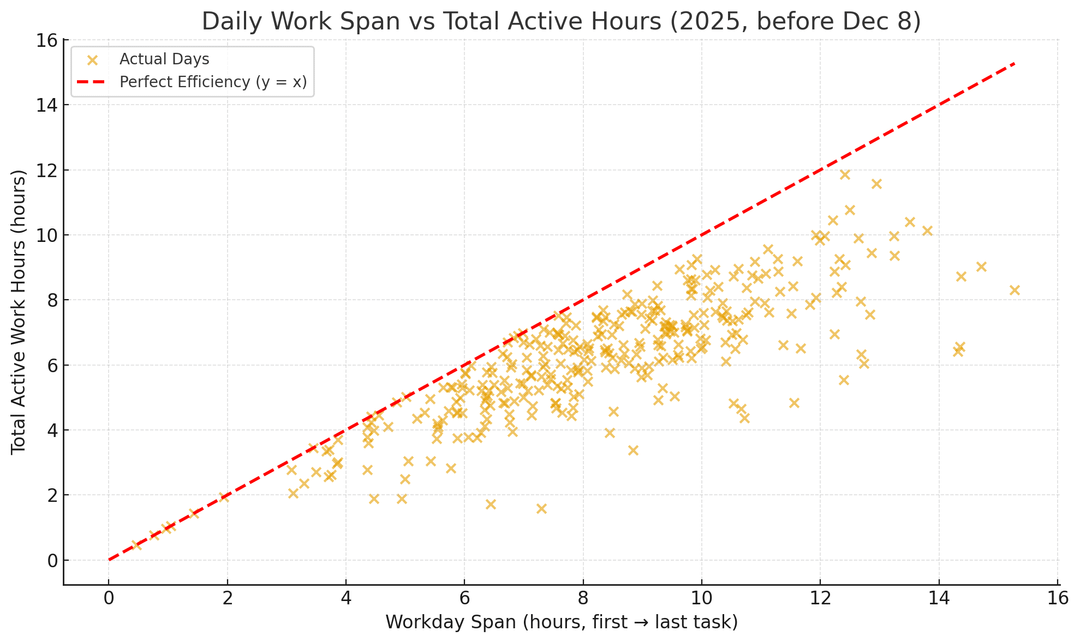
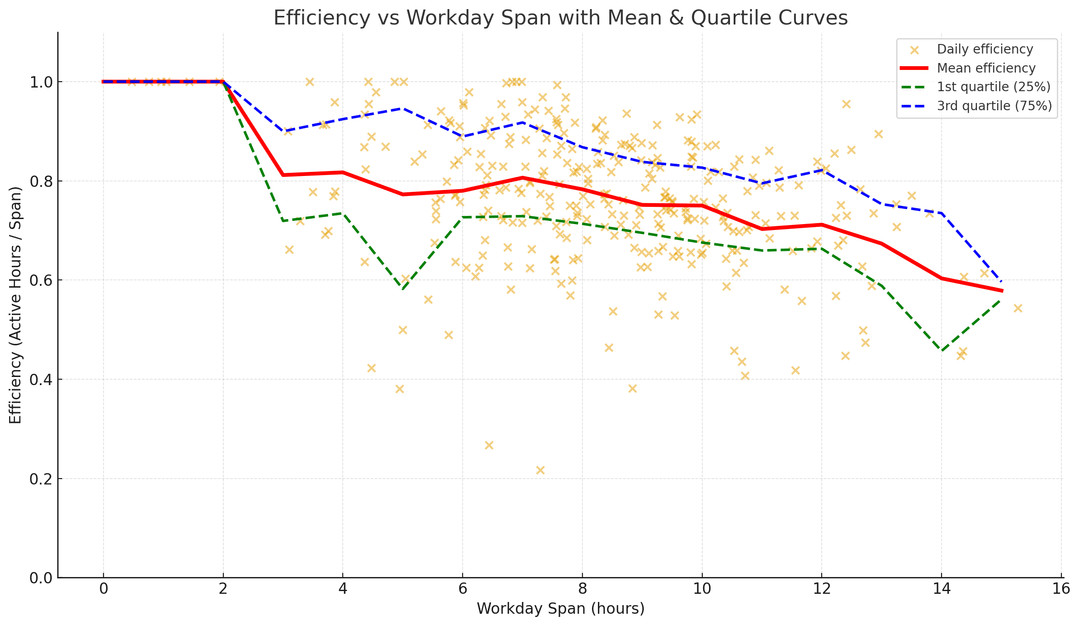
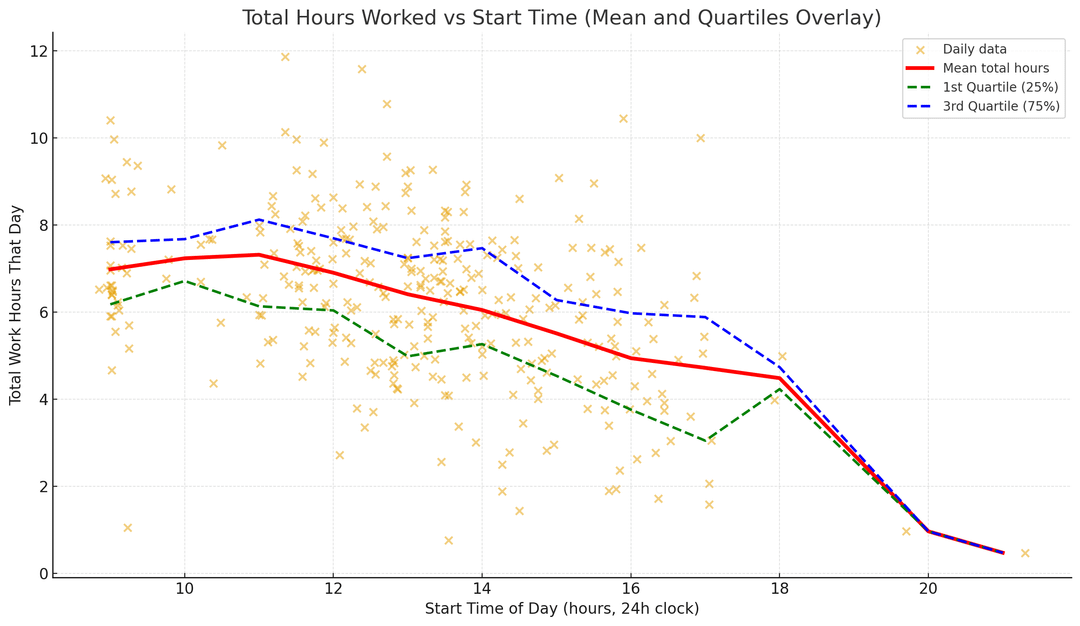
I started using Toggl to track my activity in 2019, but didn't start using it for everything until 2020, the year I graduated high school. The second image is an example of what the data itself looks like–I only track things if I am actively working on them, i.e. actively sitting at my computer reading something, writing code, taking notes, etc. The third image is a spreadsheet I made of the time spent in each of my undergraduate classes at UMich, and how I performed in them.
2025 has been my most productive year so far, averaging 6.22 hours of active work per day. At the start of the year, I started to really enjoy my research project, which obviously helped motivate me to work more. At the same time, I also became a lot more determined to aim for a good tenure-track job, which would require me to have a substantial body of work in my PhD, thus another motivation to work more.
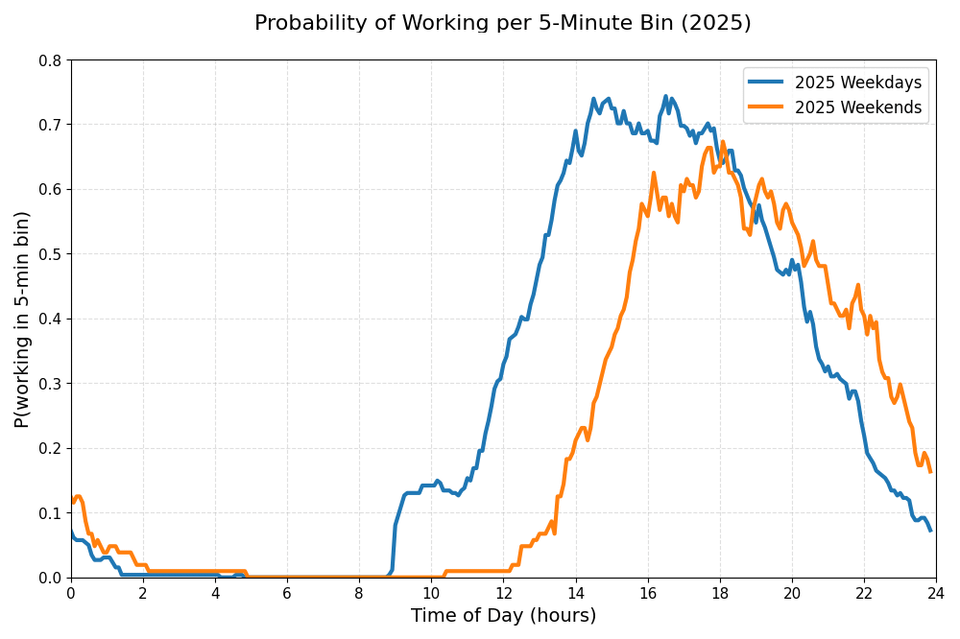
I have a really terrible sleep schedule (as should be obvious by images 4-5), but I work every day to make up for it (I've only taken 2 days off in the past 8 months, including weekends). You'll also notice I only wake up at 9 AM less then 20% of weekdays, which is just because I have a 9AM research subgroup meeting every Tuesday. Also, in image 4, you can see that my sleep schedule completely devolved in 2020 due to COVID, where I am only about 2x more likely to be working at 4 PM as I am likely to be working anytime from 2 AM to 6 AM. Image 2 shows an example of what this looked like in pracitice. Essentially, if I don't have any regular meetings at normal times, I default to a ~28 hour sleep schedule that slowly rotates through the day over the course of a few weeks.
I originally posted this last week on Friday, unaware of rule 9 (personal data posts are only permissible on Mondays), and it was taken down within an hour. I fixed the plots up a bit before reposting, but I thought I should also add some of the common questions from the original post:
"How much time did this take you?"
The plots themselves + writing the initial post took ~3.3 hours, but obviously the data collection was the primary time sink. I only actually spend about 2 minutes every day starting and stopping the timers, so the total time would probably be a bit less than 70 hours.
Why?
In high school, I struggled a lot with procrastination, time-tracking was just a way to hold myself accountable and make sure I'm consistently making progress on my work. I was initially inspired by CGP Grey's old podcast Cortex in 2018, and I've been doing it ever since. There were a lot of concerns about my mental health in the first post, so I wanted to add here that I'm doing relatively ok. I have a lot of freedom in my current research, so I only really work on things I am personally motivated to work on, which I think helps a lot.
by CuseCoseII
5 Comments
Cool data, the charts need some work though. The first two especially are pretty inscrutable
Damn that’s some insane time tracking haha, have you considered therapy? Long term this doesn’t seem good for you
Wasn’t this just posted two days ago?
Do you not need a Masters to do a PhD in the US?
Not trying to dox you, but curious what your research is about that you find super interesting