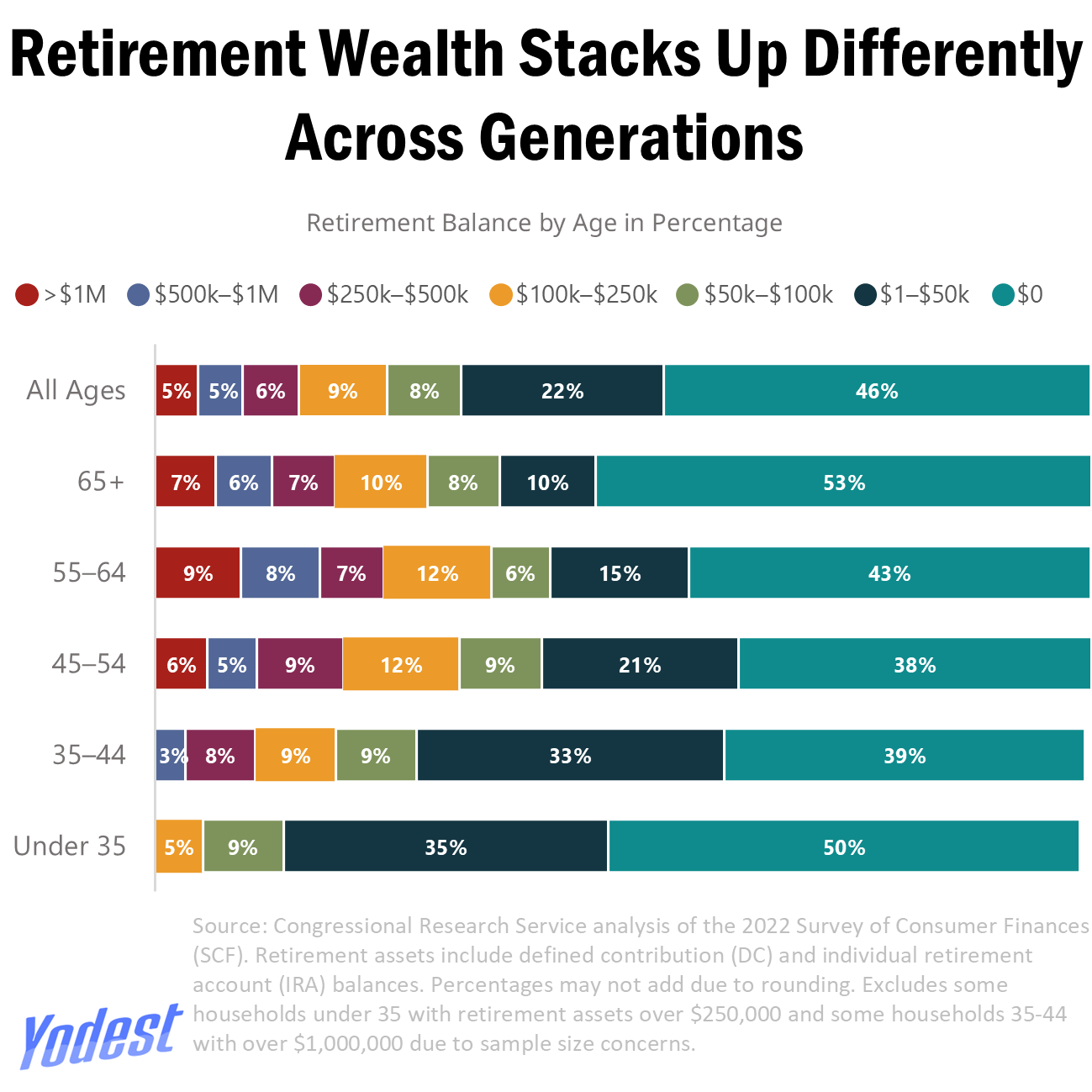
The 59% of 45-54 year olds with less than $50,000 saved for retirement are ngmi
lsp2005 on
Why exclude data for sample size concerns when there is no identifying information included in this chart?
GilbyGlibber on
Someone needs to make a PSA for /r/personalfinance
jeesuscheesus on
Makes sense that younger people have less savings, but it would be interesting to see each generations savings at a specific age.
cpt_cat on
This is a scary graphic…I don’t feel like I am adequately prepared for retirement and i’m in the top 20% for my age group…
ykliu on
Quite surprised how large the $0 is.
Whornz4 on
Recently hit $1m and only 6% of my age category has this.
04221970 on
This looks suspiciously incorrect.
53% if 65+ have saved $0 for retirement. I’d like to know the definitions of some words and the methodology for determining this.
InevitablePresent917 on
Maybe I’m not understanding this graph, but does the Boomer+ demo having the largest $0 proportion mean that, right now, half of that cohort have exhausted whatever savings they might have had, or does it mean they never had the savings? If the former, I’m not sure this graph is particularly helpful.

9 Comments
The 59% of 45-54 year olds with less than $50,000 saved for retirement are ngmi
Why exclude data for sample size concerns when there is no identifying information included in this chart?
Someone needs to make a PSA for /r/personalfinance
Makes sense that younger people have less savings, but it would be interesting to see each generations savings at a specific age.
This is a scary graphic…I don’t feel like I am adequately prepared for retirement and i’m in the top 20% for my age group…
Quite surprised how large the $0 is.
Recently hit $1m and only 6% of my age category has this.
This looks suspiciously incorrect.
53% if 65+ have saved $0 for retirement. I’d like to know the definitions of some words and the methodology for determining this.
Maybe I’m not understanding this graph, but does the Boomer+ demo having the largest $0 proportion mean that, right now, half of that cohort have exhausted whatever savings they might have had, or does it mean they never had the savings? If the former, I’m not sure this graph is particularly helpful.