
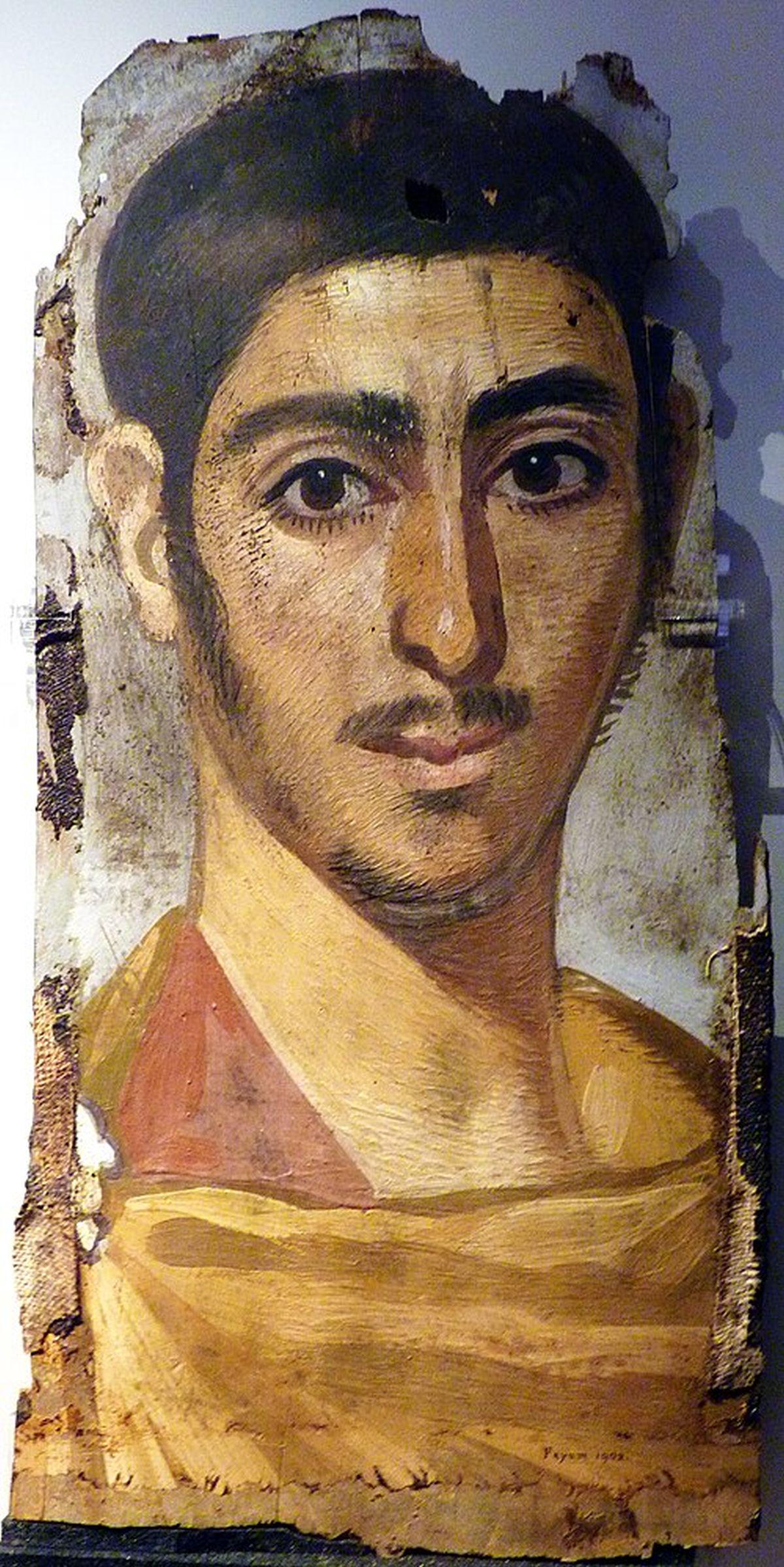
The painting depicts a young man. It is a so-called Fayum portrait—a unique type of portrait created in Egypt during the Roman period, roughly from the 1st to the 3rd century CE. These portraits were painted on wooden panels using the encaustic technique (paint with wax). [1200×2398]
by imperiumromanum_edu
2 Comments
A mixture of wax and paint (pigment) was used because the wax preserved the color very well. The pigment encased in wax did not fade or crumble, and in the dry Egyptian climate, it could survive for hundreds, even thousands, of years. This is why the colors of the Fayum portraits remain so intense to this day.
The Fayum portraits served a funerary function – they were placed on the mummies of the deceased, replacing their faces, to preserve their image for eternity. They combine three cultural traditions: the Egyptian belief in the afterlife, Greek artistic realism, and the Roman passion for portraiture. As a result, they remain an invaluable testimony not only to art but also to the everyday lives, appearance, and identity of people who lived almost two thousand years ago.
Luigi?