
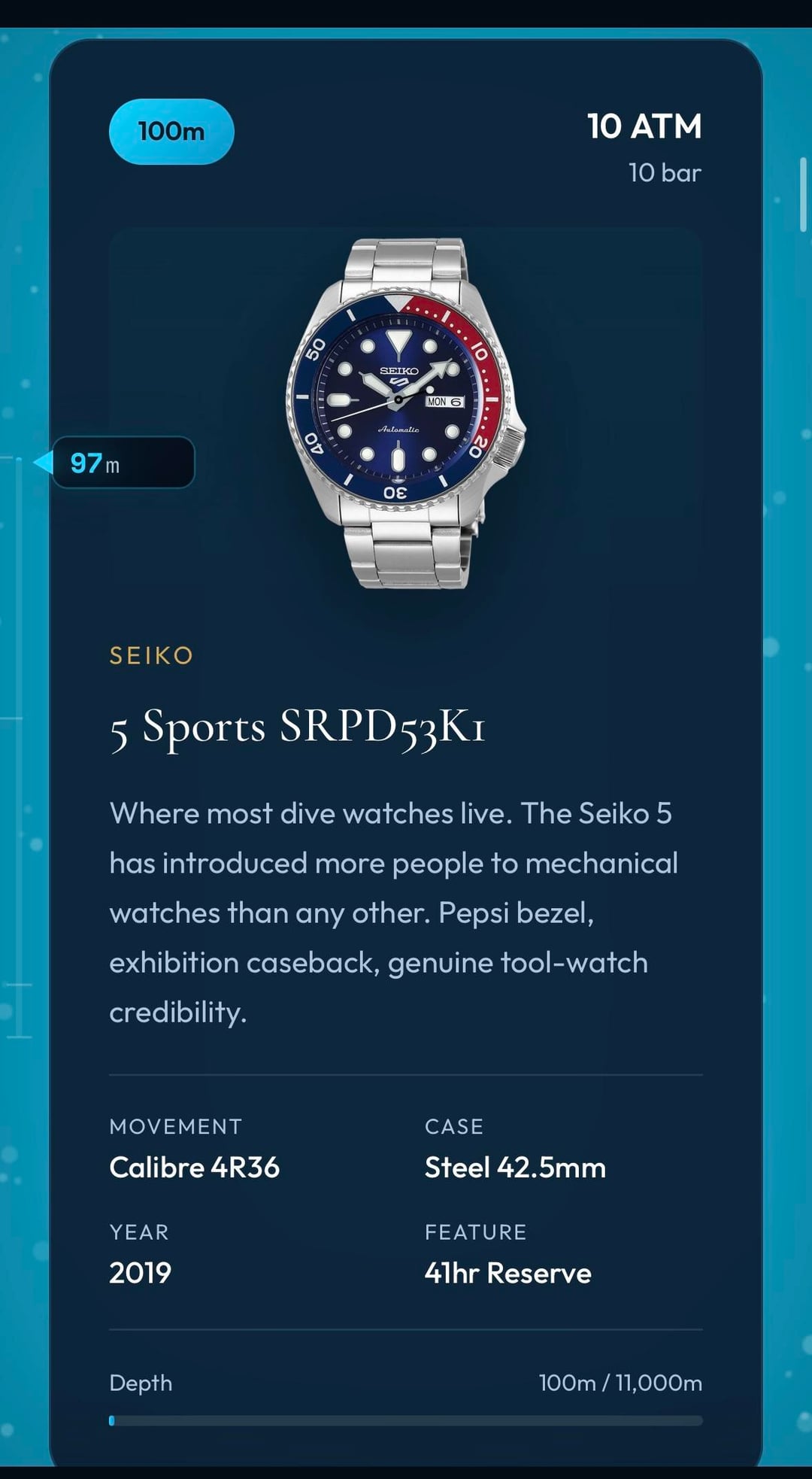
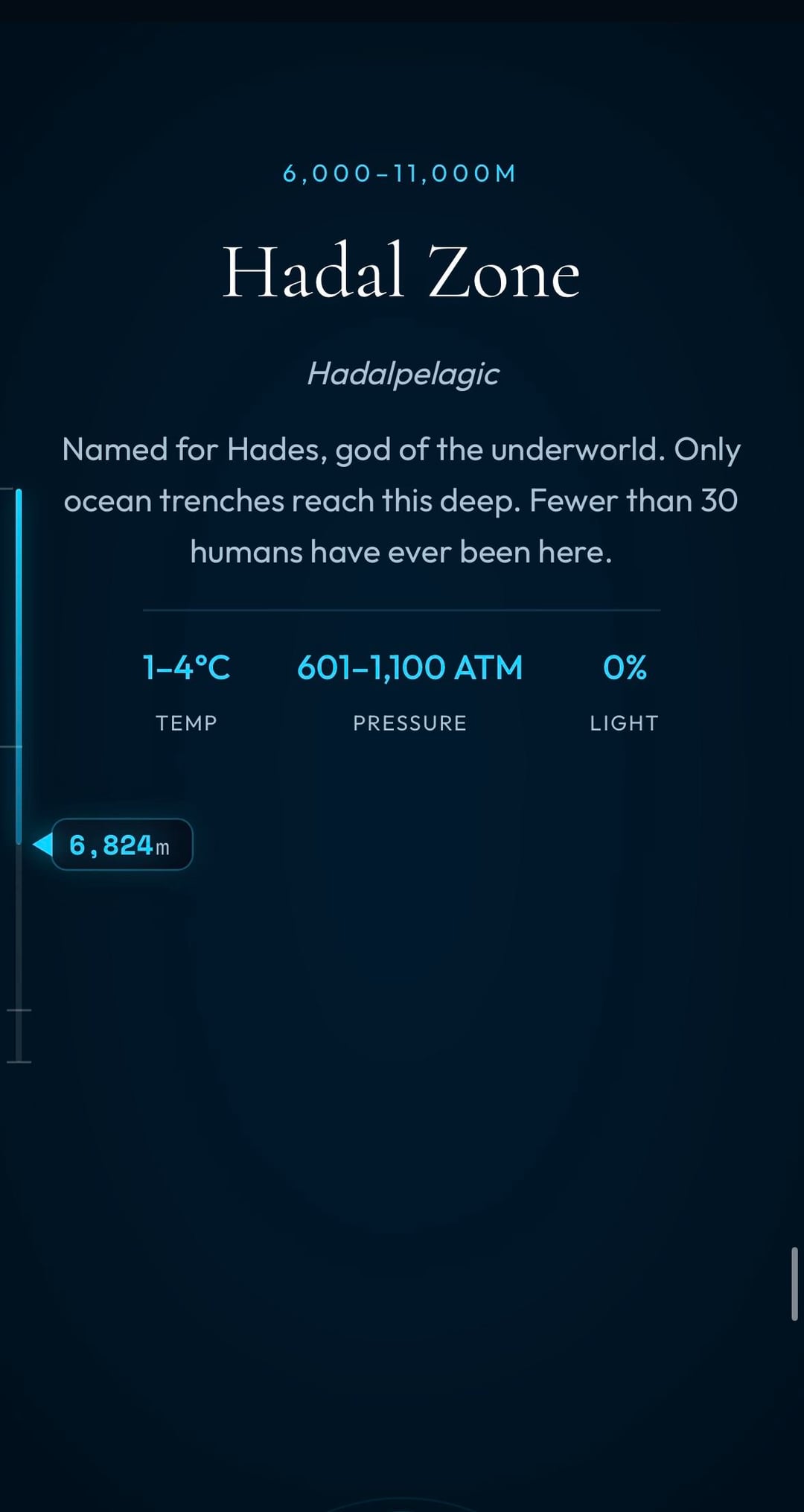

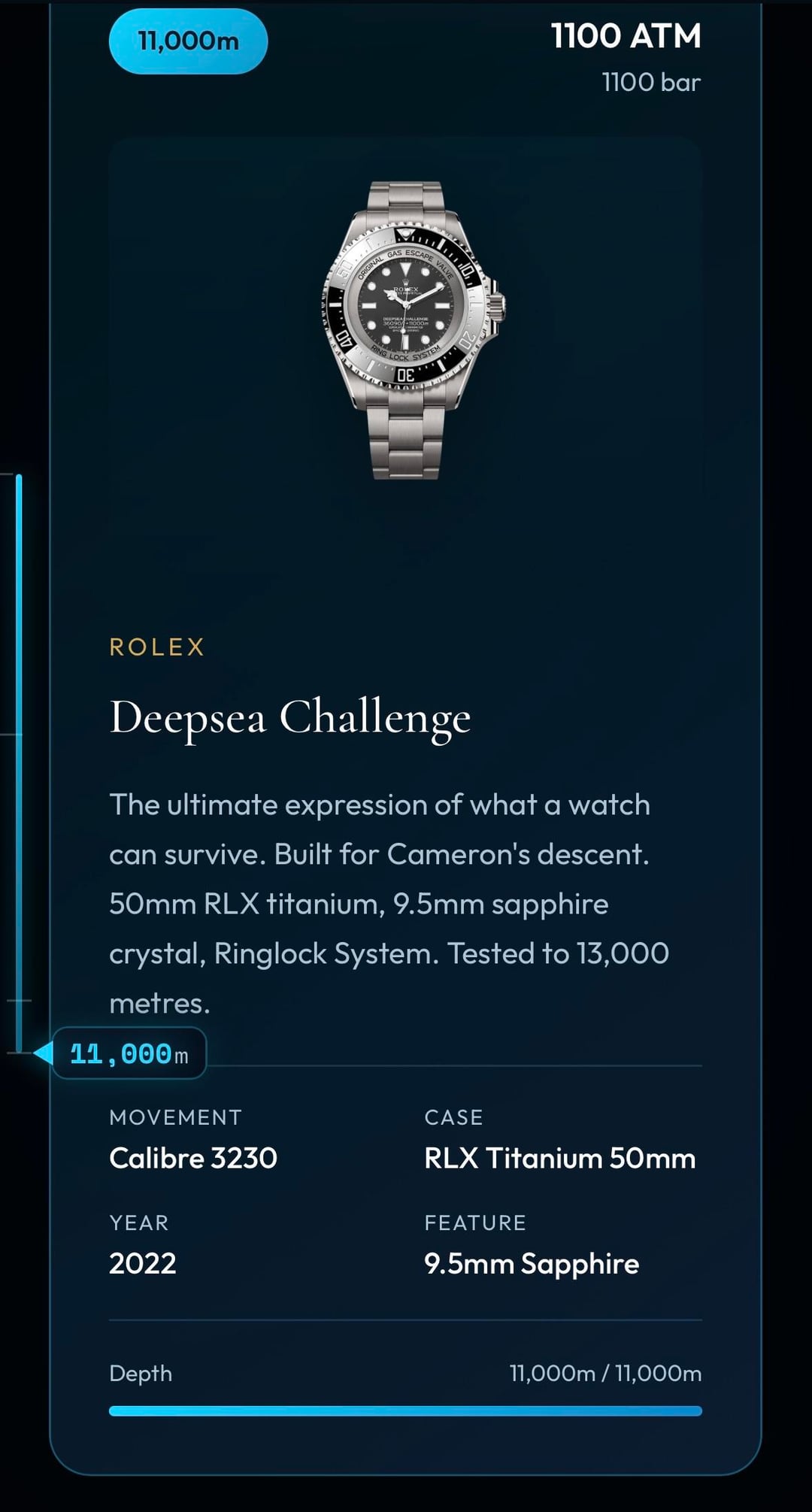
I’ve always been curious about depth ratings beyond the marketing line.
“200m”, “300m”, “1000m”—we see them constantly, but they rarely get visualized in a way that connects them to the actual ocean.
So I spent the last few weeks building a small side project that maps common dive-watch ratings against real ocean depth. Nothing commercial, just me falling down a rabbit hole about pressure, engineering, and why certain references became what they are.
A couple of notes for context, since this sub cares about accuracy:
• Depth ratings are pressure tests, not actual dive limits.
• The model is a visualization—an editorial look at capability, not a recommended dive plan.
• Specs vary across brands; this is meant to be fun, not a technical standard.
Sharing a few screenshots here because I figured some of you might appreciate the perspective.
Happy to answer questions or fix anything if I’ve misrepresented the science or the horology.
by Nexusneuron
2 Comments
[Deep Dive Watches](https://deepdivewatches.com)
I have a question. If at 10,000m the pressure can crush steel how do companies even test that something can withstand 13,000m?
I’d like to imagine that they stop a boat at a specific spot in the ocean and put the watch on a fishing line that is 13,000m long and drop it in.