
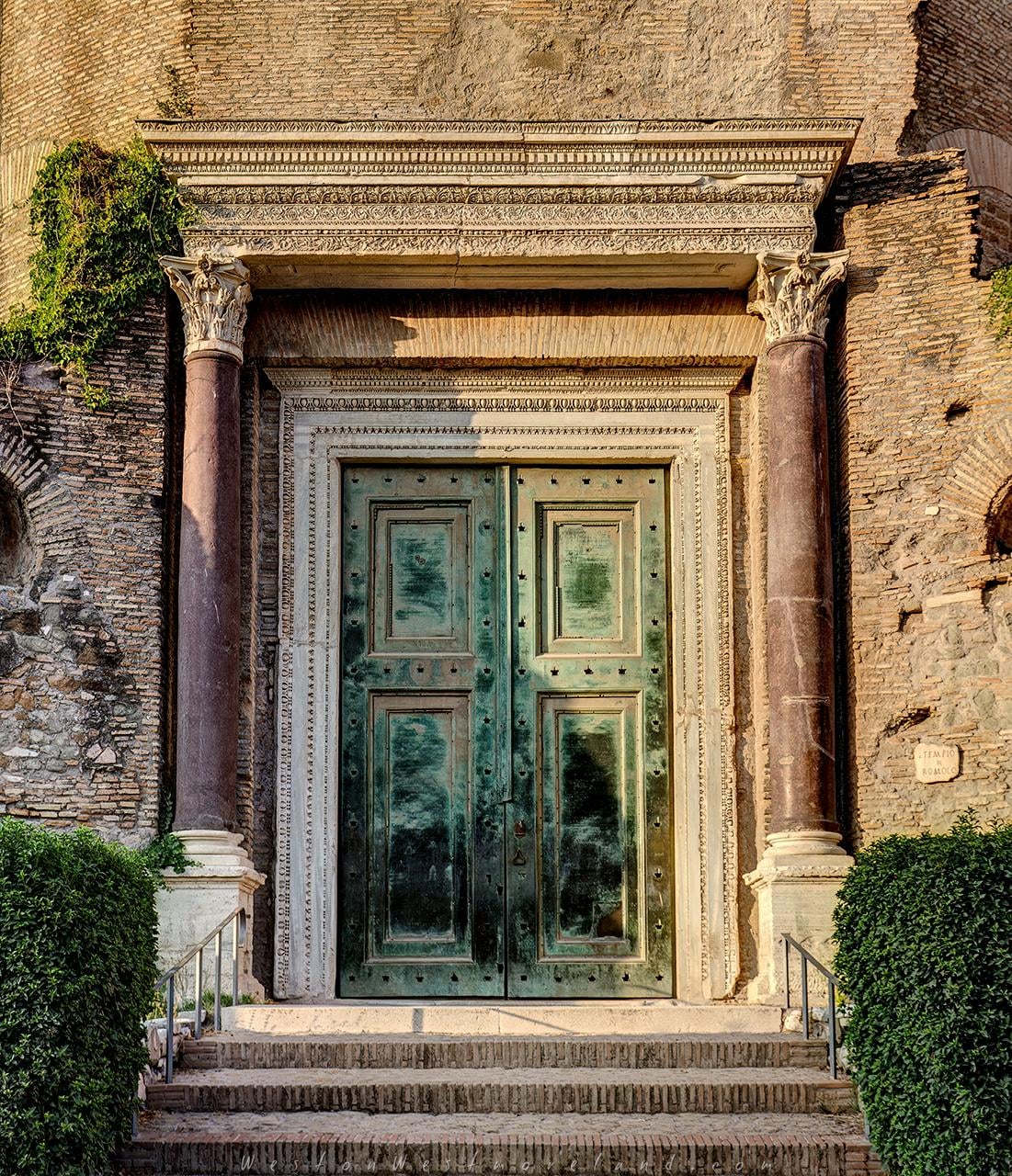
A few steps from the Via Sacra, set between two porphyry columns that support a reused marble architrave, the original bronze doors of the Temple of Divus Romulus stand there, their lock functional, since the temple was built in 309 AD by Emperor Maxentius to deify his young son… [1280×1101] [OC]
by WestonWestmoreland
1 Comment
…when the boy is presumed to have died. Close to where Julius Caesar had lived within the Roman Forum, lies a structure many people walk past without knowing just how extraordinary it is. The Temple of Romulus, now part of the Church of Santi Cosma e Damiano, is a fascinating fusion of pagan legacy and Christian transformation. This site is a time capsule within a time capsule, radiating spiritual, historical, and architectural significance.
This temple dedicated to Valerius Romulus, the deified son of Emperor Maxentius, who died young in the early 4th century. Maxentius likely commissioned the temple to honor his son’s memory and legacy, intertwining imperial power and divine tribute.
The temple was constructed with precious materials and harmonious symmetry, symbolizing prestige, eternity, and the emperor’s grief. The structure stood out with its circular plan and magnificent bronze doors, two of the few original Roman-era bronze doors, complete with ancient lock mechanisms that are still functional. These doors are a rare surviving piece of 4th-century Roman metalwork and are flanked by two deep purple porphyry columns, sourced from Egypt and reserved for imperial buildings. Standing before them feels like brushing against 1,700 years of continuous history. Their size, craftsmanship, and survival through centuries of turmoil are testaments to the Roman engineering genius.
In the 6th century, Pope Felix IV transformed the Temple of Romulus into part of a new Christian Basilica: Santi Cosma e Damiano, dedicated to the twin physician saints who were revered for their healing miracles. This wasn’t just an act of faith but also a strategic move to repurpose pagan sites and assert the Christian identity of Rome.
The circular temple became the vestibule for the larger church complex behind it. Step inside, and you’ll find awe-inspiring early Christian mosaics that shimmer in the apse, including a majestic depiction of Christ in glory flanked by Saints Cosmas and Damian, Peter, Paul, and Pope Felix himself holding the model of the church. The mosaics are among the finest examples of Byzantine (late Roman in fact) influence in the Eternal City, blending Eastern and Western iconography.
This temple-turned-church exemplifies one of Rome’s most iconic traits: recycling its past. The structure isn’t just physically layered, it’s philosophically layered, too. Pagan architecture became Christian sanctity, and sacred space adapted rather than disappeared. The reuse of Roman temples as Christian churches wasn’t just practical; it was symbolic. By adapting imperial structures, the Church emphasized continuity and dominance, asserting that the divine could inhabit the same stones once devoted to emperors and gods. It’s a beautiful metaphor for Rome itself: always evolving, never erasing.
My apologies for inaccuracies and mistakes.
Most of the text was written by Bubbly, taken from [here](https://www.bubblyliving.com/temple-of-romulus-santi-cosma-e-damiano-a-hidden-gem-in-the-roman-forum/).