
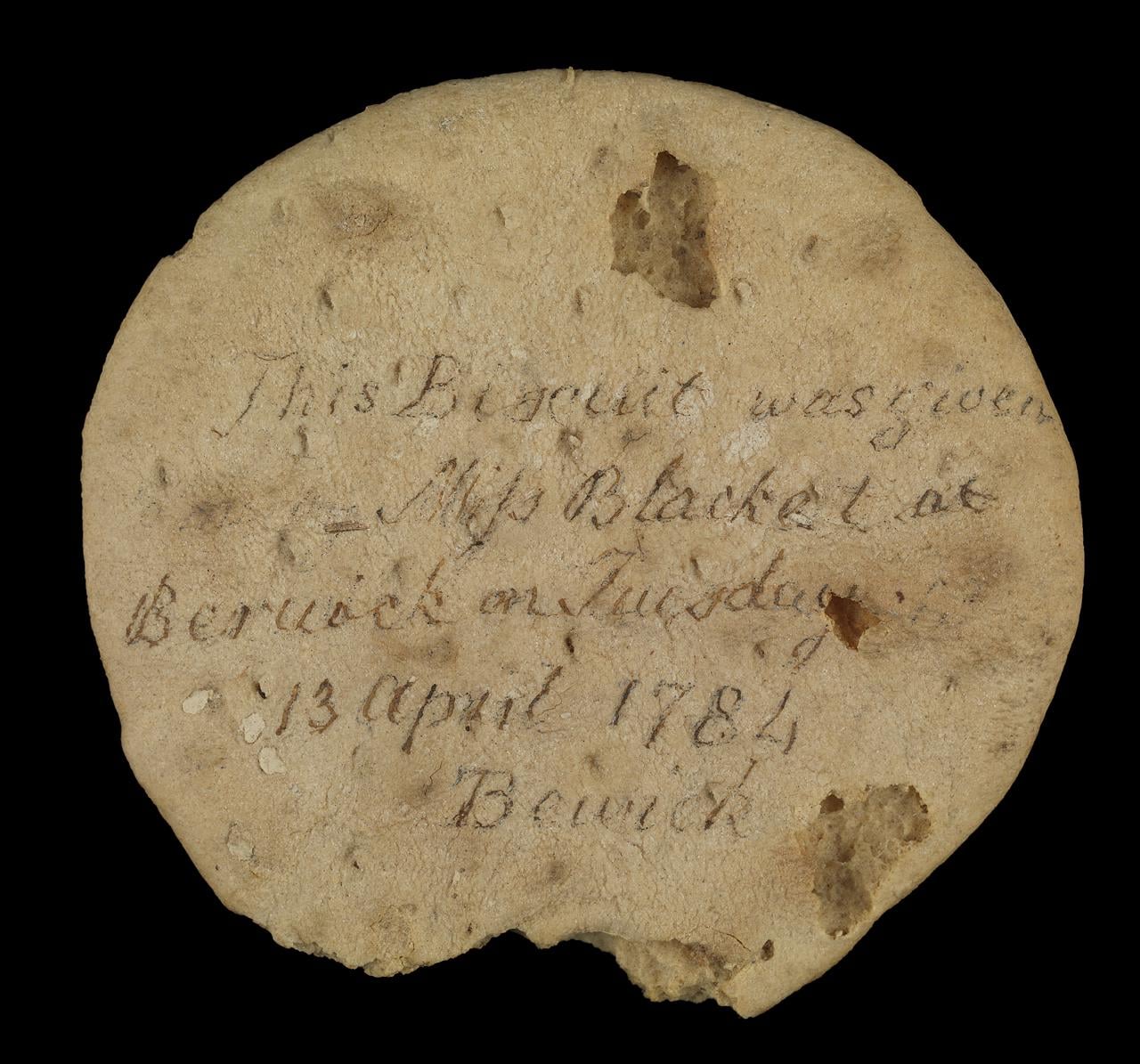
Long lasting, cheap and stable, this has been one of the main food sources for sailors for hundreds if not thousands of years. Also known as hardtack, worm castles and many others.
It was normally soaked in some liquid to make it more edible as this stuff was very hard. Hence the long shelf life, probably.
by Smeijerleijer
7 Comments
Delectable
Why is the biscuit notarized?
Probably tastes the same now
Wow, that’s some old hardtack. I bet it’s still “good”, or at least not much worse than it was when it was new. I’ve made hardtack and tried it, just out of curiosity, and with enough soaking it’s not bad, provided you have something flavorful to soak it in, like beef broth. But, in just water, it’s filling, but that’s about it. An updated hardtack I’ve made, with leavening and oats, turned out quite good, but the original flour, water, and salt version is pretty awful. This example looks like it has some sort of leavening, so it’s probably not as bad as the worst of hardtack.
But, even though hardtack can be made less awful, the conceptually similar Swedish knäckebröd is much better and has a similar shelf life. I make my knäckebrod with the traditional hole through the center, which was originally there so it could be strung on a cord or stacked on a pole, and then suspended from the ceiling of the kitchen as a way of getting it off the floor and out of the reach of damp conditions, mice, crawling insects, and anything else that could spoil it. Stored properly it lasts just as well as hardtack, and if made with a sourdough starter and rolled very thin, is crisp, but not tooth shattering, and can be eaten without soaking. Plus you can dress up the basic recipe with things like sunflower seeds, oats, cracked black pepper, etc. and make it delicious all by itself. Similar is true of hardtack, but the basic recipe of knäckebröd starts out better, in my opinion.
Does anyone else hear Max Miller clacking two pieces of hardtack in the background or is it just me?
Good ol dwarf bread!
Let’s get this out onto a tray, nice!