
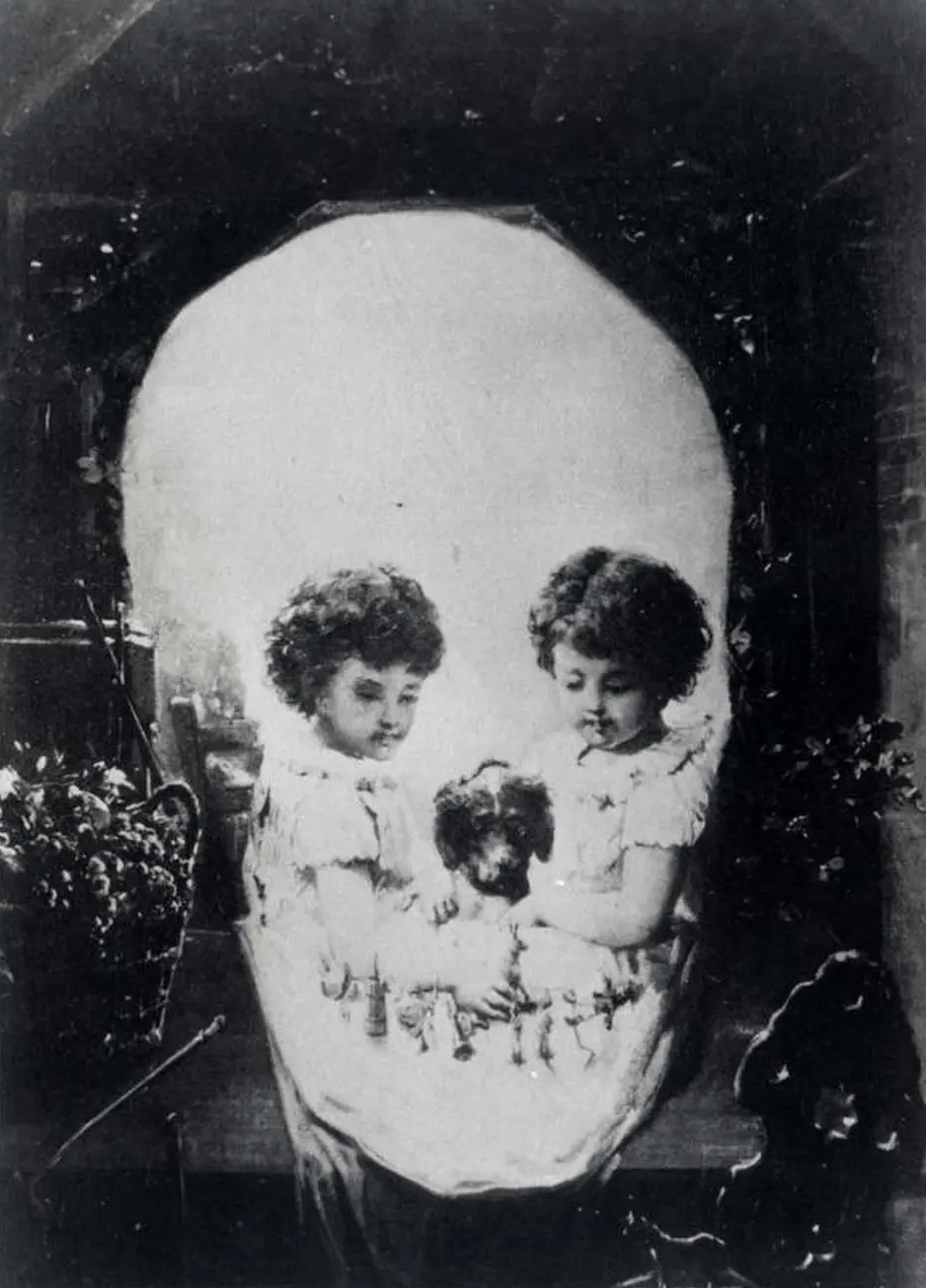
A postcard from the Golestan Palace royal archives (1870), featuring two children holding a small dog surrounded by flowers—yet a skull appears within the composition, serving as a memento mori (“remember you must die”). [1305×930]
by Party_Judgment5780
2 Comments
This photograph comes from the Golestan Palace archives in Tehran. The picture shows two children in European-style clothing, holding a small dog, seated in a decorative studio setting. At first glance, it looks like a sentimental family portrait. But closer inspection reveals something else: the faint image of a skull within the composition. This detail connects the image to a European artistic tradition known as Memento Mori (“remember you must die”). In 19th-century Europe, such symbolic additions reminded viewers of the transience of life—even in the midst of childhood and beauty.
Photography was introduced to Iran during the reign of Naser al-Din Shah (1848–1896), the fourth Qajar King, who was deeply fascinated by the medium and imported cameras, lenses, and even European photo albums. Today, the photo is kept in the Golestan Palace Photo Archive, catalogued as part of the vast Qajar photographic heritage. It offers both a glimpse into daily royal imagery and a symbolic reminder of mortality.
Eerie