
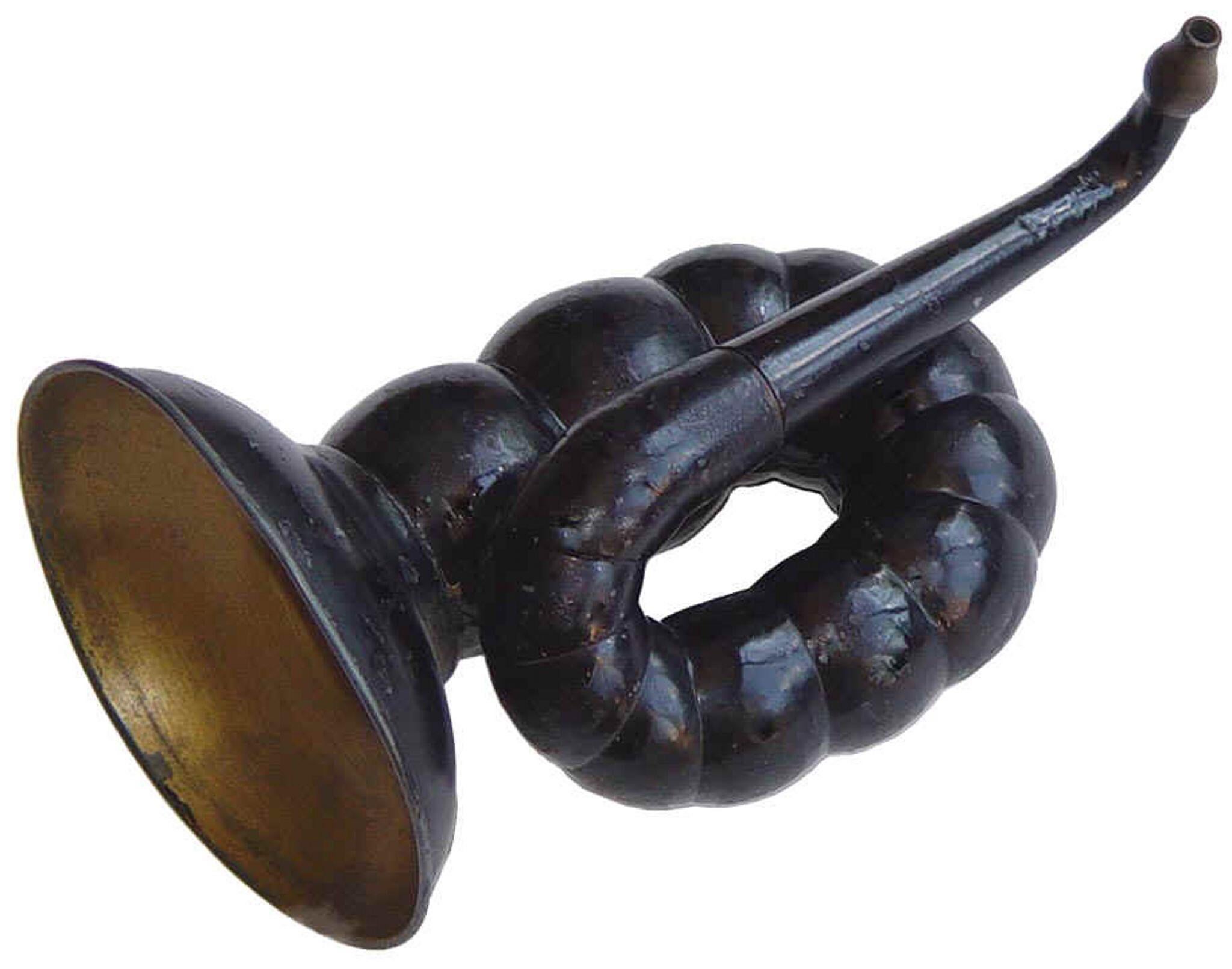
Corrugated Ear Trumpet, c. 1880. Antique ear trumpet made of tin with a black and gold tone finish. The body of the ear horn is a series of soldered doughnut-shaped segments. The bulbous segments were designed to further amplify sound. [2058 x 1611]
by Persephone_wanders
1 Comment
In the early 17th century, the first primitive hearing aids emerged in the form of [ear trumpets](https://www.connecthearing.com.au/blog/hearing-aids-and-technologies/historical-journey-ear-trumpets-and-the-evolution-of-hearing-aids/#). These trumpet-shaped devices were crafted from various materials such as wood, metal, and even animal horns. The design aimed to capture sound waves and amplify them before directing them into the ear canal.
The earliest description of an ear trumpet was made by the French Jesuit priest and mathematician Jean Leurechon in his work Recreations mathématiques (1634).
Ear trumpets operate on the principle of sound collection and amplification. When sound waves enter the wide opening of the trumpet, they are funneled towards a narrower tube that leads directly into the ear. The shape of the device allows the sound to be focused and channeled into the ear canal, enabling individuals with hearing impairments to hear more clearly.
While ear trumpets did provide some amplification, their effectiveness varied depending on the design and individual hearing loss. Larger and longer ear trumpets generally offered better amplification. In fact, Beethoven used ear trumpets when he was composing to channel the sound into his ears.
However, ear trumpets had limitations. They were unable to filter out background noise, making it difficult to distinguish between sounds. Moreover, their amplification capabilities were limited to specific tones or frequencies, resulting in distorted or muffled sound perception.
Despite their benefits, ear trumpets were not without risks. Their extensive use could lead to ear canal irritation and infections due to the accumulation of dirt and wax. Additionally, the design made it difficult for users to engage in activities requiring mobility or discretion. Ear trumpets were conspicuous and often viewed as stigmatizing, which discouraged many individuals from using them openly.