
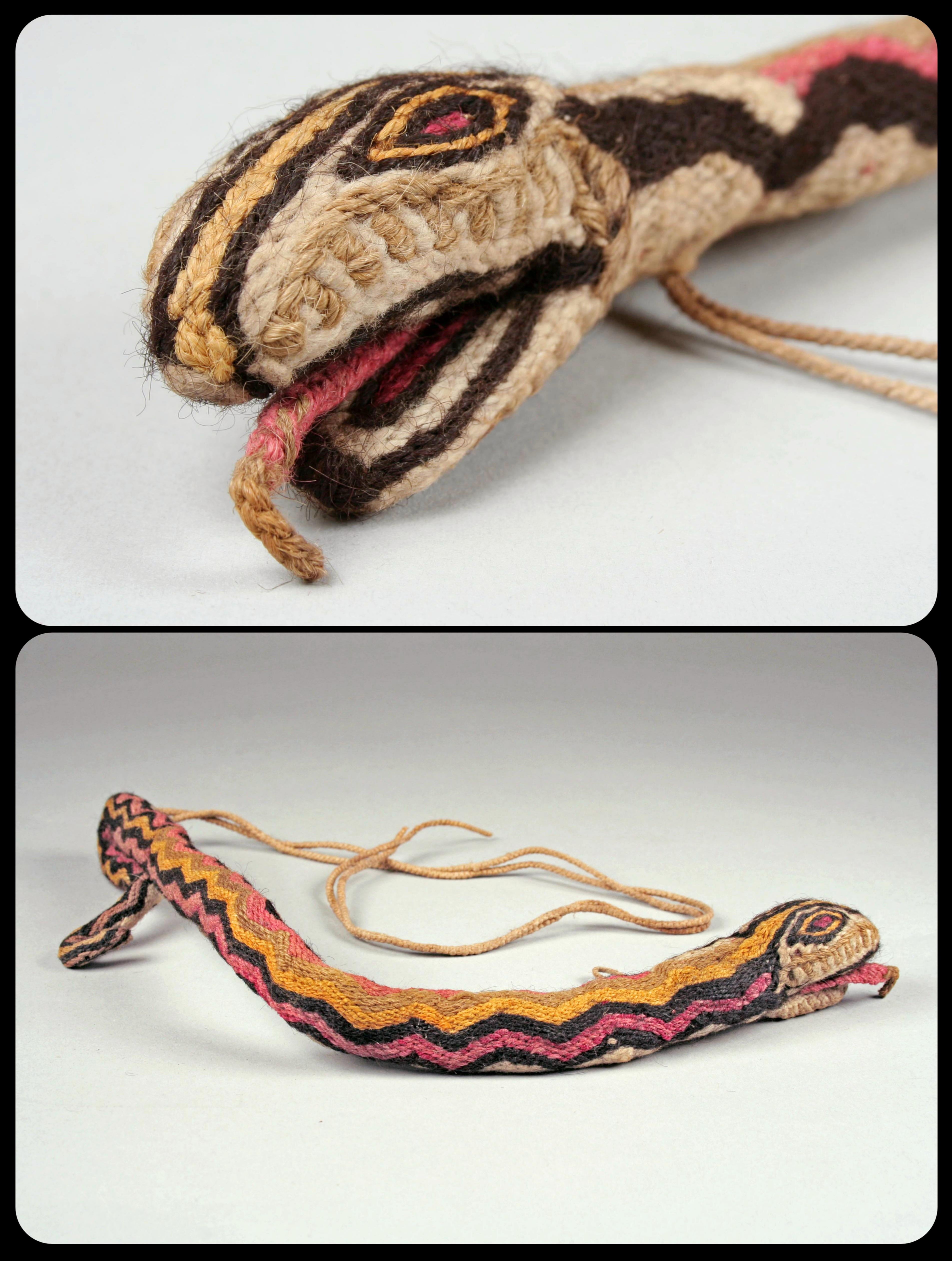
500-year-old Snake Figure from the Incan Empire, c.1450-1532 CE: this fiber-art serpent measures 86.4cm long (about 34 inches) and it was made from cotton and camelid hair [3806×5042]
by SixteenSeveredHands
500-year-old Snake Figure from the Incan Empire, c.1450-1532 CE: this fiber-art serpent measures 86.4cm long (about 34 inches) and it was made from cotton and camelid hair [3806×5042]
by SixteenSeveredHands
2 Comments
The figure was crafted by shaping a cotton core into the basic form of a snake, wrapping it in structural cords, and then using colorful thread to create patterns and details along the surface. A zig-zag design covers most of the snake’s body, and its facial features are decorated with embroidery.
A double-braided rope extends from the distal end of the snake’s body, near the tip of its tail, and another rope is attached along the ventral side, forming a small loop just behind the snake’s lower jaw. Similar features have also been found on several other fiber-craft snakes from the same time period/region, suggesting that the figures may have been designed for a common purpose. Very little is known about the original function and significance of these artifacts, however.
The figures may have been created as costume elements, toys, ceremonial props, decorative pieces, gifts, grave goods, or simply as pieces of artwork.
The Metropolitan Museum of Art argues that they were likely used as props during an Andean tradition known as *ayllar:*
> In a ritual combat known as *ayllar,* snakes made of wool were used as projectiles. This effigy snake may have been worn around the neck—a powerful personal adornment of the paramount Inca and his allies—until it was needed as a weapon. The wearer would then grab the cord, swing the snake, and hurl it in the direction of the opponent. The heavy head would propel the figure forward. The simultaneous release of many would produce a scenario of “flying snakes” thrown at enemies.
The same custom is described in an account from a Spanish chronicler named Cristóbal de Albornoz, who referred to the tradition as “the game of the ayllus and the Amaru” (*El juego de los ayllus y el Amaru*).
#Sources & More Info:
– Metropolitan Museum of Art: [Snake Ornament](https://www.metmuseum.org/art/collection/search/316938)
– Serpent Symbology: [Representations of Snakes in Art](https://storymaps.arcgis.com/stories/784d7d2fb8504a3aa8f3dc8c5d49df67)
– Journal de la Société des Américanistes: [El Juego de los Ayllus y el Amaru](https://www.persee.fr/doc/jsa_0037-9174_1967_num_56_1_2270)
– Time: [Why Indigenous Artifacts Should be Returned to Indigenous Communities](https://time.com/6964733/indigenous-artifacts-museums-essay/)
I love to see fiber arts represented – it seems like they are difficult to preserve.