
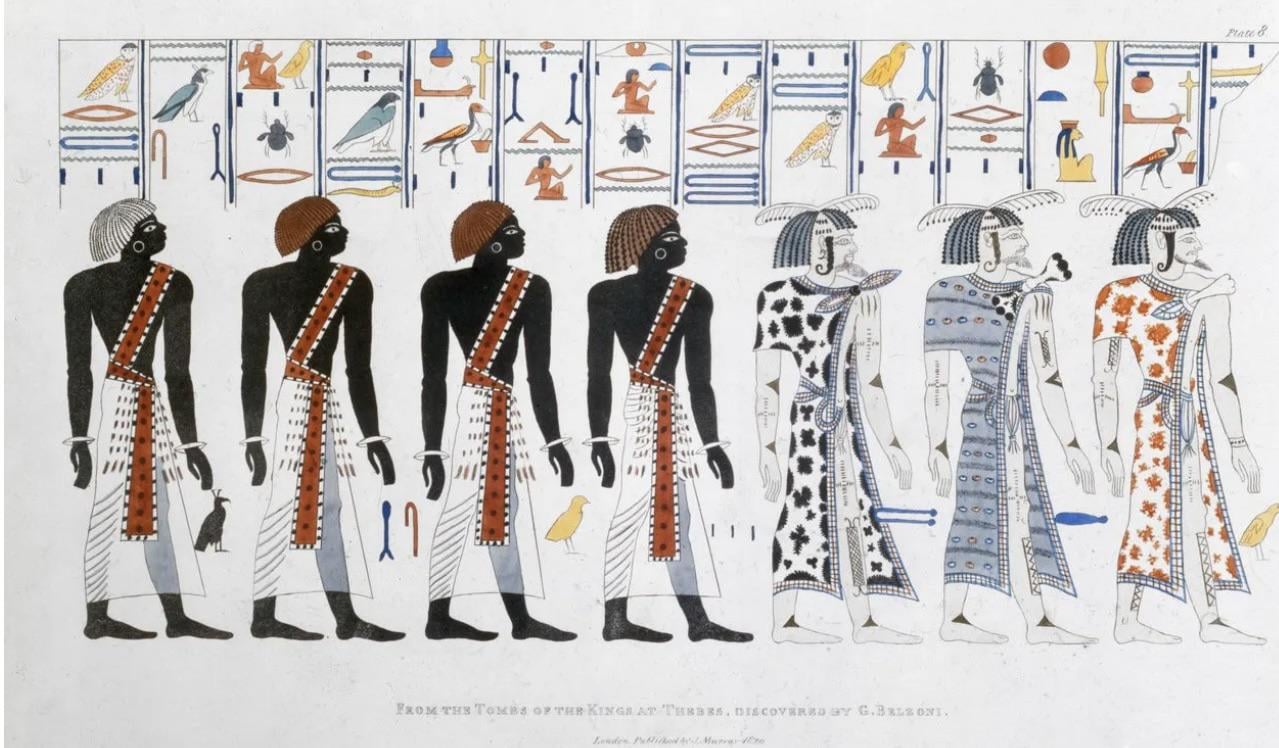
This richly detailed wall scene, originally painted in the tomb of Seti I (KV17), presents two distinct groups of foreigners. The four men on the left, dark-skinned and clad in white garments with red sashes, are Nubians. Each of their cartouches contains the word nḥsj, meaning “Nubian,” occasionally accompanied by ḥqꜣ nḥsj, meaning “Chief of the Nubians”. This designation reflects their origin in the southern lands of Kush and their association with archery, a role the Egyptians often attributed to Nubian warriors. To the right stand four light-skinned figures wearing elaborately patterned robes and feathered headdresses, iconic features of the Libyan tribes known to the Egyptians. The hieroglyphs above them read ṯḥnw (Tehenu), a term used to describe the western desert dwellers of Libya. Some captions elaborate with titles such as rmt ṯḥnw (“man of the Tehenu”) or ḥqꜣ ṯḥnw (“chief of the Tehenu”), identifying these individuals as representatives or leaders of their people. Their distinctive appearance (with tattoos, feathers, and flowing garments) reflects the Egyptian perception of their exotic western neighbours. Altogether, this scene symbolically portrays the submission of foreign lands to the might of the pharaoh, with the hieroglyphs carefully preserving each people’s identity and status within the Egyptian worldview.
by CryptographerKey2847