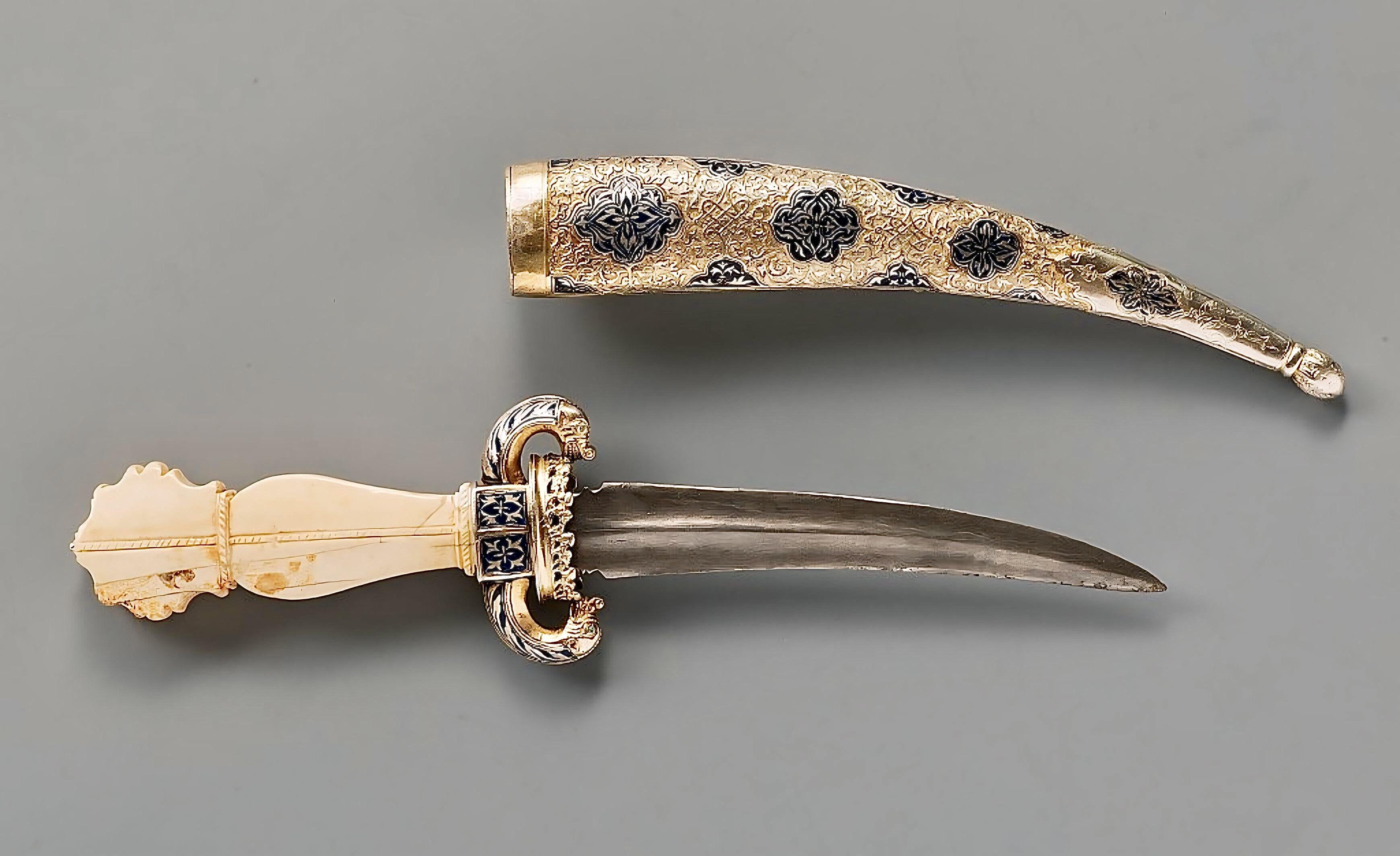
Ceremonial dagger, 1540. Steel, silver-gilt, and ivory. Transylvania or Turkey. [3480 x 2127]
by Persephone_wanders

Ceremonial dagger, 1540. Steel, silver-gilt, and ivory. Transylvania or Turkey. [3480 x 2127]
by Persephone_wanders
2 Comments
That looks cool as hell, I can only imagine what is was like to work on such excellent craftsmanship
A ceremonial dagger from 1540, made of steel, silver-gilt, and ivory, is believed to be from either Transylvania or Turkey. It is currently held at the Museum of Applied Arts Budapest. The dagger’s origin is uncertain, but it reflects the artistic styles of either the Transylvanian or Ottoman courts of the time. The Principality of Transylvania was a semi-independent state ruled primarily by Hungarian princes. It existed as an Ottoman vassal state for the majority of the 16th and 17th centuries, overseen by Ottoman Turkish sultans. Transylvania’s relationship with the Ottoman Empire was complex, shifting from periods of Ottoman suzerainty to periods of relative autonomy.
The dagger is considered a high-quality example of 16th-century craftsmanship, showcasing the use of precious materials and intricate techniques. The specific details of its construction, such as the silver-gilt and ivory, are indicative of the high status and cultural importance of such an object. Ottoman goldsmiths and silversmiths were renowned, and their designs, particularly those incorporating Persian and Byzantine motifs, influenced jewelry production in Transylvania.