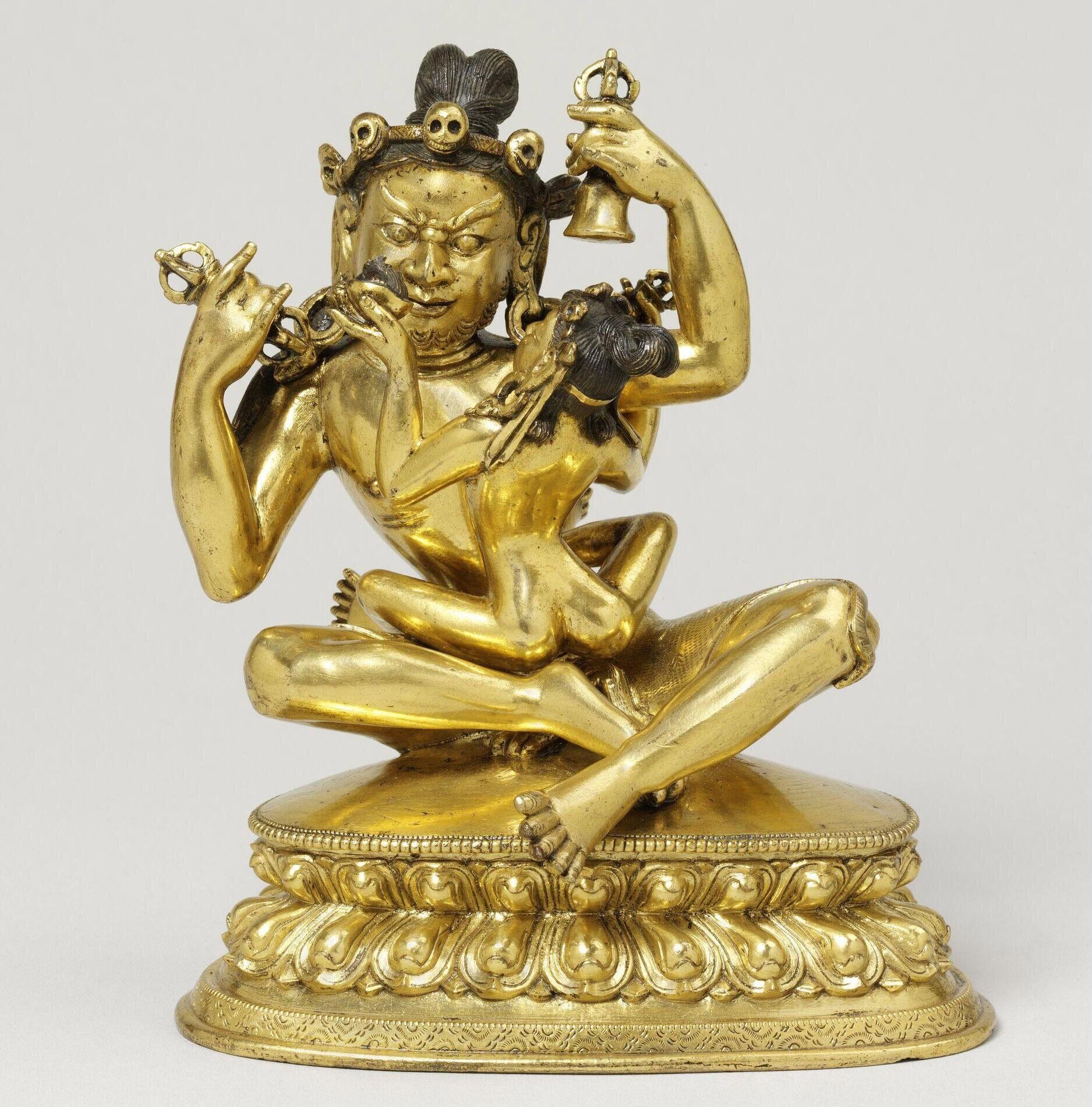
[Museum](https://collections.vam.ac.uk/item/O76027/ghantapada-figure-unknown/). This piece shows the Mahasiddha Ghantapa and consort. Mahasiddhas (‘great accomplished ones’) were tantric adepts who lived in India between the 6th and 11th centuries. A group of 84 Mahasiddhas are revered throughout the Tibetan Buddhist world as enlightened beings. Ghantapa, whose name means ‘bearer of the bell’ or ghanta, lived in north-east India during the 9th century. In his right hand he holds a vajra or ‘diamond sceptre’, symbolising compassion. In his left he holds a bell, representing wisdom. Together these attributes form the fundamental components of the enlightened state. These two qualities are mirrored again on the human level by the male, who signifies compassion, and the female, signifying wisdom.
NOVAbuddy on
That’s the face my wife makes when the kids are all up in her grill.

2 Comments
[Museum](https://collections.vam.ac.uk/item/O76027/ghantapada-figure-unknown/). This piece shows the Mahasiddha Ghantapa and consort. Mahasiddhas (‘great accomplished ones’) were tantric adepts who lived in India between the 6th and 11th centuries. A group of 84 Mahasiddhas are revered throughout the Tibetan Buddhist world as enlightened beings. Ghantapa, whose name means ‘bearer of the bell’ or ghanta, lived in north-east India during the 9th century. In his right hand he holds a vajra or ‘diamond sceptre’, symbolising compassion. In his left he holds a bell, representing wisdom. Together these attributes form the fundamental components of the enlightened state. These two qualities are mirrored again on the human level by the male, who signifies compassion, and the female, signifying wisdom.
That’s the face my wife makes when the kids are all up in her grill.