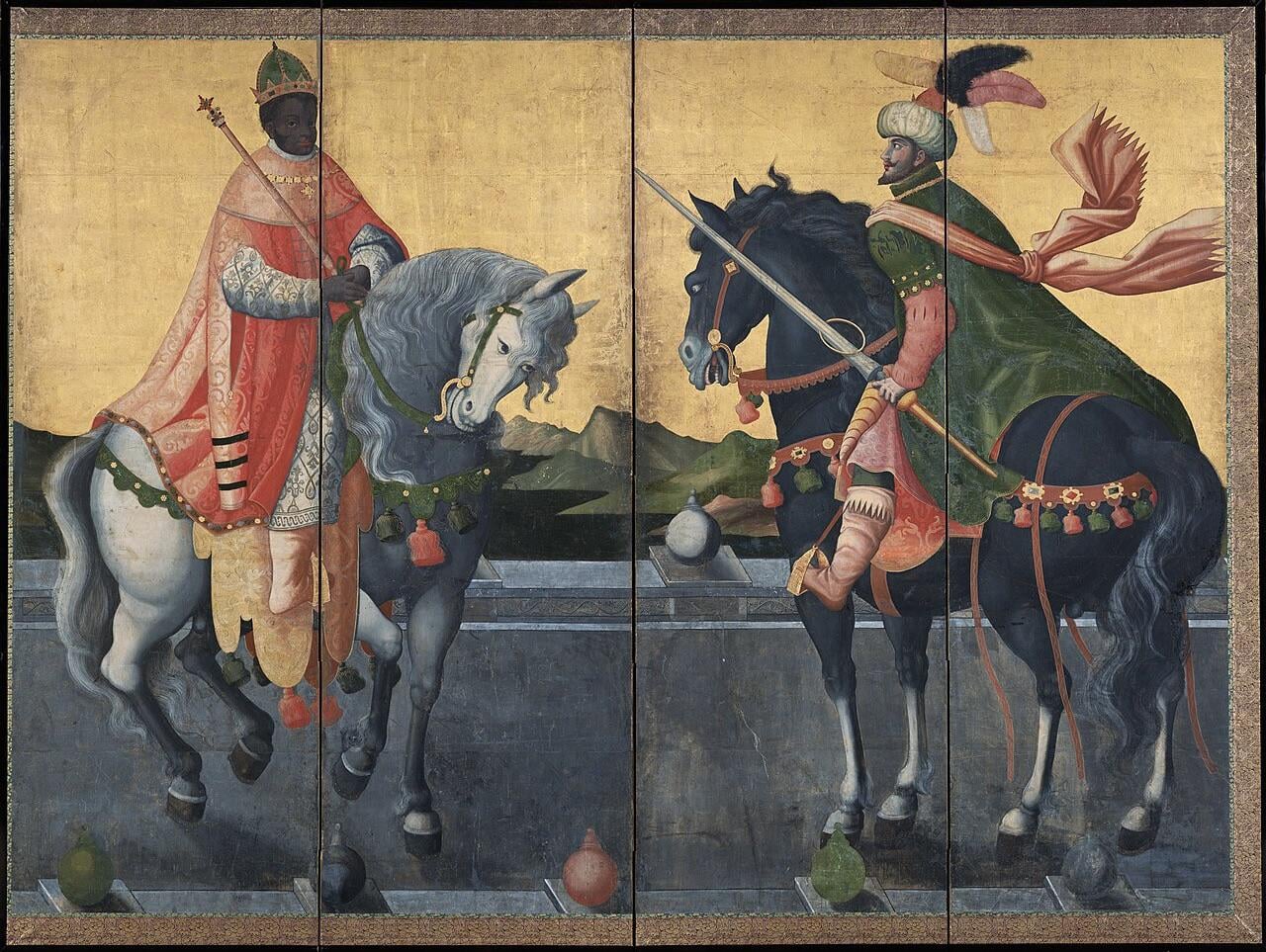
The king of Abyssinia faces the Ottoman sultan in a Japanese depiction of the Ottoman–Ethiopian War (1557–1589) based off Portuguese descriptions to a Momoyama period Nanban painter. [1280×963]
by ZemenfesKidus

The king of Abyssinia faces the Ottoman sultan in a Japanese depiction of the Ottoman–Ethiopian War (1557–1589) based off Portuguese descriptions to a Momoyama period Nanban painter. [1280×963]
by ZemenfesKidus
2 Comments
ethiopian dudes hair line is wild. beard is on point though
This Byōbu (Folding Screen) features elements of both eastern and western art typical of the early 17th century nanban style which arose under heavy Portuguese influence and is a perfect example of the relationship between art and commerce. Even a century prior the sort of cultural contact behind it’s creation would have been unimaginable for all three relevant societies. Part of “The Western kings on Horseback” (Japanese: 重要文化財 泰西王侯騎馬図屏風) series, it was once a treasured possession of the Aizu Wakamatsu Castle.