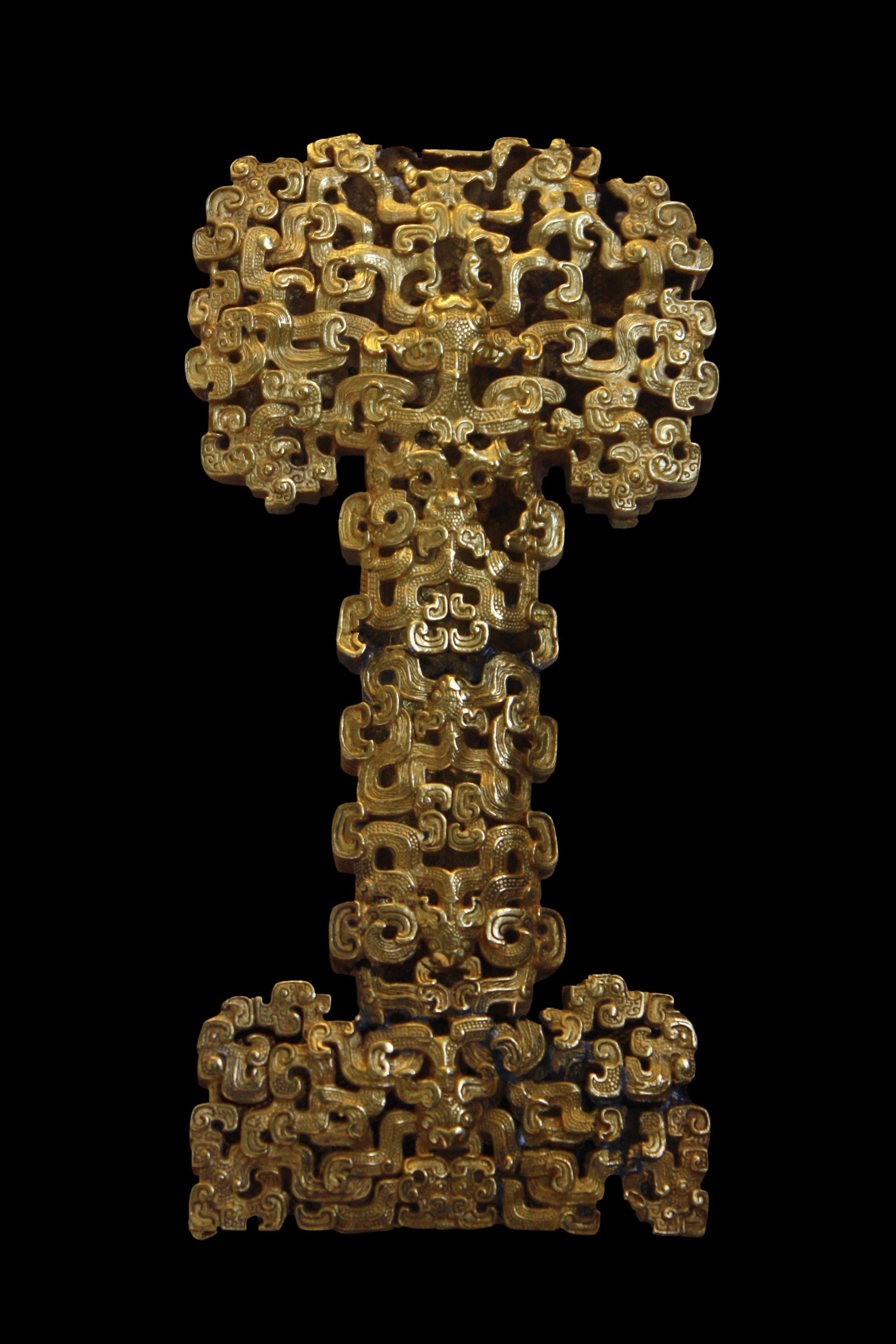
Gold openwork dagger-handle. Eastern Zhou period. between 6th century and 5th century BC. British Museum [2289×3434]
by Remote_Finish_9429

Gold openwork dagger-handle. Eastern Zhou period. between 6th century and 5th century BC. British Museum [2289×3434]
by Remote_Finish_9429
3 Comments
The openwork decoration of this cast gold sword hilt was derived from Central Asia. The design is based on repeated units forming the image of a winged dragon. The spirals and granulation make up the dragon parts – a mass of bodies and stubby wings with a sprinkling of heads. This hilt shape is known from Central Asian and Bactrian blades and is also characteristic of the steppe region. Its rounded relief surfaces and fine detailing reflect the light with great effect. [Museum link](https://www.britishmuseum.org/collection/object/A_1937-0416-218)
Give it back, British Museum.
Lookin insane. They cast this in wax?