
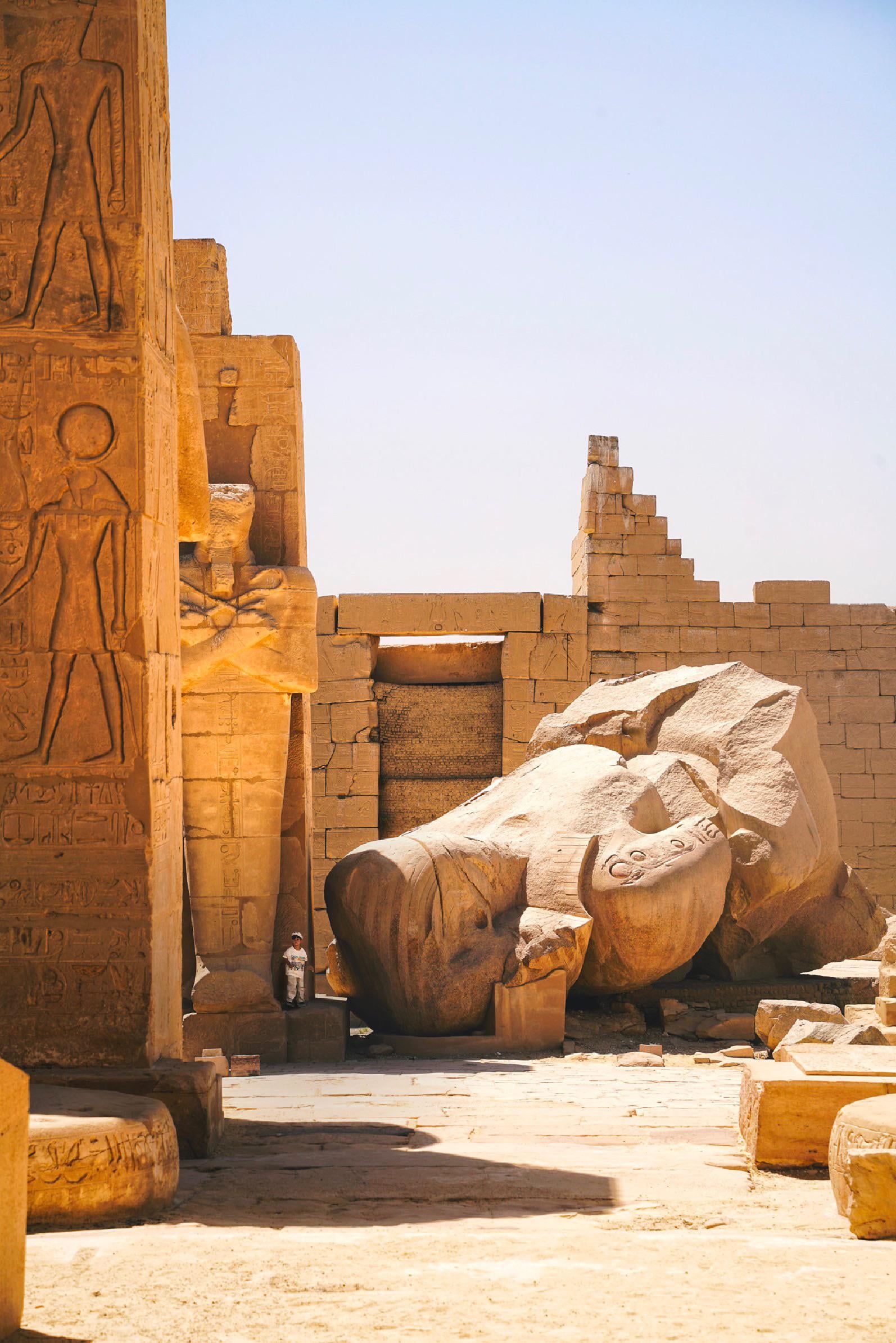
The fallen colossus of Ramesses II, one of the greatest pharaohs of Egypt. This was once the largest statue of ancient Egypt, and the inspiration behind the Ozymandias poem – “Look on my works, ye mighty, and despair!” [OC] [1600×2400]
by this_wandering_day
2 Comments
Once standing at nearly 20 meters (57 feet) high, this was the largest statue ever created by Ramesses II (and he created some big ones). Ramesses II, also known as Ramesses the Great, has become the most well known pharaoh thanks in part to his numerous Hollywood depictions, but also as the most prolific builder in ancient Egyptian history. The Ramesseum, found on the West Bank of Luxor, was the pinnacle of his achievements – a temple where he hoped the worship of himself would last for eternity. A short video of the interior of the temple can be seen here: [Ramesseum](https://m.youtube.com/watch?v=k1_qYvcJ57M)
The temple also captured the imaginations of numerous visitors over the past few centuries, from Napoleon Bonaparte to Percy Shelly, the author behind the famous Ozymandias poem, written in 1818. According to the Poetry Foundation: “Shelley and Smith remembered the Roman-era historian Diodorus Siculus, who described a statue of Ozymandias, more commonly known as Rameses II. Diodorus reports the inscription on the statue, which he claims was the largest in Egypt, as follows: “King of Kings Ozymandias am I. If any want to know how great I am and where I lie, let him outdo me in my work.”
And therefore indirectly responsible for one of the single greatest episodes of television ever made