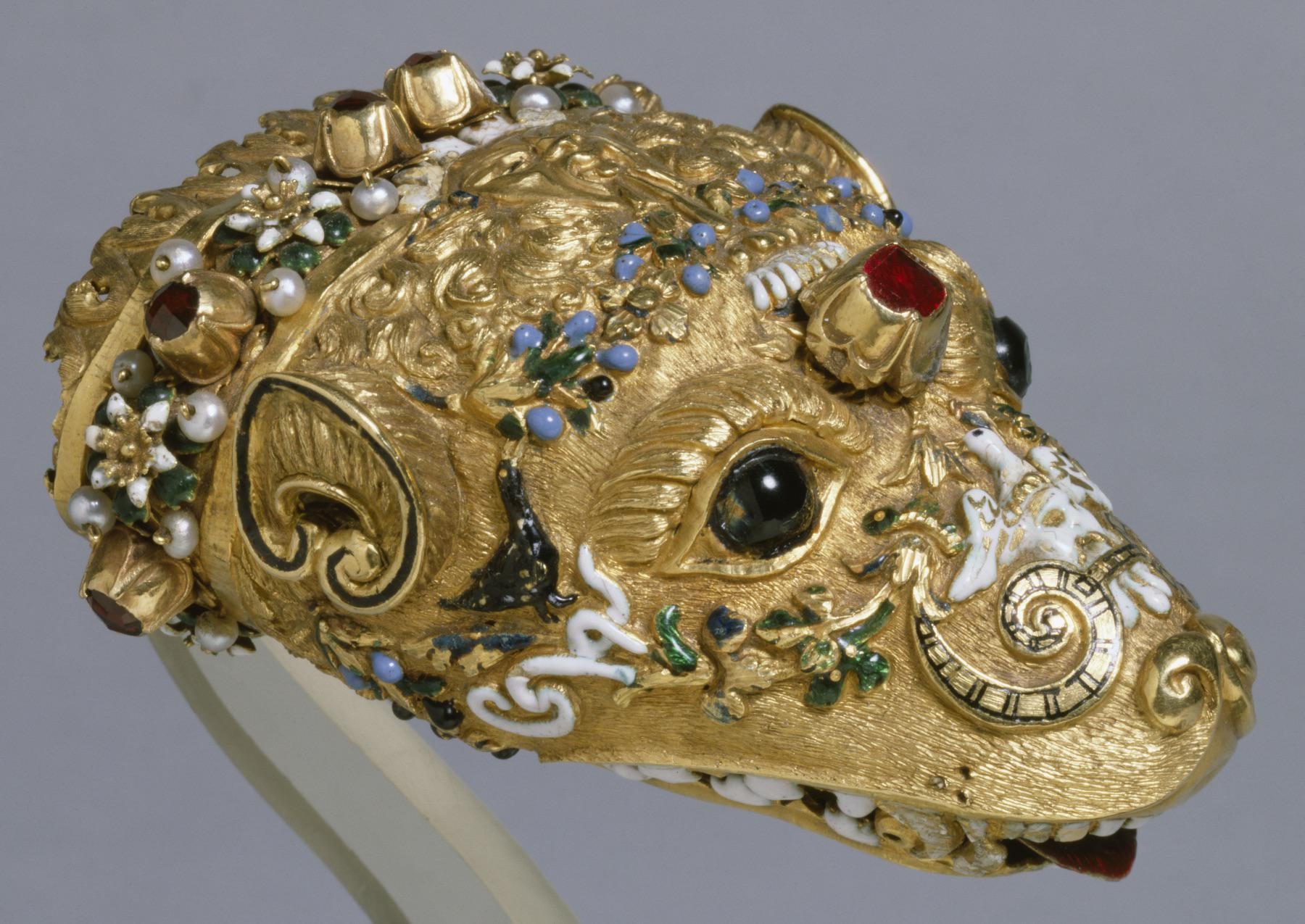
Venetian jeweled marten’s head, circa 1550-1559. Martens were associated with childbirth, and wearing its fur was believed to increase a woman’s fertility and protect her during pregnancy. Walters Art Museum. [1800×1275]
by Remote_Finish_9429

Venetian jeweled marten’s head, circa 1550-1559. Martens were associated with childbirth, and wearing its fur was believed to increase a woman’s fertility and protect her during pregnancy. Walters Art Museum. [1800×1275]
by Remote_Finish_9429
1 Comment
This jeweled marten’s head is nearly identical to that attached to the fur held by the countess in Veronese’s portrait of Countess da Porto and is displayed here in a similar way. Since antiquity, the marten had been thought to conceive through its ear or mouth (and therefore chastely). The dove on the creature’s nose may be a symbol of the Holy Ghost and further allude to Mary’s miraculous conception. This would add to the amulet’s protective powers.
[Museum link](https://art.thewalters.org/object/57.1982/)