
The Tassili Mushroom Shaman: A Glimpse Into Prehistoric Psychedelic Spirituality
In the heart of the Sahara Desert, on the windswept plateau of Tassili n’Ajjer in southeastern Algeria, lies one of the most mysterious and provocative pieces of ancient rock art ever discovered: the so-called Tassili Mushroom Shaman. Estimated to be between 6,000 to 9,000 years old, this painting may provide insight into the spiritual and cultural practices of early African hunter-gatherers — and perhaps, the earliest evidence of humanity’s interaction with psychedelic substances.
Tassili n’Ajjer/Algeria
Tassili n’Ajjer, meaning “Plateau of the Rivers,” is a UNESCO World Heritage Site known for its extensive collection of prehistoric rock art. This region, once a fertile savannah teeming with life, has over 15,000 rock paintings and carvings documenting the evolution of human life from the Mesolithic to the Neolithic era.
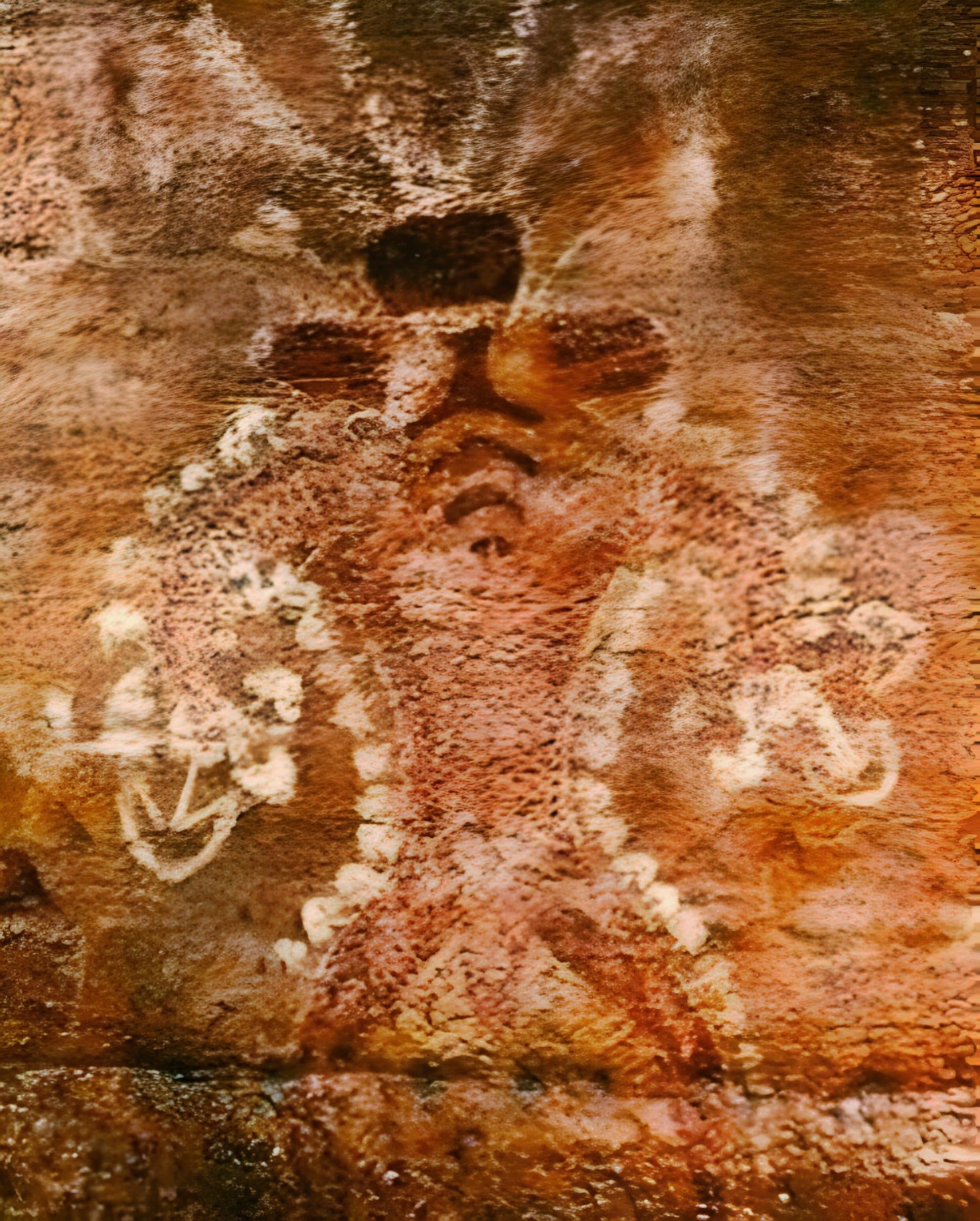
Among these ancient artworks is a particularly enigmatic image — a humanoid figure with insect-like features, holding mushrooms, with fungi seemingly growing from or around the body "Mushroom Shaman."
—-
The Mushroom Shaman Figure:
A bee- or ant-like head, possibly representing a trance-like state or symbolic transformation.
Mushroom-like shapes in both hands.
Mushrooms sprouting from his limbs and body, suggesting ingestion or embodiment.
A dotted, patterned torso, which some interpret as a representation of altered states of consciousness.
This figure is believed to be a shaman or spiritual leader engaged in a ritualistic experience, possibly involving the use of psychoactive mushrooms.
______
Psychedelic Shamanism: Terence McKenna theorized that psychoactive mushrooms influenced the evolution of human consciousness, language, and spirituality. The artwork may reflect early psychedelic rituals for spiritual communication or transformation.
- Transformation Symbolism: The insect or bee-like head represents metamorphosis, symbolizing the shaman’s journey between the physical and spiritual realms, aided by mushrooms.
- Spiritual Connection: The image implies that ancient cultures viewed mushrooms as sacred tools for connecting with divine forces or experiencing visionary states.
Chronology: Dating from 6000–9000 B.C.E., this artwork predates recorded history and the major monotheistic religions by thousands of years.
Anthropological Insight: It may provide one of the earliest records of entheogenic (mind-altering for spiritual purposes) use in human society.
Cultural Parallels: Similar mushroom-based spiritual practices are found in Mesoamerican, Siberian, and Indian traditions, pointing to a global prehistoric phenomenon.
The Tassili Mushroom Shaman serves as a window into the mind of early humans, suggesting a world where nature, spirituality, and altered consciousness were deeply intertwined. Whether this figure was a psychonaut, a spiritual visionary, or a symbolic guardian of an ancient ritual, it remains one of the most provocative and compelling images in the archaeological record.
It reminds us that the roots of human spirituality may lie in our earliest, most primal interactions with the natural world — including its mind-altering gifts.
by Neaxaeee