
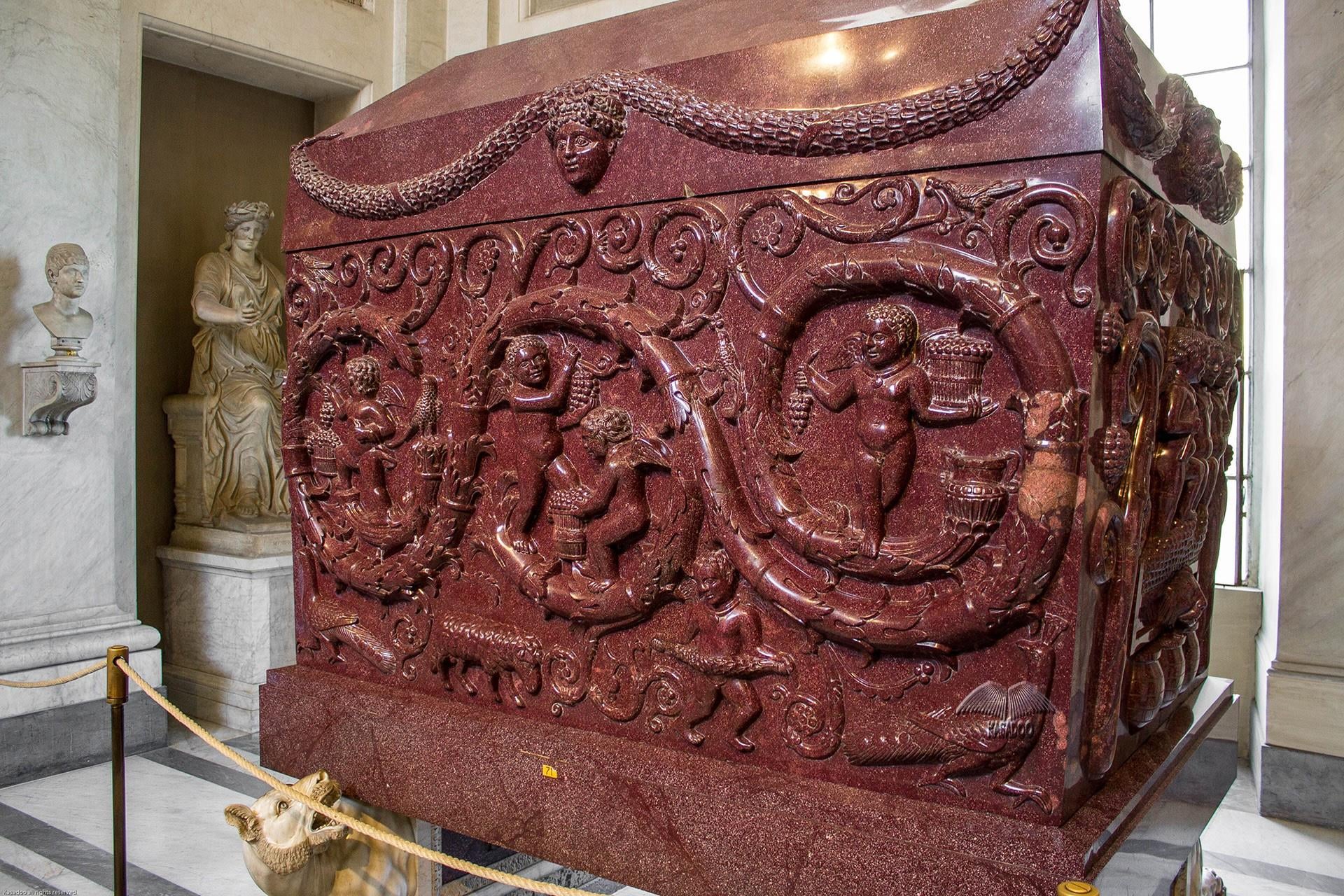
The Sarcophagus of Constantina is the 4th century coffin of Constantina, daughter of Emperor Constantine I. It is made from a single slab of red porphyry, an exceptionally hard stone which was difficult to carve. The richly detailed carvings show cupids making wine. [1920×1280]
by KidCharlemagneII
5 Comments
**Some additional info:**
When Constantina, daughter of Constantine died of an unknown illness 354 AD, she was laid to rest in a sarcophagus worthy of her status. It depicts winged cupids harvesting grapes and making wine. It is a distinctly pagan scene, but it has been suggested as an early reference to the Christian eucharist. Constantina was considered cruel and violent by chroniclers, but is now venerated as a saint.
Red porphyry was a highly prized rock in Rome. It was quarried in Egypt from the 1st century onwards, and brought to Rome for carving. It is a very hard stone, equivalent to granite. This made it a prestigious material for sarcophagi, busts, and other high-status objects; it eventually become known as imperial porphyry, for its association with the imperial court.
https://en.m.wikipedia.org/wiki/Constantina
So subtile and understated as one can expect from the byzantines
TIL that porphyry is a rock AND a person…
Very beautiful, i like it! Say what you will about the eastern roman empire but they had good taste.