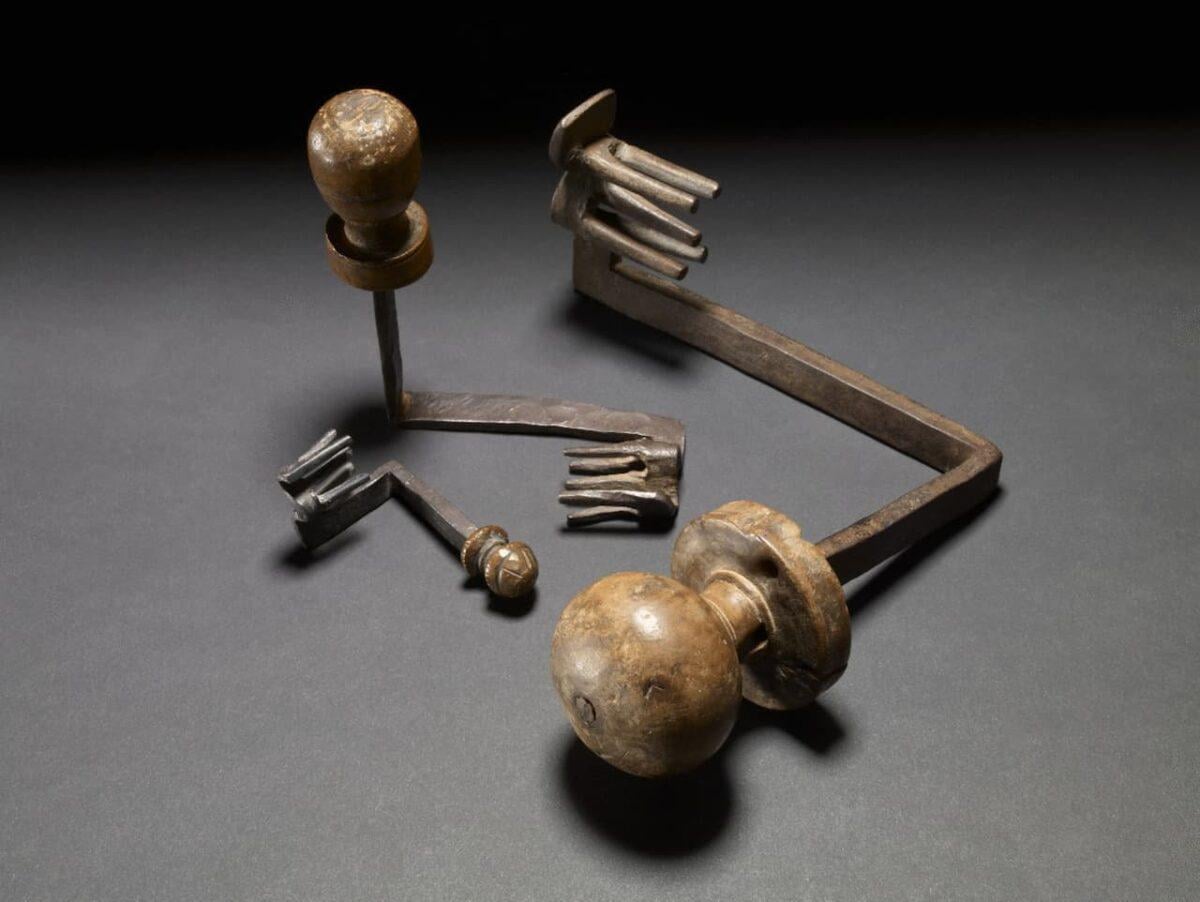
Three unique elbow keys from the Cave of Letters assemblage discovered by the Yadin expedition to the Judean desert. They are dated to the 1st century. [1200×902]
by AlbaneseGummies327

Three unique elbow keys from the Cave of Letters assemblage discovered by the Yadin expedition to the Judean desert. They are dated to the 1st century. [1200×902]
by AlbaneseGummies327
1 Comment
In the 1960s, archaeologist Yigael Yadin discovered in the Cave of Letters, in the Judean Desert, a treasure trove of objects belonging to Jewish refugees fleeing the violent Bar-Kokhba revolt against Rome (132-136 AD). Among the objects were 10 iron keys, which the refugees carried with them in the hope of someday returning to their homes in Jerusalem.
What is most surprising about these keys is their shape. Many of them have a right angle, like an elbow, making them very different from the Roman keys found in other parts of the empire.
Researchers have called them “elbow keys” and believe they were a local design, possibly used only by the Jewish population of the Roman province of Judea.
These keys first appeared in the 1st century BC and ceased to be used after the Bar-Kokhba revolt, when the Roman administration changed the name of the province from Judaea to Syria Palaestina and reorganized the region.