
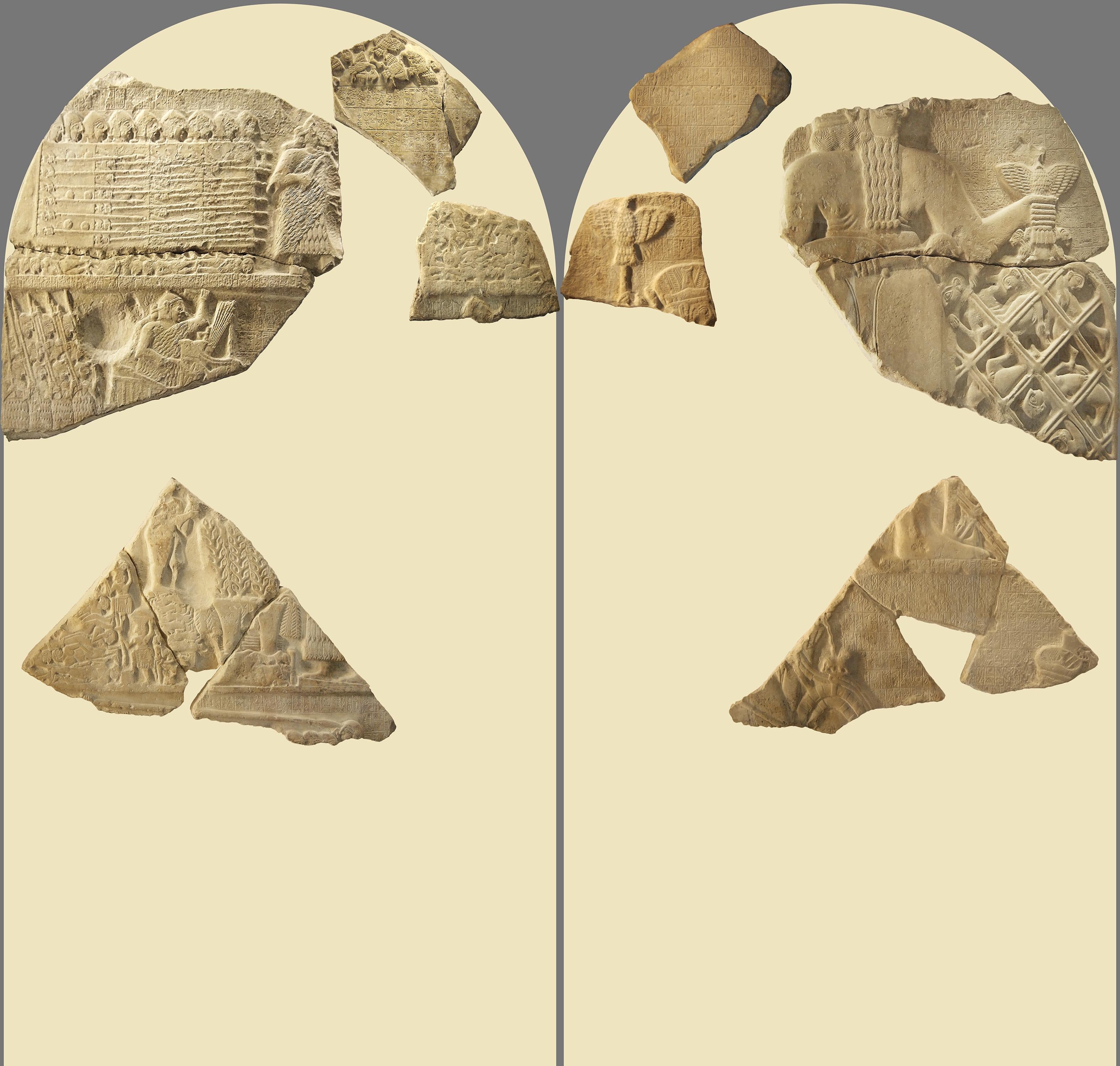
Fragments of the “Stele of Vultures” commemorating victory of Eannatum, King of Lagash, over rival city-state Umma, c. 2460 BCE. Opposite the battle scene, the god Ningirsu and his mother Ninhursag are shown with a net full of casualties, his chariot approaching her on the lower register [3152×3000]
by JaneOfKish
1 Comment
Such a striking glorification of military violence with a supposed divine seal of approval resulted from these two city-states squabbling over a fertile stretch of land known as Gu-Edin, off the Tigris River. About a century later, Umma would have its revenge as King Lugal-Zage-Si led them to conquer not only Lagash, but even most of Lower Mesopotamia in one of history’s first empires. He was depicted just as ruthless as Eannatum in a lament over the fall of Lagash, the earliest recovered text of an Ancient Near Eastern genre now most well-known for the prophet Jeremiah’s Lamentations over the Neo-Babyonian Empire’s destruction of Jerusalem in the Hebrew Bible, penned some 1,750 years later. Lugal-Zage-Si’s glory, however, would be short-lived as an upstart city-state known as Akkad which lied just north of his domain would conquer Sumer under a king calling himself Sargon (roughly meaning “the rightful king”) after issuing him a crushing defeat at the Battle of Uruk. The only surviving image of the former great empire-builder is as a disheveled captive being restrained by Sargon in a net, just like Eannatum’s monument shows being held by Ningirsu. Has anything really changed with state societies in the past 4,400 odd years?