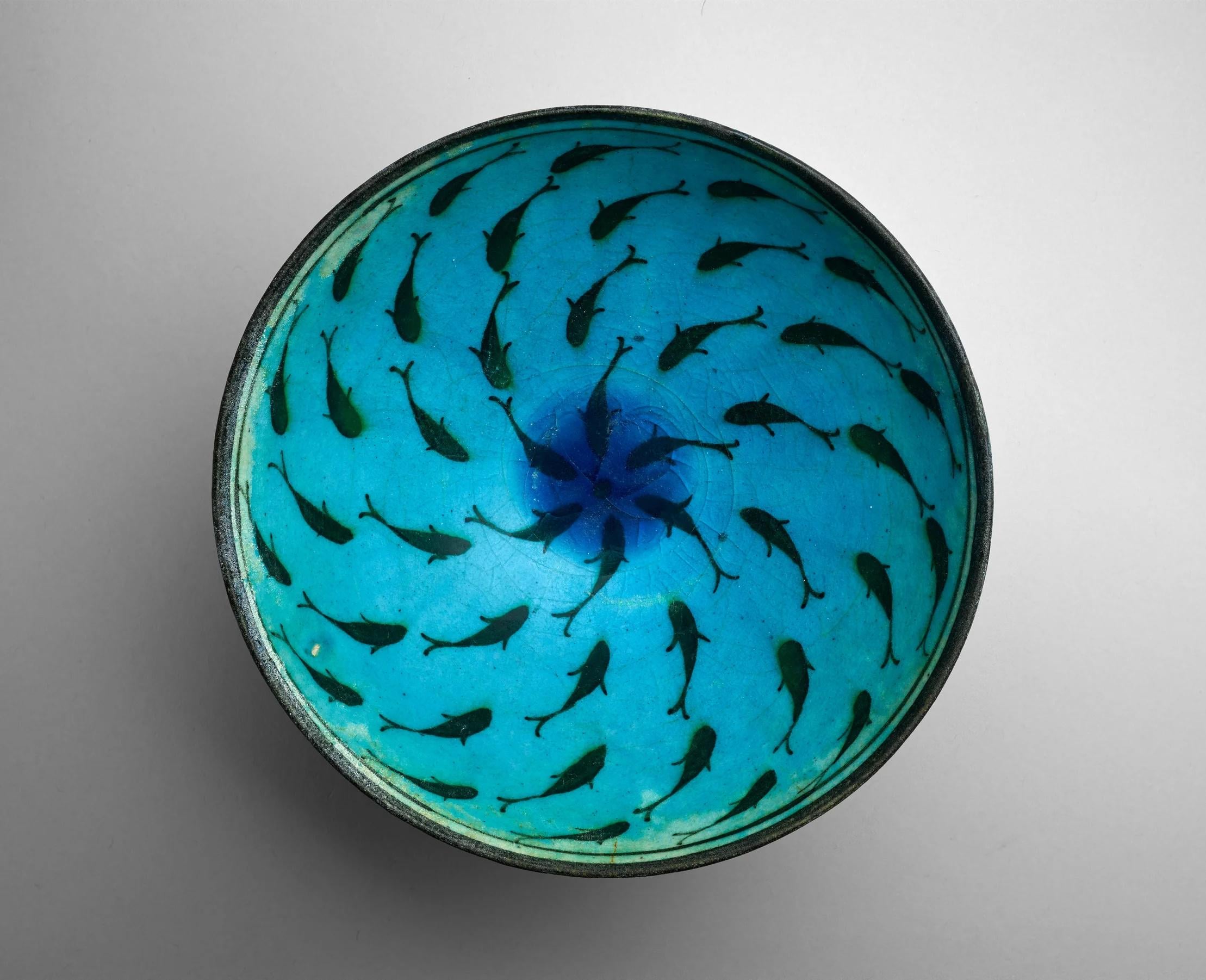
Bowl. Iran, Ilkhanid dynasty, late 13th-mid 14th c. Stonepaste; painted in black-under-turquoise glaze. Loaned to the Museum of Fine Arts, Houston [2218×1802]
by oldspice75

Bowl. Iran, Ilkhanid dynasty, late 13th-mid 14th c. Stonepaste; painted in black-under-turquoise glaze. Loaned to the Museum of Fine Arts, Houston [2218×1802]
by oldspice75
2 Comments
[image source](https://arthistory.rice.edu/hiaa-symposium-2023)
[display description, Museum of Fine Arts, Houston](https://i.ibb.co/vxvDts7N/20250117-115305-ed.jpg)
[Bowl
Ilkhanid Iran, late 13th-mid-14th century
Stonepaste; painted in black-under-turquoise glaze
The Hossein Afshar Collection at the Museum of Fine Arts, Houston
Brilliant blues like turquoise feature prominently on Islamic ceramics and architectural tilework. Fish swirl in a sea of turquoise glaze on this bowl, creating an illusion of water, an effect that would have intensified if the vessel was filled with liquid. Schools of fish are often found on metal and ceramic bowls in Islamic art. The meaning of this motif is mysterious, but it may allude to the notion of distant seas whose waters will bring fortune and wealth to the person who consumes from such vessels.]
god so stunning