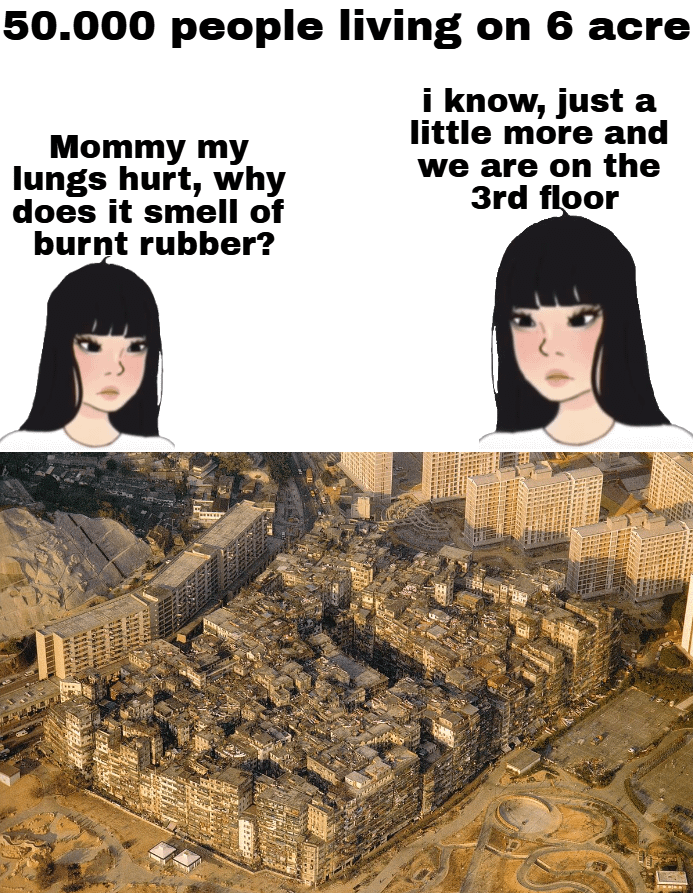
It’s 20 years since the demolition of Kowloon Walled City began, but former residents hold fond memories of the overcrowded slum they called home. It was called a lawless twilight zone by some and the world’s most overcrowded squat by others. A 6-7 acre enclave of opium parlors, whorehouses, and gambling dens run by triads, it was a place where police, health inspectors, and even tax collectors feared to tread. In Cantonese, it was known as the City of Darkness. But though it may have been a fetid slum, crawling with rats and dripping with sewage, it was stoutly defended to the last by those who lived there, as well as an unlikely ensemble of Chinese shopkeepers, faith healers, and self-taught dentists. It was once thought to be the most densely populated place on earth, with 50.000 people crammed into a few tiny apartment blocks and more than 300 interconnected high-rise buildings, all constructed without contributions from a single architect. The height of the Walled City rose with the rest of Hong Kong. In the 1950s, housing usually consisted of wooden and stone low-rises. In the ’60s, concrete buildings of four or five stories appeared. And in the ’70s, many were replaced by blocks of 10 stories or more. The site became chaotically cramped, with buildings so close to each other that in some it was impossible to open a window. Low rents also meant many small factories, with toys, plastic goods, and food among the biggest products. The factories may have brought their owners decent incomes, but they also brought more rubbish, fire hazards, and pollution to the city. Limited interference by the authorities also meant limited welfare. Apart from basic municipal services such as rubbish collection, residents had to rely on each other to maintain living conditions.
East_Professional385 on
Most cyberpunk building I’ve ever heard.
SteelAlchemistScylla on
It’s only horrible to people on the outside judging other people for their way of life. In interviews of people who lived here most remember it fondly for the sense of community, individual freedoms, and affordable cost of living.
There’s a reason people kept building up instead of, ya know, leaving.
BerserkForcesGuts on
All those ghost cities and yet they crammed them like that.

6 Comments
It’s 20 years since the demolition of Kowloon Walled City began, but former residents hold fond memories of the overcrowded slum they called home. It was called a lawless twilight zone by some and the world’s most overcrowded squat by others. A 6-7 acre enclave of opium parlors, whorehouses, and gambling dens run by triads, it was a place where police, health inspectors, and even tax collectors feared to tread. In Cantonese, it was known as the City of Darkness. But though it may have been a fetid slum, crawling with rats and dripping with sewage, it was stoutly defended to the last by those who lived there, as well as an unlikely ensemble of Chinese shopkeepers, faith healers, and self-taught dentists. It was once thought to be the most densely populated place on earth, with 50.000 people crammed into a few tiny apartment blocks and more than 300 interconnected high-rise buildings, all constructed without contributions from a single architect. The height of the Walled City rose with the rest of Hong Kong. In the 1950s, housing usually consisted of wooden and stone low-rises. In the ’60s, concrete buildings of four or five stories appeared. And in the ’70s, many were replaced by blocks of 10 stories or more. The site became chaotically cramped, with buildings so close to each other that in some it was impossible to open a window. Low rents also meant many small factories, with toys, plastic goods, and food among the biggest products. The factories may have brought their owners decent incomes, but they also brought more rubbish, fire hazards, and pollution to the city. Limited interference by the authorities also meant limited welfare. Apart from basic municipal services such as rubbish collection, residents had to rely on each other to maintain living conditions.
Most cyberpunk building I’ve ever heard.
It’s only horrible to people on the outside judging other people for their way of life. In interviews of people who lived here most remember it fondly for the sense of community, individual freedoms, and affordable cost of living.
There’s a reason people kept building up instead of, ya know, leaving.
All those ghost cities and yet they crammed them like that.
At least there are plenty of dentists.
Remember what they stole from you