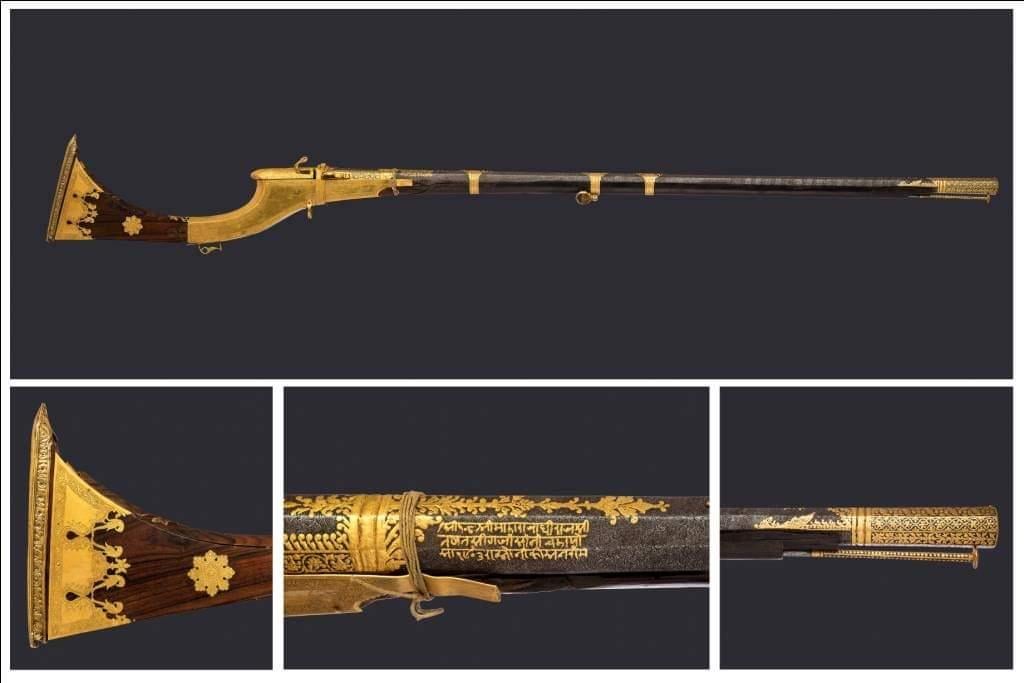
Jezail (Matchlock) rifle of Rajput Maharaja Takhat Singh. 19th century with gold damascene. On display at Mehrangarh Fort Museum, Jodhpur, India. [1024×683]
by Nice_Crew_449

Jezail (Matchlock) rifle of Rajput Maharaja Takhat Singh. 19th century with gold damascene. On display at Mehrangarh Fort Museum, Jodhpur, India. [1024×683]
by Nice_Crew_449
1 Comment
Jezail (Matchlock) of Maharaja Takhat Singh (r.1843-73) Sindh, Second quarter of the 19th century These distinctive shaped guns called jezail were a kind of matchlock made in Afghanistan and the adjacent region of Sindh.A Persian inscription on the barrel of this gun notes that it was owned by Mir Muhammad Khan of the Talpur dynasty of Sindh.In 1843, Sindh was annexed to British India and its armoury was dispersed.Many weapons found their way into different collections including this matchlock from the Mehrangarh Museum collection.
A second inscription observes that this magnificent gun belonged to Maharaja Takhat Singh of Jodhpur (r. 1843-73) and its gold damascening was polished in 1846 by goldsmith Kisan Ram.Rajput kings were often pictured in paintings and photographs with fine weapons as they were important markers of their martial strength, patronage and kingship. Picture Credits: Mehrangarh Museum Trust