
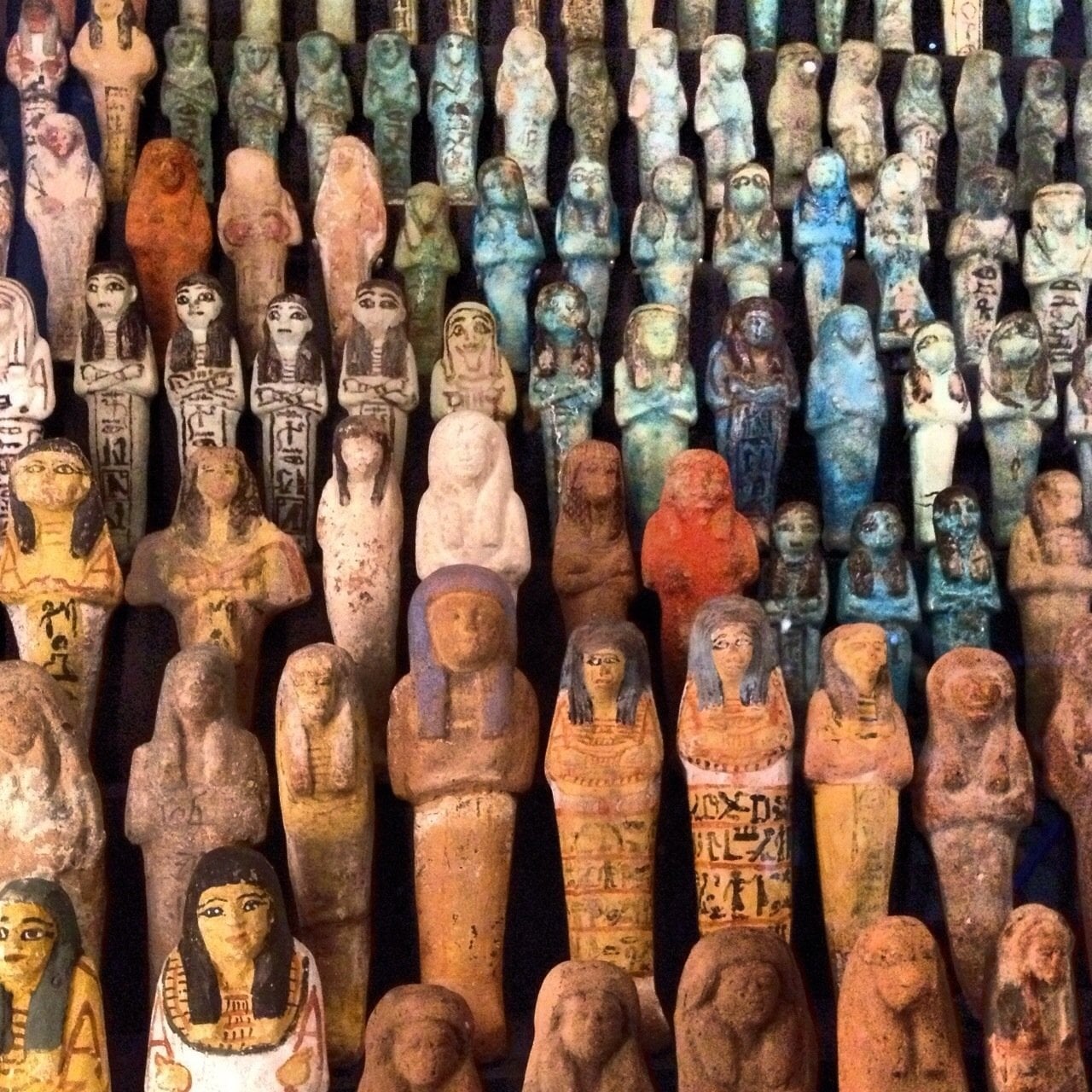
Shabtis were used by the Egyptians between c.1900 and 100 BC. They were figurines placed in tombs to represent the deceased, and were believed to ‘stand in’ for them should they be called to work in the afterlife. Manchester Museum [1280×1280]
by Remote_Finish_9429
4 Comments
Shabti figures usually take the shape of a wrapped mummy with tools that would be required for tasks in the afterlife. These tasks were described in the ‘shabti spell’ which was inscribed on the front of them. These tools were picks and hoes for the irrigation of crops with the waters from the Nile. Shabtis often carry baskets to help remove sand and soil from place to place.
The hieroglyphic inscription is a magical spell to activate the shabti figure. The full spell is Chapter 6 of the Book of the Dead, and refers to tasks which compliment the tools that these figures are typically depicted as holding.
Shabtis were among the first ‘tourist souvenirs’ from Egypt because they were small, colourful and were available in large numbers. many were donated to museums, where they provide a useful source of information and make attractive displays!
I got to get some of those. I have absolutely no intention of working even one single day past my death. If I’m dead, I am retired as far as I am concerned. That kind of thing should be abolished!! I am getting out my Budgie’s Book of the Dead right now and learning that spell in Chapter 6…I need all the shaptis I can get!
Kind of looks like a real housewives cast reunion. But still awesome to see how these have survived the decades.
I learned about these as an young lad by reading John Bellairs’s classic “The Curse of the Blue Figurine” (with the Edward Gorey illustrations) and every time I see them in a museum they still creep me out a little. 8-year-old me was pretty impressionable and easily freaked out.