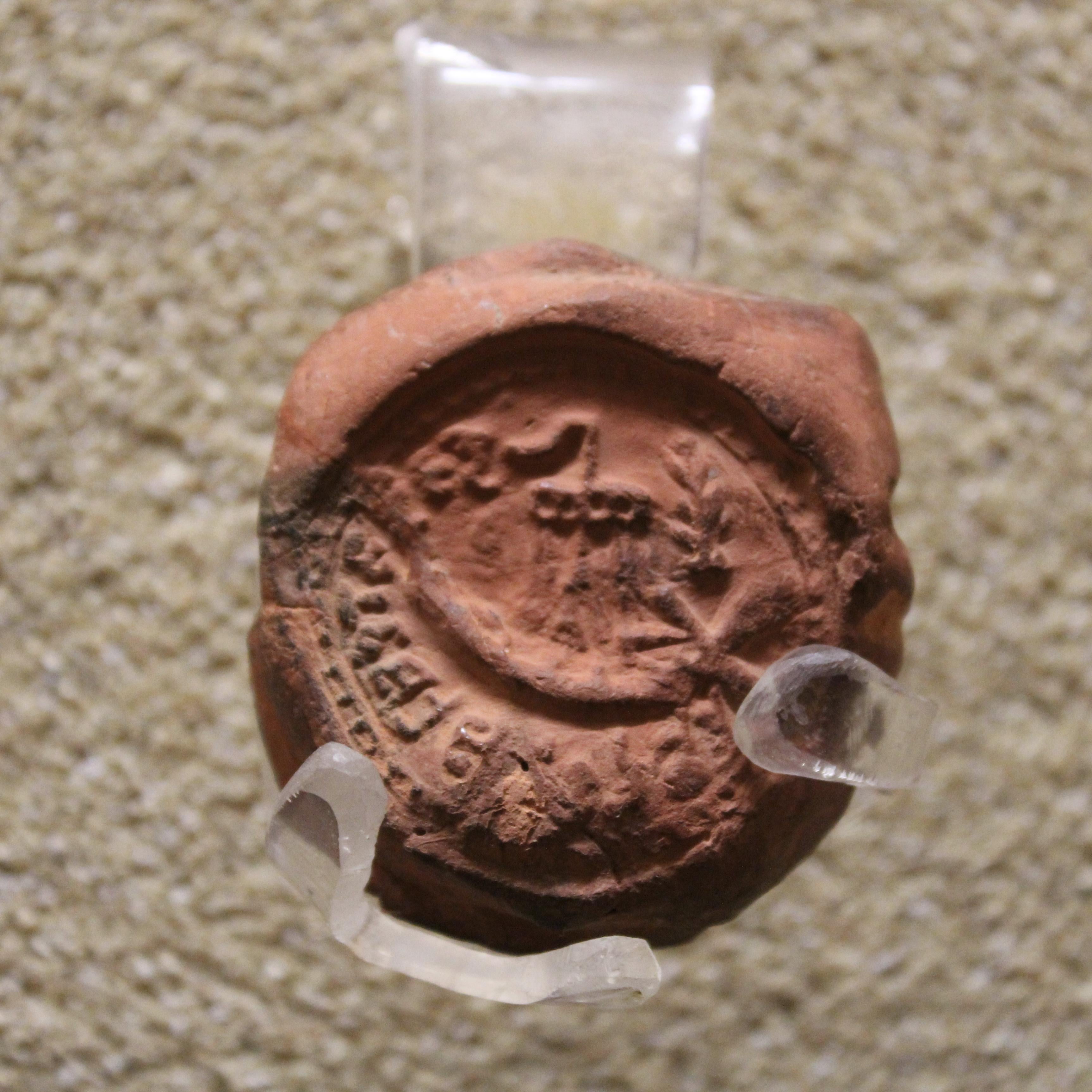
Terracotta seal showing a ship. 1st century BCE, Chandraketugarh – State Archaeological Museum- Kolkata, India.[3452×3452]
by Nice_Crew_449

Terracotta seal showing a ship. 1st century BCE, Chandraketugarh – State Archaeological Museum- Kolkata, India.[3452×3452]
by Nice_Crew_449
1 Comment
The excavations at Chandraketugarh, Bangarh and Hadipur in West Bengal have yielded Kharosthi inscriptions on
seals, plaques and pots. The terracotta seals from Bangarh and Chandraketugarh depict sea going vessels
containing corn flanked by symbols like conch and taurine.
Such vessel types are known as Sasyadidhrta Sthali, a
bowl shaped vessel filled with com. Another such vessel
has legend in Kharosthi-Brahmi script referring to Tridesayatra, meaning a voyage to three countries or
directions. Yet another seal from Chandraketugarh reveals a type of vessel called Trapyaka belonging to the wealth
earning Tasvadaja family. It may be noted that Trapyaka is
a type of ship mentioned also in the Periplus and the
Angavijja. The above vessel types as well as flanking
symbols recall the Satavahana ships. It appears that the
Kharosthi script was used by tradesmen settled in the lower Ganga valley of Bengal in good numbers during the third to first centuries B.C. and was mixed up with the Brahmi used by local merchants, developing a mixture type Kharosthi-Brahmi writing with North-western Prakrit
expressions (Sarma 1991).