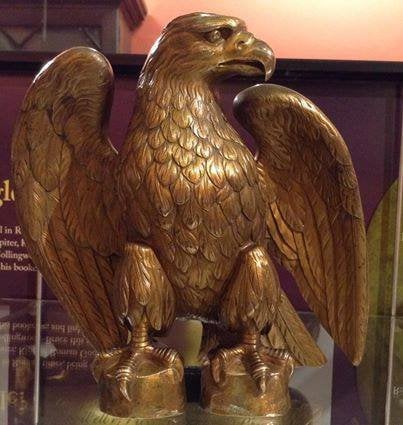
An eagle made of three thousand Roman coins, which were excavated in one of the forts on the line of the Hadrian’s Wall. [403×425]
by imperiumromanum_edu

An eagle made of three thousand Roman coins, which were excavated in one of the forts on the line of the Hadrian’s Wall. [403×425]
by imperiumromanum_edu
1 Comment
**In 1867, lead miners found a well in the Roman Fort of Carrawburgh (Northumberland, England). At the request of John Clayton, extensive excavations were organized, which brought 13,000 coins, 22 altars, vases, incense burners, pearls and Roman brooches from the bottom of the well, to the surface. These objects were sacrificed to the Roman-British goddess of wells and springs – Coventina.**
**Most of the coins were donated to the British Museum, but 3,000 of them were used to smelter and produce a bronze eagle. Clayton gave this object to his friend and antiquarian – John Collingwood-Bruce.**