any further information on find-place and archaeological context for this one?
Crann_Tara on
A“remarkable” Pictish ring has been discovered at a Moray fort which is believed to have been an elite centre of the north.
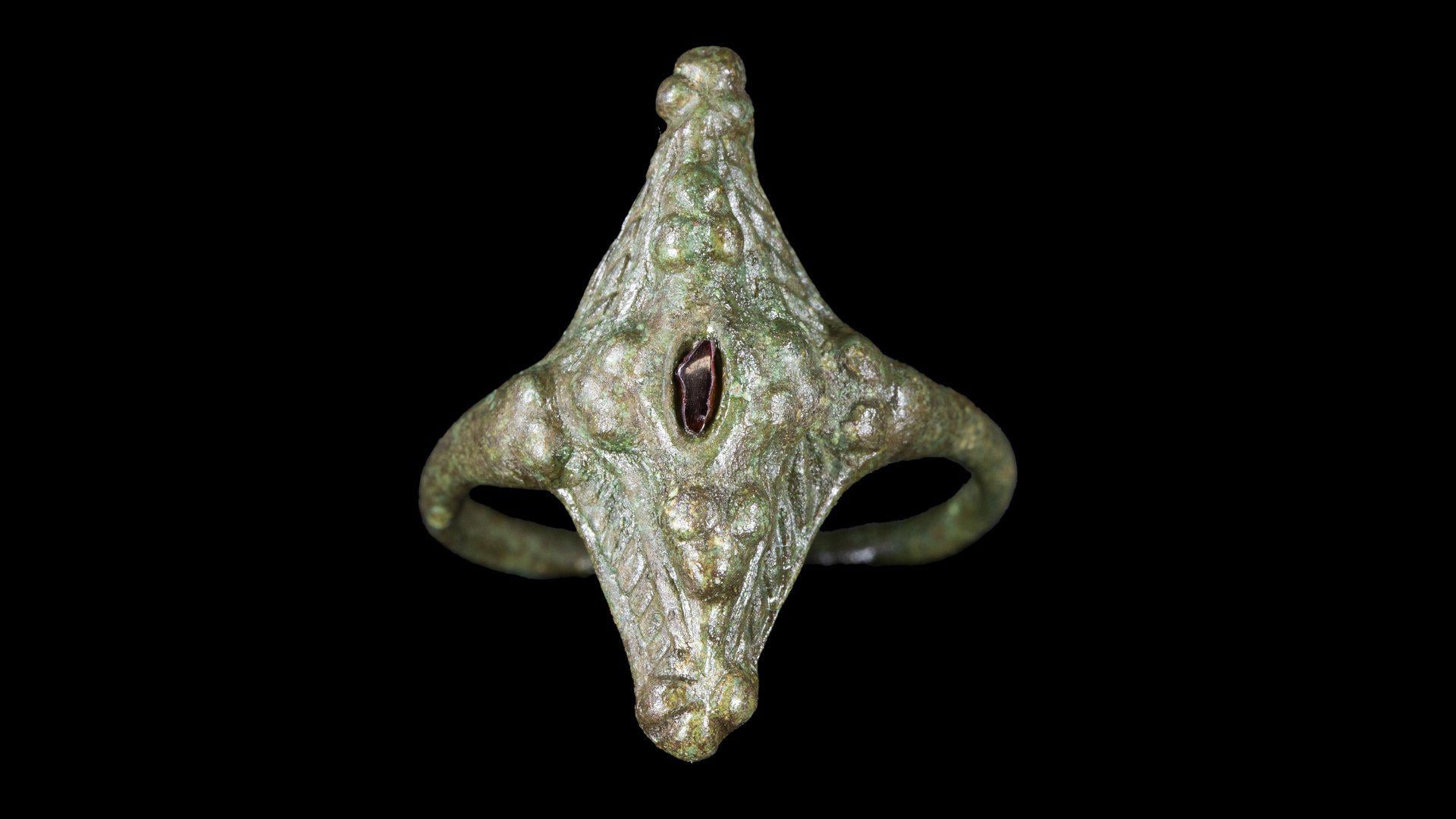
The beautiful piece of jewellery, which came out the ground almost complete, was last seen more than 1,000 years ago.
The kite-shaped ring with a garnet or red glass centre reflects the high-status nature of the fort that was home to a bustling settlement between the 6th and 10th centuries.
It was discovered by a volunteer taking part in an excavation at Burghhead, once a mighty highly-defended fort which was thought to have been “archaeologically vandalised” when large parts of the site were destroyed to make way for construction of the new town.
The ring was found by John Ralph on the excavation led by Aberdeen University where he studied 50 years ago.
Mr Ralph said: “It is a real thrill to dig up an artefact in the knowledge that you are probably the first person to see it for 1000-1500 years.“It becomes a real guessing game of who owned it, what did they use it for and how was it lost.”
Pictish leaders are likely to have gathered at Burghead while a significant population lived side-by-side with a fleet of vessels, possibly harboured in the shallow anchorage below.
Burghead was destroyed by fire around the same time as Viking’s were raiding the Moray coast.
In the 1800s, the site was further wrecked to make way for the new town with stone from the site used in the construction of the modern town and harbour seen today.
Excavations at Burghead have now revealed far more material from the Pictish period than was first believed to have survived.
Mr Ralph’s own ancestors were among those encouraged to relocate to the new town of Burghead to support the fishing industry.

2 Comments
any further information on find-place and archaeological context for this one?
A“remarkable” Pictish ring has been discovered at a Moray fort which is believed to have been an elite centre of the north.
The beautiful piece of jewellery, which came out the ground almost complete, was last seen more than 1,000 years ago.
The kite-shaped ring with a garnet or red glass centre reflects the high-status nature of the fort that was home to a bustling settlement between the 6th and 10th centuries.
It was discovered by a volunteer taking part in an excavation at Burghhead, once a mighty highly-defended fort which was thought to have been “archaeologically vandalised” when large parts of the site were destroyed to make way for construction of the new town.
The ring was found by John Ralph on the excavation led by Aberdeen University where he studied 50 years ago.
Mr Ralph said: “It is a real thrill to dig up an artefact in the knowledge that you are probably the first person to see it for 1000-1500 years.“It becomes a real guessing game of who owned it, what did they use it for and how was it lost.”
Pictish leaders are likely to have gathered at Burghead while a significant population lived side-by-side with a fleet of vessels, possibly harboured in the shallow anchorage below.
Burghead was destroyed by fire around the same time as Viking’s were raiding the Moray coast.
In the 1800s, the site was further wrecked to make way for the new town with stone from the site used in the construction of the modern town and harbour seen today.
Excavations at Burghead have now revealed far more material from the Pictish period than was first believed to have survived.
Mr Ralph’s own ancestors were among those encouraged to relocate to the new town of Burghead to support the fishing industry.
[https://www.scotsman.com/heritage-and-retro/heritage/the-remarkable-1000-year-old-pictish-ring-discovered-at-vandalised-scottish-fort-by-amateur-archaeologist-4766893](https://www.scotsman.com/heritage-and-retro/heritage/the-remarkable-1000-year-old-pictish-ring-discovered-at-vandalised-scottish-fort-by-amateur-archaeologist-4766893)