
After decades of authoritarian rule under General Antonio López de Santa Anna, Mexican liberals overthrew him and launched La Reforma, an effort to modernize the country. Its leading figure was Benito Juárez, a Zapotec who rose from poverty to the presidency in 1858. His reforms provoked fierce resistance from Mexico’s traditional elites, plunging the country into civil war.
At the same time, Mexican conservative exiles found support at the court of Napoleon III. France intervened in Mexico aiming to install a friendly regime.
In 1862, a French force marched inland and was unexpectedly defeated by smaller Mexican forces at Puebla on May 5. The victory became Cinco de Mayo, but it was only a pause. The following year, a much larger French army captured Puebla and Mexico City. Juárez fled, and with French backing, conservatives established a monarchy, inviting Archduke Maximilian of Austria and his wife, Charlotte of Belgium, to rule.
Charlotte, now Empress Carlota, was not a passive figure. Intelligent, deeply ambitious, and intensely idealistic, she believed in the imperial project with a conviction that often exceeded her husband’s. While Maximilian tried to balance liberal reform with political reality, Carlota threw herself into governance, acting as regent in his absence and pushing tirelessly to stabilize the regime.
But the empire was built on fragile ground: foreign guns, divided at home, and a determined republican resistance under Juárez. As French support wavered, especially after the American Civil War ended, Carlota took it upon herself to save the throne. In 1866, she sailed to Europe, personally appealing to Napoleon III and the Pope for aid.
She was refused at every turn.
What followed was a psychological collapse as dramatic as the empire’s fall. Increasingly paranoid and convinced she was being poisoned, Carlota unraveled in public, pleading, ranting, and refusing to eat or drink. She never returned to Mexico.
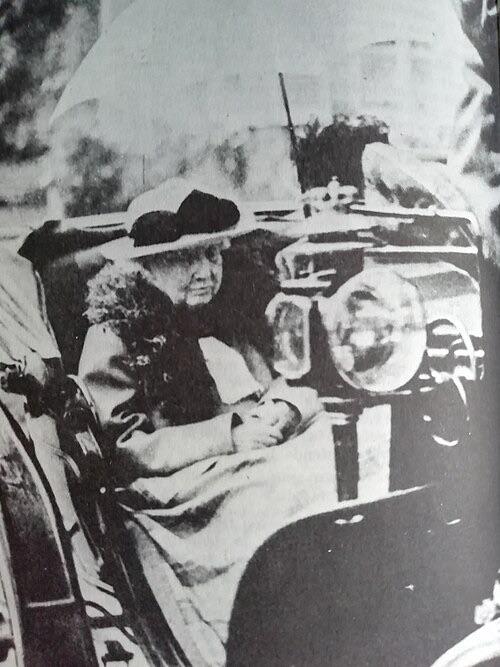
After Maximilian was captured and executed in 1867, Carlota lived on, but in isolation. For nearly sixty years, she remained in seclusion in Belgium, her mind fractured. Visitors described long silences punctuated by frantic, disjointed conversations with unseen interlocutors, slipping between languages and fragments of memory. At times she was calm, even lucid; at others, consumed by agitation, destroying objects, lashing out, or reliving the past in obsessive loops.
She died in 1927 at the age of 86,
If you’re interested the story of the Second Mexican Empire, I cover it here: \\\[https://open.substack.com/pub/aid2000/p/hare-brained-history-vol-91-cinco?r=4mmzre&utm\\\\\\\\\\\\\\\_medium=ios\\\\\\\](https://open.substack.com/pub/aid2000/p/hare-brained-history-vol-91-cinco?r=4mmzre&utm\\\\\\\_medium=ios)
by aid2000iscool