
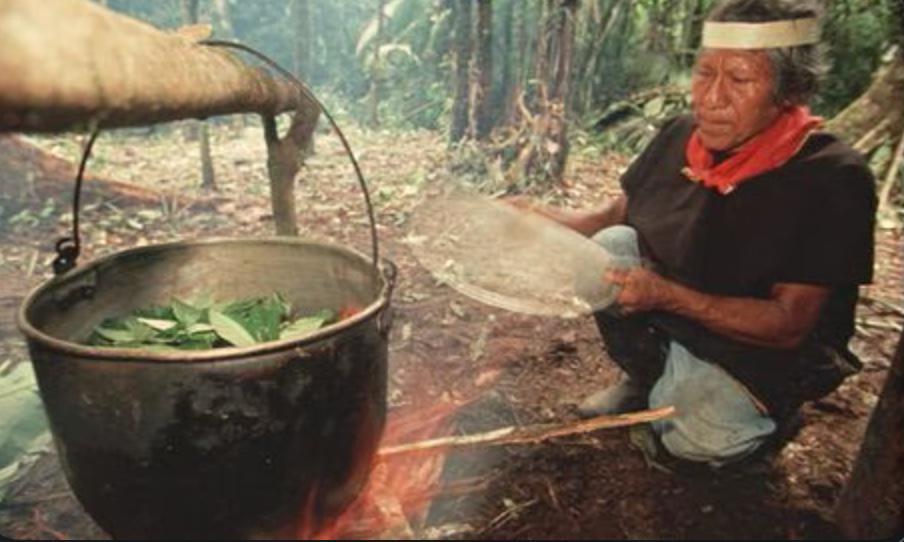
Amazonian shamans figured out that combining two specific plants out of 80,000 species produces a psychoactive effect. The odds of finding that combination by random search is roughly 1 in 4 million. They did it through centuries of iterative testing and cultural natural selection explains it
by tractorboynyc
37 Comments
I think you underestimate the time course we are talking about here. With enough time and curiosity (or boredom) things can be discovered.
Also: needs citation.
Or the plants told them how to do it.
How many people died through trial and error?
Ayahuasca, a drug I want to try
Never underestimate man’s desire to get fucked up.
The yopo from the Yanimango
The OG Shulgin
never thought of this really mathmatically
I heard they saw jaguars eating those two things. There’s a cool video of it
I always like to think what the first person who figured it out felt like. Like maybe they were just hungry trying to cook some kind of soup, next minute they are in a different dimension like wtf just happened.
If it can make you high, humans will find a way to smoke it
i wonder if there was a designated guy in the village they tested stuff on like “hey jerry try our weird new goop batch we just cooked up”
I mean there were a good amount of people there for a good amount of time. I can see the coincidence being plausible. Only takes one guy trying out a new tea combo to realize there are extra dimensional beings
With plenty of “free time” for sure they would be able to find something worth
The elves told them which ones to use
Did they stop there? What if there’s something even better? The sky’s the limit! At least until you discover something that gets you even higher!
Except both are individually active are they not? It’s just that the combined effect is far greater than each in their own.
That’s a far simpler problem.
Hey you! Come taste this
They also could watch local wildlife using it
e.g. in south america, jaguars chew roots with psychedelic effects to get buzzed
Or it wasnt so random theres lots of animals in our world that use plants or other animals to get high like in the Amazon Jaguars that chew the bark and roots of specific plants to get high.
AFAIK this is complete folklore, you can make Aya thousands of different ways much like beer. You don’t need those exact two plants. You can find DMT in many sources and you can find maoi inhibitors in many sources. Different cultures just swap in what’s locally available. Eg in desert regions it’s acacia seeds and Syrian rue.
Even within the Amazon basin different plants are used giving different “flavors”. Over time, tribes have gone back to the best pairings with the highest concentrations.
Shout out to Amazonian shamans… took centuries for them to find out how to get us high as fuck. Legends.
so, what are those 2 plants?
# They did it through centuries of iterative testing and cultural natural selection plus they had nothing better to do.
Weird argument for me, are all 80k species stuff they regularly eat and mix? Also nature is not a vacuum, they probably saw some birds or other animals fucked up and tried to understand what they are etc, I don’t think this is particularly crazy
“They did it through centuries of iterative testing and cultural natural selection explains it”
Odd I could have sworn when asked they tell you that the plants themselves told them how to make it. But sure, you tell yourself that.
Imagine how many discoveries were lost between colonization and the church wiping out local knowledge.
Absolute life-changing medicine. Although when I did ayahuasca in the Peruvian jungle with the shaman, there were more than 2 ingredients.
https://preview.redd.it/thehncanooug1.jpeg?width=3024&format=pjpg&auto=webp&s=c811e3c42409966cfd90148cc1ff7c0c3d89076f
Are we sharing the recipe?
Asking for a friend.
Didn’t they simply observe wildlife tripping balls and followed them?
The fuck else they have to do?
Way more than 2 plants
Ok. Which ones? so I can avoid them.
The part that most people miss is that the MAO inhibitor plant, likely would have been known to make certain other plant medicines stronger. So it was only a matter of time that someone tried the ayahuasca plant with the “other plant that makes things stronger”
Isn’t the probability (1/80000 * 1/79999)/2 so 1 in 3.199.960.000?
It’s always mind blowing to me how indigenous tribes made all their discoveries when the only ones I know are from the grocery store.
Don’t worry, AI would have found it in a fraction of the time they did. And yes AI already did it, and then antibiotic candidate AI found is called Halicin. AI screened over 100 million molecules in 3 days and found it.