
On Easter Sunday, 1478, a conspiracy backed by Pope Sixtus IV sought to break the Medici grip on Florence.
The Medici had risen from relative obscurity, outmaneuvering older families like the Pazzi through banking, politics, and patronage. By the 1470s, they had run the Republic for decades
During Easter Mass inside the Cathedral of Santa Maria del Fiore, under Brunelleschi’s dome, Francesco de’ Pazzi and Bernardo Baroncelli attacked 24-year-old Giuliano de’ Medici. They stabbed him to death, Pazzi so frenzied that he stabbed himself in the process.
Near the altar, two priests went to Lorenzo, 29, the head of the family. He twisted at the last second, and the blade only grazed his neck.
Baroncelli moved to finish the job, but Lorenzo’s friend Francesco Nori stepped in and took the fatal blow.
At the same time, across the city, Archbishop Francesco Salviati tried to seize the Palazzo della Signoria with mercenaries. He failed, partly nerves, partly bad luck (his men got stuck behind a door that only opened from the outside).
The alarm bells rang. Crowds filled the Piazza.
Jacopo de’ Pazzi rode in with armed men shouting “Popolo e libertà!”The people and freedom.”
The people weren’t buying it. The Medici were still popular. Loyalists moved fast. Salviati’s mercenaries were killed. Rumors spread that Lorenzo was dead until he appeared on a balcony at the Palazzo Medici, pale, neck bandaged, but alive.
The crowd roared. He told them: The Pazzi had struck. The state would handle it, and citizens should return home and remain calm.
Florence did not calm down. It exploded.
Mobs armed themselves and went hunting.
Francesco de’ Pazzi was dragged from his bed, naked and wounded, hauled through the streets, and hanged from the Palazzo della Signoria.
Salviati followed.
Anyone tied to the Pazzi was hunted down, around 80 killed. Lorenzo made it permanent: the conspirators were painted hanging in public, disgraced forever. Botticelli did the work.
Jacopo de’ Pazzi fled, was captured, tortured, and hanged. His body was dragged through the streets, thrown in the Arno, pulled out, abused, and thrown back again.
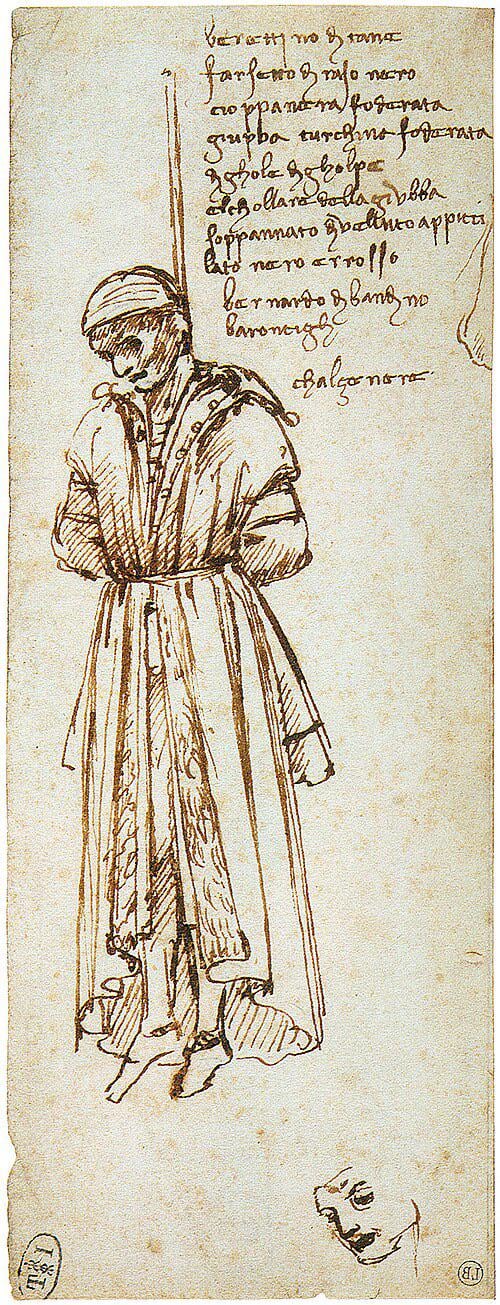
Baroncelli made it the farthest, escaping to Constantinople. Lorenzo had him tracked down, extradited by the Ottoman Sultan, and executed. His likeness was painted too, this time by a young Leonardo da Vinci.
Lorenzo ruled Florence until his death. His second-born son, Giuliano, became Pope Leo X. Giuliano’s son, Giuliano, became Pope Clement VII. If interested, I explore the conspiracy and Renaissance Florence here: https://open.substack.com/pub/aid2000/p/hare-brained-history-vol-82-the-pazzi?r=4mmzre&utm\_medium=ios
by aid2000iscool