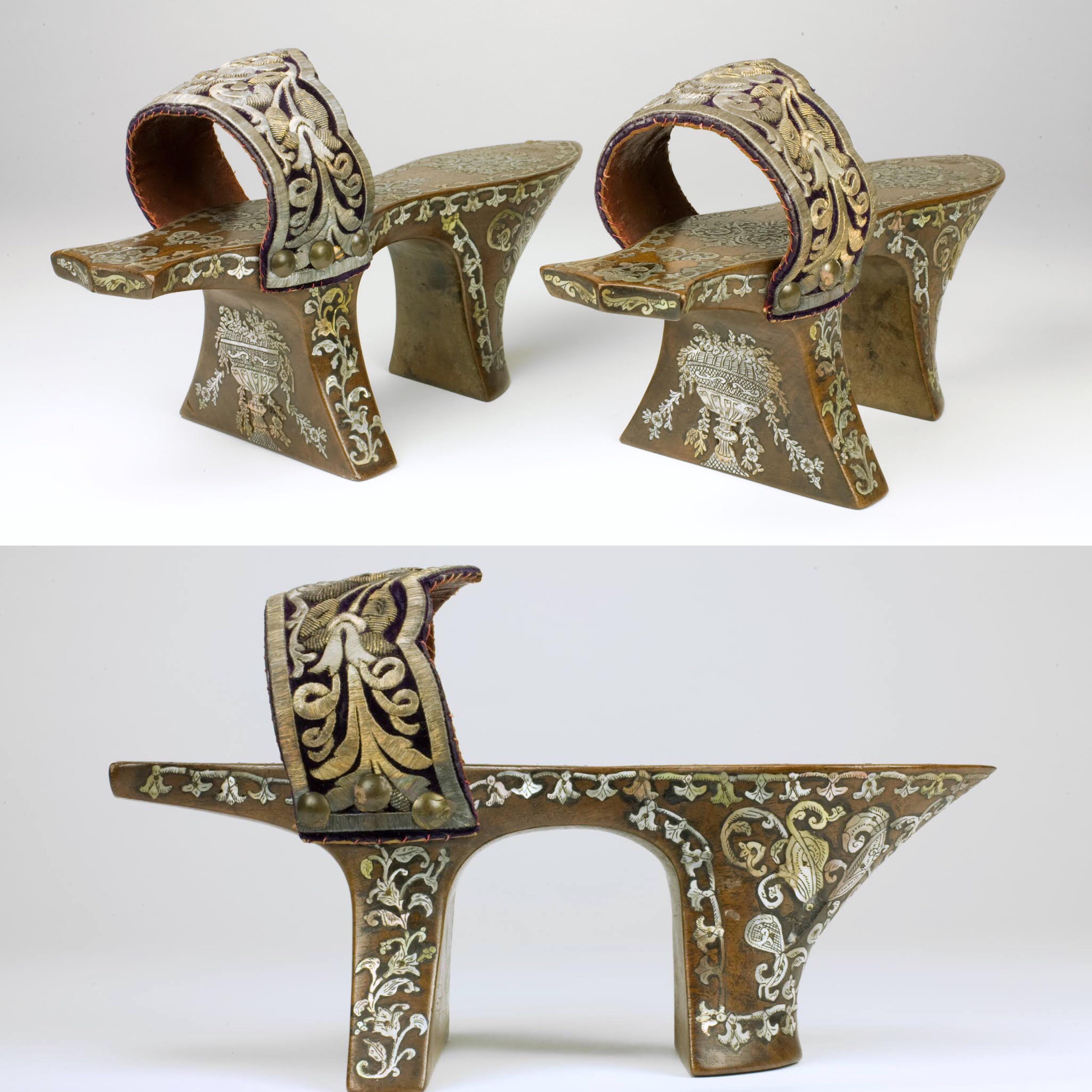
Turkish bath clogs, also known as nalın or Qabâqib, 19th century. This pair is highly decorated with intricate inlaid silver, mother-of-pearl, and velvet straps. This is a very ornate pair potentially made for brides. [4319 x 4319]
by Saint-Veronicas-Veil

1 Comment
Nineteenth century Ottoman bathhouse clogs called nalin. Nalin from Turkey tend to be lower in height than other Ottoman examples such as those from Syria which can reach heights of 26 cm. Turkish nalin are also more frequently decorated with elaborate silver inlay. This pair has exceptionally fine inlay and may have been made for use by a bride.
Qabâqib are typically made out of wood and were traditionally worn in hammams or Turkish bathouses to elevate the wearer’s feet above the heated floors. Nalin, the Turkish word for qabâqib, were descendants of the wooden sculponea worn to bathhouses in ancient Rome and under Roman rule their use spread across the Maghreb and Near East where they were transformed into part of the female wardrobe.
Ottoman Turkish brides traditionally bathed at the hammam or Turkish bath before their weddings. The accoutrements required for the hammam included Turkish towels, a bowl for pouring water, and a pair of nalin. For weddings, wealthy brides were frequently gifted with elaborately decorated nalin similar to this pair.
From [Bata Shoe Museum](https://astepintothebatashoemuseum.blogspot.com/2020/09/from-vault-nalin-shoes.html?m=1)