
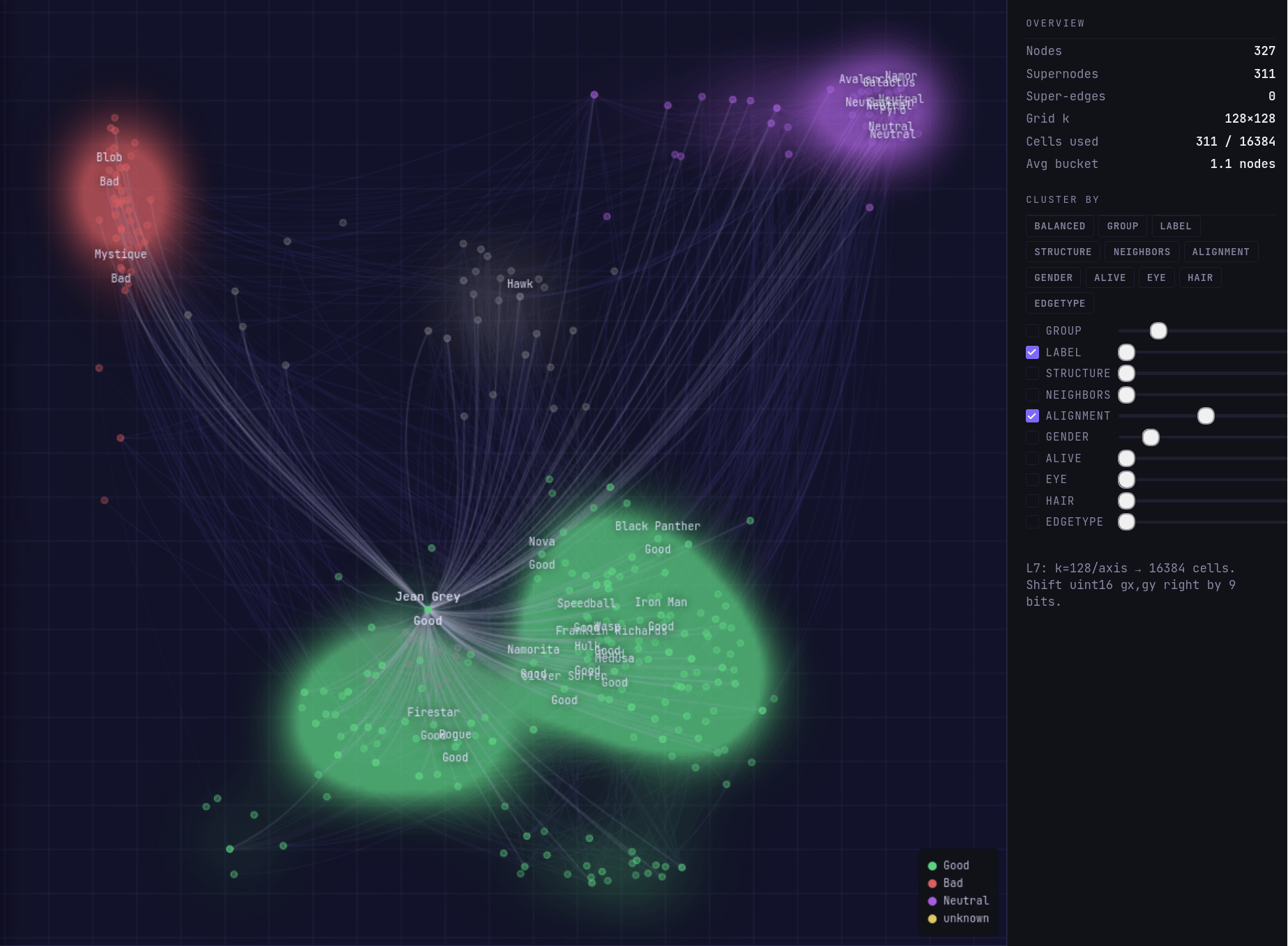
Heroes and villains separate cleanly into distinct regions. The large green "good" cluster contains the heroes. The selected node, Jean Grey, on the border of the good cluster connects to almost all clusters, for example Mystique in the upper left bad cluster. Neutral and unknown characters scatter between the two.
Data
Marvel Comics co-appearance network (327 characters, 9,891 edges) from Melanie Walsh's social network datasets, enriched with alignment, gender, eye/hair color, alive/dead status, appearances, and first year from FiveThirtyEight's comic character dataset. 204 characters matched automatically; 123 matched manually.
Combined data files: marvel.edges, marvel.nodes.
How to read it
Each dot is a character. Position is based on property similarity — characters with similar traits end up near each other. Color = alignment. Size = number of co-appearances. The layout is weighted on alignment with light topology influence so connected characters pull slightly toward each other.
Tool
BitZoom (open source). Uses MinHash fingerprints for deterministic property-similarity layout.
Interactive version where you can adjust weights and explore.
by kattresa
1 Comment
I’ve been fascinated with nodes-and-edges for pointcrawl creation, but this is the first use I’ve seen of them for analysis. Fun little toy!