With the conclusion of the battle of Hanoi and the failed final negotiation between Ho Chi Minh and Paul Mus in April 1947, the French launched Opération Léa, the never-turning-back battle that would launch the Indochina Wars definitively.
Gathered in the ATK (‘Safe Zone’) were the government, military, and institutions, which had already been partially evacuated in late 1946 and completely by 1947. The French offensive was to eliminate the provisional capital and therefore to dissolve this government and all armed resistance. The Capital Regiment of the famed Year 2 romances of the battle of Hanoi, will once more be the advanced guard of the new mobilized regiments to oppose the French. Already started by mistakenly identifying a provincial city as the provisional capital, the French operation would end in failure.
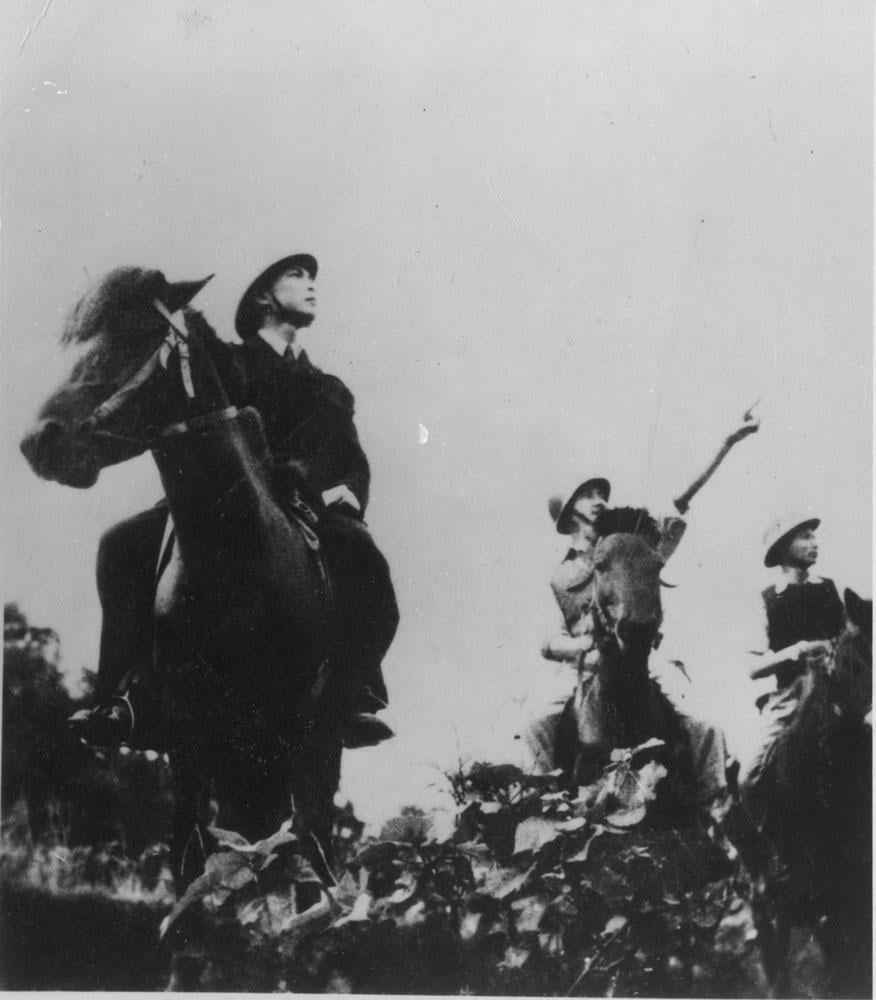
After being assigned to the Defence Ministry the previous year, Giap was also made the Commander-in-Chief of the National Army and Militia of Vietnam (Tổng tư lệnh Quân đội Quốc gia và Dân quân Việt Nam). He was technically still a civilian minister-in-charge with no military rank and thus not ‘General’ Giáp yet, and it was after the successful defence of this campaign that he would officially receive his General commission. Another interesting fact is that this post had only one holder, Giap himself, throughout its entire existence, and it was dissolved in 1976 after the end of the 2nd Indochina War.

1 Comment
With the conclusion of the battle of Hanoi and the failed final negotiation between Ho Chi Minh and Paul Mus in April 1947, the French launched Opération Léa, the never-turning-back battle that would launch the Indochina Wars definitively.
Gathered in the ATK (‘Safe Zone’) were the government, military, and institutions, which had already been partially evacuated in late 1946 and completely by 1947. The French offensive was to eliminate the provisional capital and therefore to dissolve this government and all armed resistance. The Capital Regiment of the famed Year 2 romances of the battle of Hanoi, will once more be the advanced guard of the new mobilized regiments to oppose the French. Already started by mistakenly identifying a provincial city as the provisional capital, the French operation would end in failure.
After being assigned to the Defence Ministry the previous year, Giap was also made the Commander-in-Chief of the National Army and Militia of Vietnam (Tổng tư lệnh Quân đội Quốc gia và Dân quân Việt Nam). He was technically still a civilian minister-in-charge with no military rank and thus not ‘General’ Giáp yet, and it was after the successful defence of this campaign that he would officially receive his General commission. Another interesting fact is that this post had only one holder, Giap himself, throughout its entire existence, and it was dissolved in 1976 after the end of the 2nd Indochina War.