
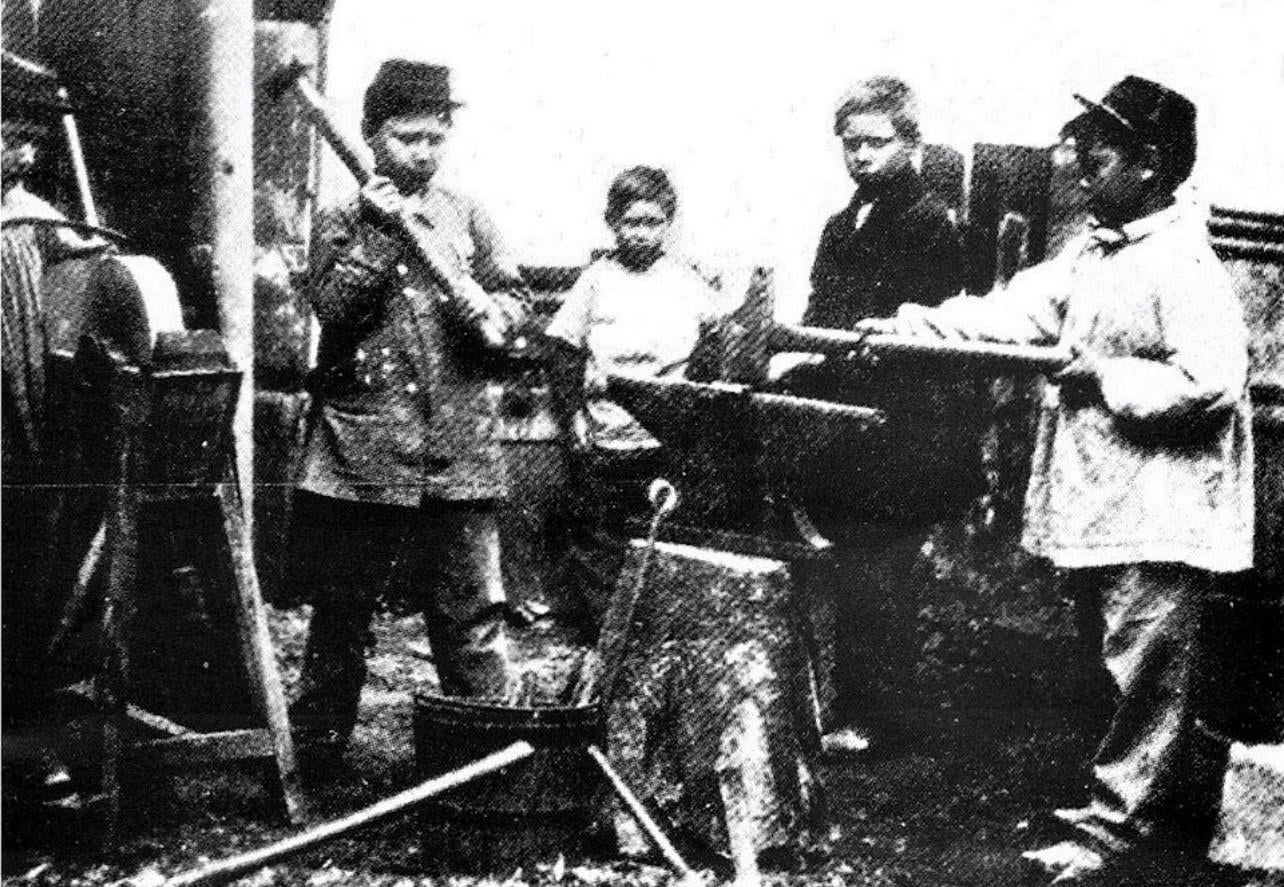
By 1869, Paris had around two million people, with hundreds of thousands working as laborers in construction, metalwork, and factories like textiles and printing. Their lives were defined by brutal conditions: 12–16 hour days, six days a week, for wages that barely covered basic food like bread and potatoes. Even small price increases could push families into crisis.
Child labor was still widespread despite earlier laws, and workplace safety was virtually nonexistent. Injuries were common, and there was no real system of compensation. Workers also had little ability to organize, unions were restricted, and strikes were often suppressed, leaving most families in constant economic insecurity.
Housing conditions were just as harsh. Many lived in overcrowded tenements with poor sanitation, limited clean water, and entire families packed into single rooms. Disease and poverty were a constant presence in working-class neighborhoods.
After the collapse of the Second French Empire in the Franco-Prussian War and months of siege, these conditions helped fuel support for radical change called for by disparate groups of revolutionaries. In 1871, Parisians rose up and established the Paris Commune, which introduced reforms like separating church and state, suspending rent and conscription, and promoting local self-governance.
If you’re interested, I cover this period of Parisian history here: https://open.substack.com/pub/aid2000/p/hare-brained-history-vol-77-the-paris?r=4mmzre&utm\_medium=ios
by aid2000iscool
4 Comments
Not a cellphone in sight. Just people living in the moment.
I see job creation, valuable work experience, and the kind of go-getterness that makes a nation and her people strong.
Cool hats
Are you sure this isn’t current day Arkansas or Florida?