
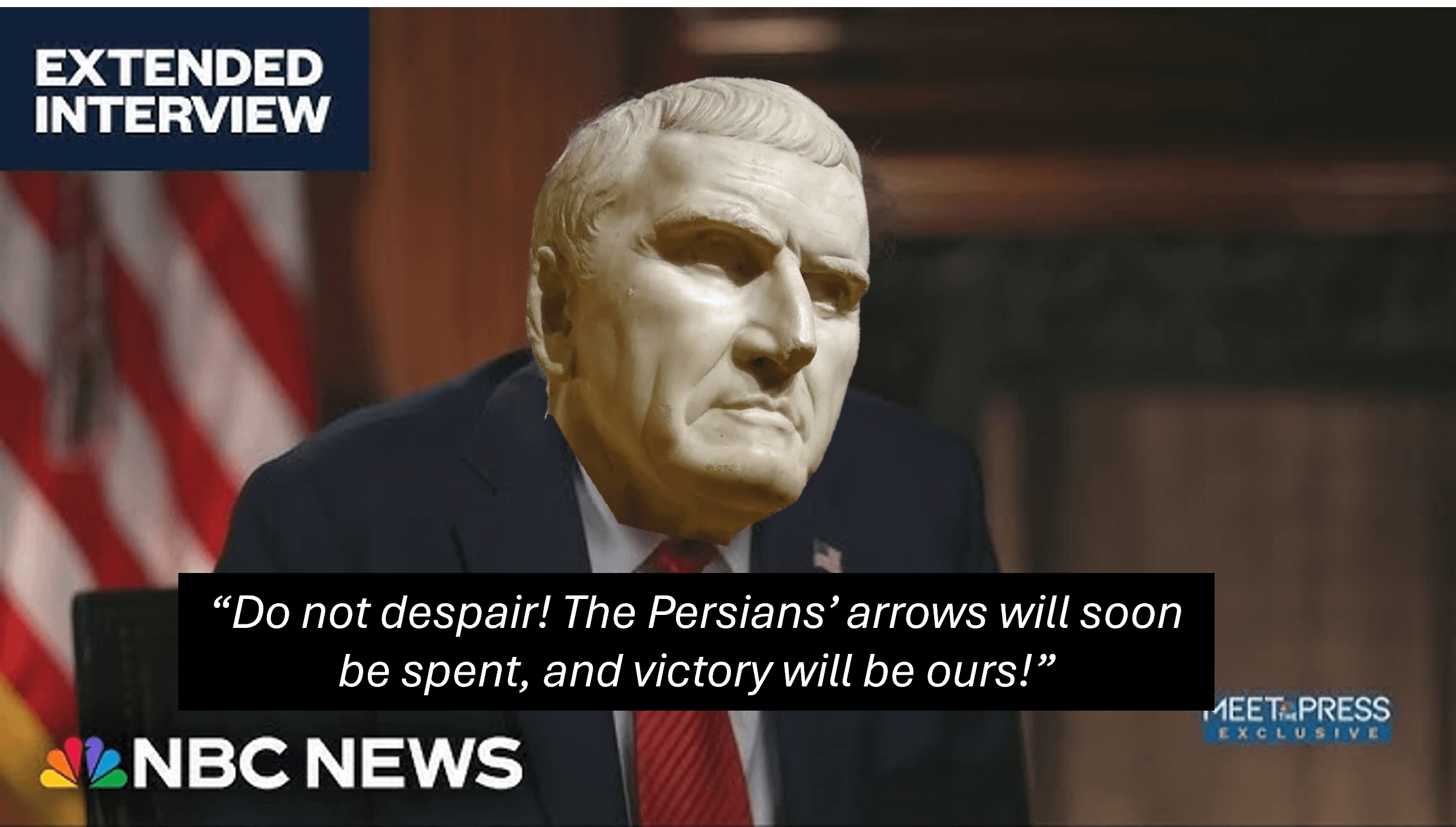
In 53 B.C., Seven Roman legions under Marcus Licinius Crassus were drawn into desert terrain and decisively defeated by Parthian forces led by General Surena. The Parthians’ combination of heavy cataphracts and mobile horse archers outmaneuvered the slow Roman infantry, which had no effective response on open ground. Surrounded and worn down by constant attacks, the Roman formations collapsed.
With over 40,000 legionaries deployed, the Roman army suffered casualty rates exceeding 50% against a Parthian force of roughly 10,000. The scale of the losses made the battle one of the most devastating defeats in Roman history.
by initiatingcoverage
10 Comments
I’m starting to think there might be a connection between Persia and Iran.
Well, he definitely had a thirst for wealth… right up until the very end
I really get why Jack Rackham History Abridged portrayed him with a purple aura of evil like a Disney villain.
It’s totally unreasonable to compare Crassus to Trump. Crassus was a hereditary aristocrat who thought his great wealth meant he would never suffer any consequences. He also had a marked inferiority complex that caused him to punch down, and dwell on delusions of military genius. He then embarked on an idiotic and disastrous war in the east despite not having the approval of the senate.
BUT he did not wear ties or colour his skin and hair orange. So not Trump. THANK YOU FOR YOUR ATTENTION TO THIS MATTER.
lmao is “regime change” analogy here just transformed Parthia Empire to Sasanian Empire
I would posit it’s been far too long since we’ve seen a political leader drink molten gold.
A strategy straight out of Zapp Brannigan’s Big Book of War.
history might not repeat itself but it sure, love to rhyme.
Well you see, the Persians have a pre-set kill limit, so I sent wave after wave of legionaries at them
Crassus really looked at an army designed for open-field maneuver warfare and thought ‘what if we just… slowly walk at them in a square?