
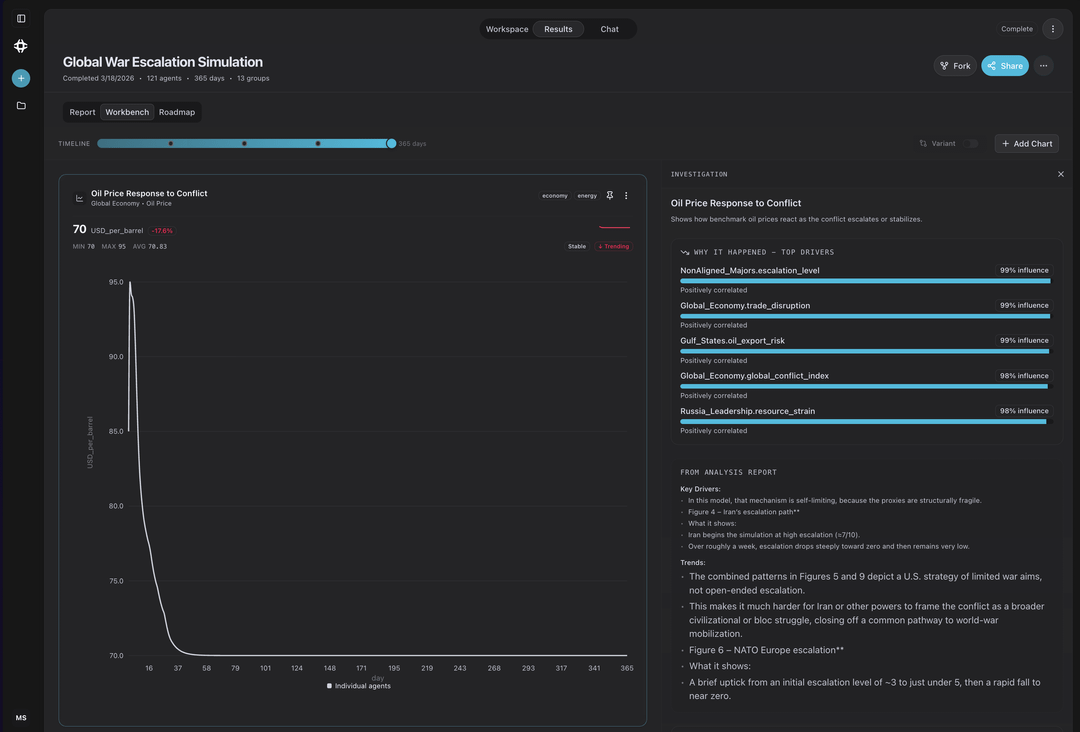
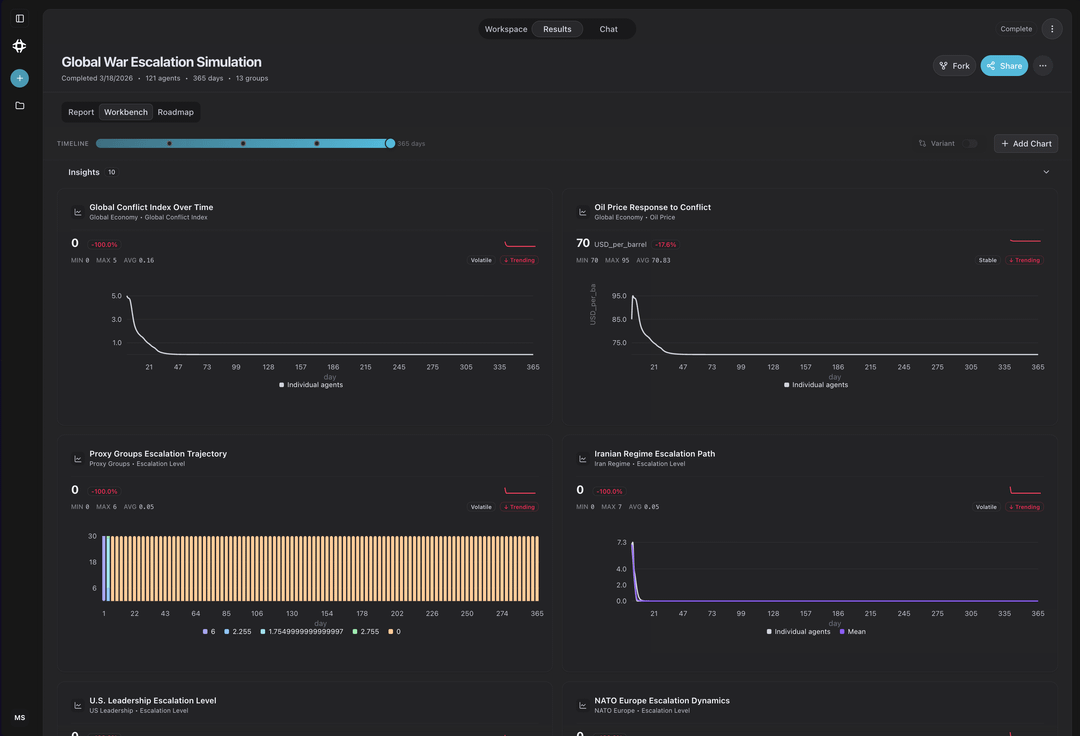
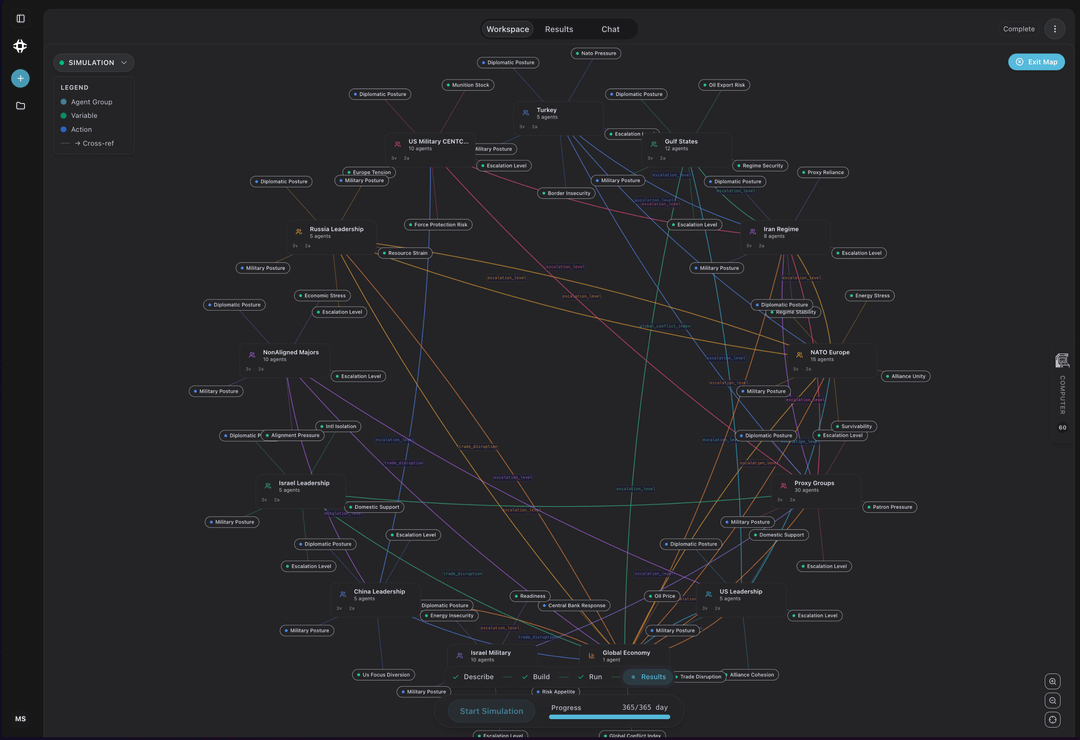
I ran a multi-agent simulation of a global war-escalation scenario with 121 agents across 13 groups over 365 days.
The main thing this run surfaced was an early oil shock followed by stabilization, alongside a rapid decline in the overall conflict index after the initial escalation period.
I included the main chart, a broader results view, and one look at the underlying world map / agent structure. This is simulated data, not a real-world forecast — more of a sandbox for exploring how interacting incentives and pressures can produce system-level outcomes over time.
Happy to share assumptions, setup, and limitations in the comments.
EDIT: Source is from a simulation platform I built, which is the tool and data provider/holder
by HugeUnderstanding680
6 Comments
What assumptions is your model making that leads to a “rapid decline in the overall conflict index”?
This isn’t data. This is a prediction.
A simulation for this is almost totally useless. There’s far too many variables and many of which can seem totally random. No matter how many AI agents you use, it wont help much.
Error bar could be orders of magnitude off.
What data is this based off of? The most recent conflict that we can compare current prices to is the Russian invasion of Ukraine, which saw oil prices rise over 5 months to hit the max to $121 in July 2022 from around $80 in February 2022.
This shows prices decreasing after 3 weeks of conflict, while we are in the third week and prices are still rising. To me this just shows the data being used is fundamentally flawed, especially considering there are maintenance delays that need to be taken into account, as even if the war ends today, it would take months for supply to return to pre-war levels.
This isn’t data, you asked a ai chatbot to predict the future.
My masters degree is in International Conflict Resolution. I wrote a thesis, did deep analysis of conflict models. Researched what causes conflicts, what resolves conflicts, and why countries and actors fall into conflict cycles and escilation. I’m now a divorce mediator, but still have close ties to the theory behind international conflict.
I share all that to ask a pretty simple question – where is your lit review? Are you using a Coleman attractors model here? What variables are you plugging in for each actors decision making matrix? Where are you getting that data from? Who’s conflict mapping technique are you leaning on?
This is a phenomenally complex and complicated undertaking. It’s not without value. Good job giving it a go. But without knowing the underlying theories of change here it’s hard to know if this has any real merit to it.