So, Algeria — a North African nation — today speaks a mixture of local dialects of Arabic and also French. Arabic makes some sense considering thousands of Arabs settled there millennia ago, but French? Why French?
Well, it turns out France used to consider Algeria a colony. Not just a colony, but as integral a part of the nation as California is the United States. So when, in 1954, Algerian nationalists decided they’d exhausted all legal options to gain social and political equality and had to resort to violent Revolution, France responded with particularly harsh measures.
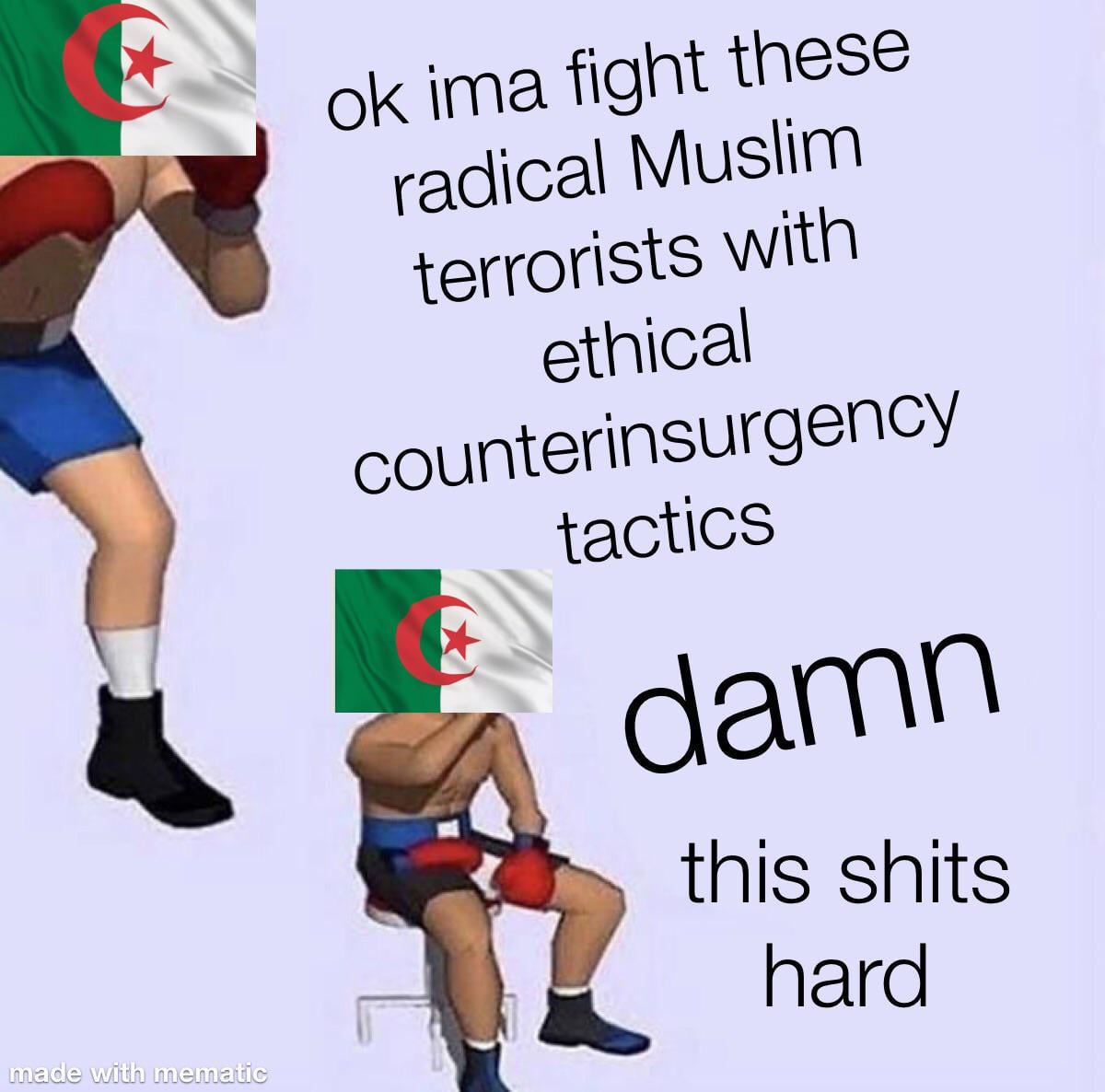
Counter-Insurgency tactics! But don’t worry, nothing illegal. These are French citizens after all. Unfortunately the reality on the ground was rampant torture, kidnappings, massacres, summary execution, coerced confessions and tons of rape. It was all for naught in the end of course. Algerians decided they wanted nothing more to do with being French and France conceded their point in 1962 with the Evian Accords.
Jump forward a few decades to 1990 and we see an independent, but struggling, Algeria trying to increase the standards of living for its citizens while also dealing with the fallout from an economy based solely around oil sales after a crash in oil prices.
The Algerian government — still run by the FLN (front de liberacion national) the group that led Algeria to independence in 1962 — finally relents to protesters angry over the stagnant economy, the lack of opportunity and the same people running things as before and offers to hold free elections!
Great! Right?
Well, kinda. There’s an old Terry Pratchett quote that I’m going to butcher here,that goes something like, “sometimes you hear the voice of the people, and it snarls.“ This perfectly describes the situation in Algeria in 1989. The voice of the people spoke and chose groups like the FIS (front islamique du salut) which wanted to break the monopoly the FLN had on national politics but also wanted to claw back what small rights Algerian women had managed to gain from their menfolk and institute Sharia.
For reasons, both ignoble and somewhat noble the Algerian government refused to legitimate the elections that the FIS won. They cancelled them. And began a crack down on these supposed subversive terrorists. With the ballot box denied to them the FIS — along with a host of others jihadi groups — waged war against the Algerian state. And the Algerian government responded much like its French predecessor had when it came to counterinsurgency. They tortured, they raped, they kidnapped, they imprisoned falsely, they coerced testimony or confessions, they slaughtered thousands of both suspected and real terrorists in the name of preserving their power. The conflict came to an end in 2002 and the Algerian state won but it was a brutal conflict that’s shredded trust in society and is now shrouded in silence or deliberate amnesia on the part of the government.
To be clear, I don’t think there’s really any good guys in the story. Both the Algerian government and the terrorists seeking to topple it soiled whatever noble motives they had with the blood of their country men many times over. And, as always, the Algerian people suffered the most.
Sent from my iPhone
TheHistoryMaster2520 on
Ruling party FRELIMO during the Mozambican Civil War (1977-1992) when rebel group RENAMO uses the same tactics against them that they used against the Portuguese during the Mozambican War of Independence (1964-1974)
DazSamueru on
Many Muslims clerics at the time of the Algerian war for independence had actually denounced the revolutionaries for being too secular.

3 Comments
So, Algeria — a North African nation — today speaks a mixture of local dialects of Arabic and also French. Arabic makes some sense considering thousands of Arabs settled there millennia ago, but French? Why French?
Well, it turns out France used to consider Algeria a colony. Not just a colony, but as integral a part of the nation as California is the United States. So when, in 1954, Algerian nationalists decided they’d exhausted all legal options to gain social and political equality and had to resort to violent Revolution, France responded with particularly harsh measures.
Counter-Insurgency tactics! But don’t worry, nothing illegal. These are French citizens after all. Unfortunately the reality on the ground was rampant torture, kidnappings, massacres, summary execution, coerced confessions and tons of rape. It was all for naught in the end of course. Algerians decided they wanted nothing more to do with being French and France conceded their point in 1962 with the Evian Accords.
Jump forward a few decades to 1990 and we see an independent, but struggling, Algeria trying to increase the standards of living for its citizens while also dealing with the fallout from an economy based solely around oil sales after a crash in oil prices.
The Algerian government — still run by the FLN (front de liberacion national) the group that led Algeria to independence in 1962 — finally relents to protesters angry over the stagnant economy, the lack of opportunity and the same people running things as before and offers to hold free elections!
Great! Right?
Well, kinda. There’s an old Terry Pratchett quote that I’m going to butcher here,that goes something like, “sometimes you hear the voice of the people, and it snarls.“ This perfectly describes the situation in Algeria in 1989. The voice of the people spoke and chose groups like the FIS (front islamique du salut) which wanted to break the monopoly the FLN had on national politics but also wanted to claw back what small rights Algerian women had managed to gain from their menfolk and institute Sharia.
For reasons, both ignoble and somewhat noble the Algerian government refused to legitimate the elections that the FIS won. They cancelled them. And began a crack down on these supposed subversive terrorists. With the ballot box denied to them the FIS — along with a host of others jihadi groups — waged war against the Algerian state. And the Algerian government responded much like its French predecessor had when it came to counterinsurgency. They tortured, they raped, they kidnapped, they imprisoned falsely, they coerced testimony or confessions, they slaughtered thousands of both suspected and real terrorists in the name of preserving their power. The conflict came to an end in 2002 and the Algerian state won but it was a brutal conflict that’s shredded trust in society and is now shrouded in silence or deliberate amnesia on the part of the government.
To be clear, I don’t think there’s really any good guys in the story. Both the Algerian government and the terrorists seeking to topple it soiled whatever noble motives they had with the blood of their country men many times over. And, as always, the Algerian people suffered the most.
Sent from my iPhone
Ruling party FRELIMO during the Mozambican Civil War (1977-1992) when rebel group RENAMO uses the same tactics against them that they used against the Portuguese during the Mozambican War of Independence (1964-1974)
Many Muslims clerics at the time of the Algerian war for independence had actually denounced the revolutionaries for being too secular.