
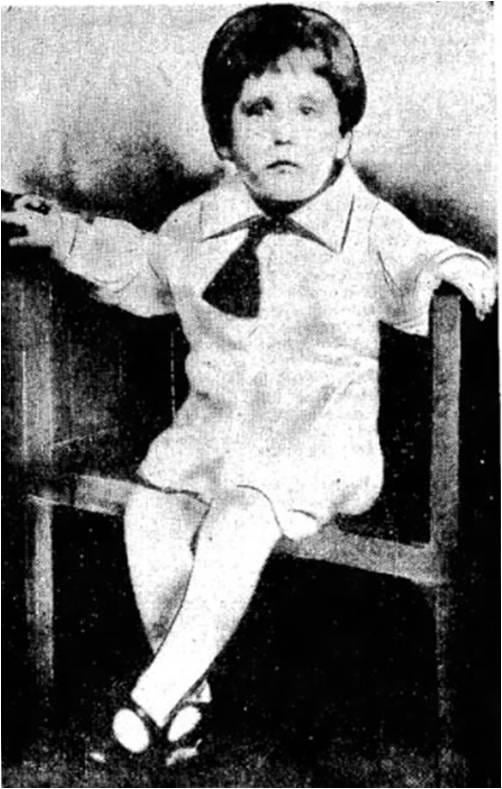
On March 8, 1921, an employee of the O’Laughlin Stone Company discovered the body of a young boy floating in a quarry pond in Waukesha.
The child, estimated to be between five and seven years old, had blond hair and brown eyes. He was well dressed, but every clothing label had been deliberately cut out, suggesting someone had tried to prevent the items from being traced.
The press dubbed the unidentified child “Little Lord Fauntleroy,” after the character from the novel Little Lord Fauntleroy. Because of his fine clothing, investigators assumed he came from a well-off family and would soon be identified. He never was.
An autopsy found very little water in his lungs and a blunt-force wound to the top of his head, suggesting he had been killed before being placed in the pond.
In 1949, a medical examiner in Milwaukee proposed that the boy might have been Homer Lemay, a six-year-old who disappeared around the same time. Homer’s father claimed he had left the boy with friends in Chicago who later took him to Argentina, where he supposedly died in a car accident. Investigators found no evidence of the family, the accident, or any record of such a death.
The examiner urged that the boy be exhumed to test the theory, but local officials decided to let the child rest in peace. At the time, forensic testing was limited, and there were no known relatives to compare against anyway.
More than a century later, the child known as Little Lord Fauntleroy remains unidentified.
If interested, I wrote more about the case here: https://open.substack.com/pub/aid2000/p/hare-brained-history-volume-73-the?r=4mmzre&utm\_medium=ios
by aid2000iscool