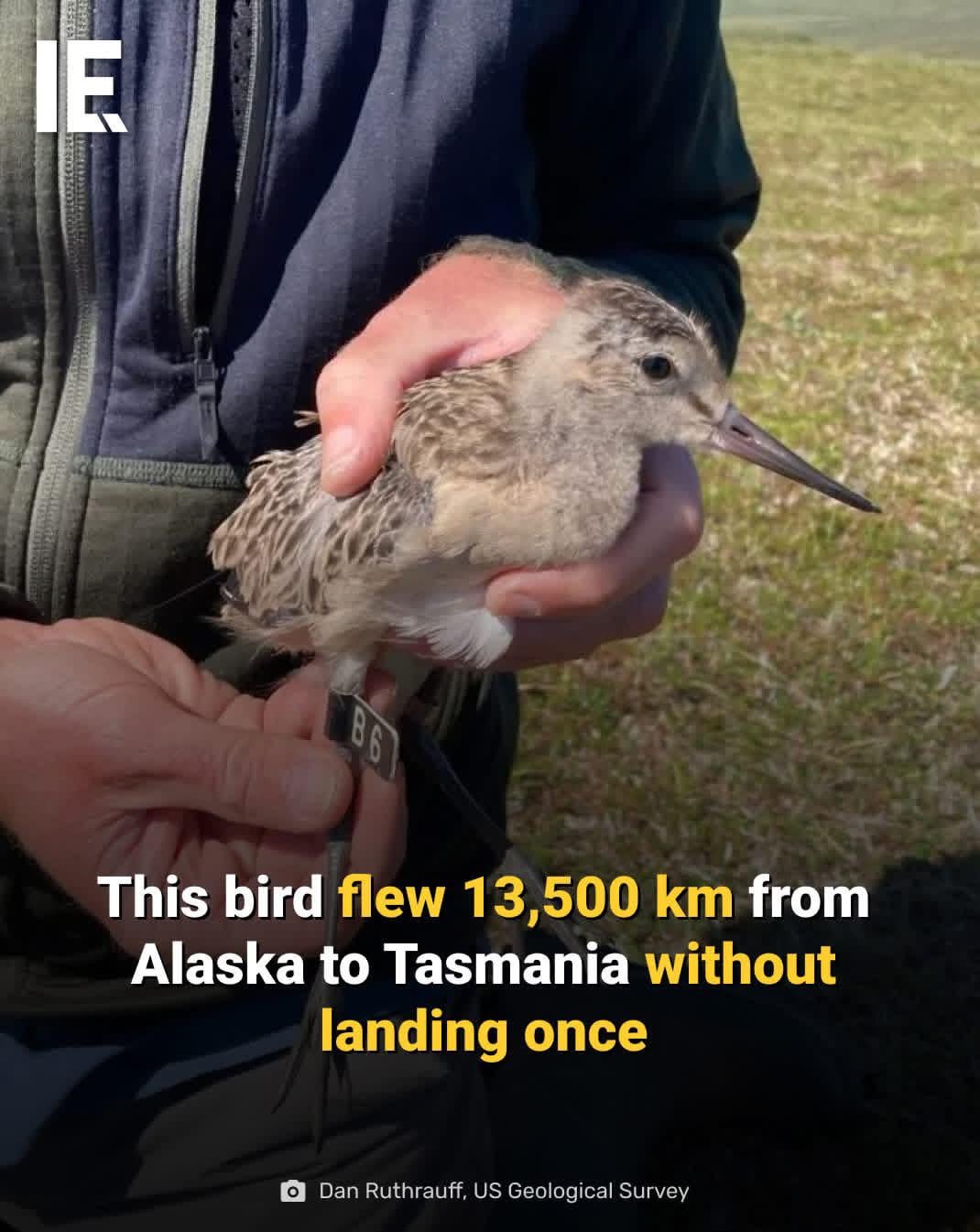
To power the journey, a satellite-tagged bar-tailed godwit builds massive fat reserves before departure and even shrink some internal organs during flight to reduce weight and energy use,an extreme adaptation for long distance migration across the Pacific.
by Low-Psychology-288

24 Comments
13,500 km without a break is wild
How does that bird stay in the air for over 13,000 kms??
Really?? WOW !
Birds are insane
Wait, so they don’t even land in the ocean to rest? I always assumed that was part of the migration.
Boy and my arms are tired

crazy
it hated alaska that much?
“Shrink some internal organs during flight to reduce weight” sorry but that requires quite an explanation, anyone?
So the pic of the bird is pre-flight?
What do they do once they arrive? Just collapse for a while and take some time to properly refuel?
Something something coconuts
and boy are my arms tired
Were just gaming birds anything
So what, we can do the same thing. It only requires a $100M dollar machine and thousands of dollars worth of fossil fuels. /s
When you can’t be around your family for one more minute.
That’s ~8400 miles for ignorant Americans, like myself
Key Facts About the Record Flight:
Distance: Over 13,500 km (approx. 8,400 miles).
Time: 11 days, 1 hour (non-stop).
Species: Bar-tailed Godwit (Limosa lapponica).
Route: From Alaska to Ansons Bay, Tasmania, Australia.
Adaptations: To prepare, godwits build massive fat reserves and can shrink their internal organs (gizzards, kidneys, liver) to reduce weight.
Physiological Cost: They likely lost half their body weight during the journey.
I Just Felt Like Flyyiinnggguuhh


: an albatross enters chat :
So do they have a loooong sleep once they arrive? How often do such birds need an actual sleep period?
That is so incredible, it’s hard to believe…
So how did they discover Tasmania? Did one of them one day just go “fuck it imma fly that way for a couple of weeks”?
And some blokes go on about walking 500 miles… 🎶