
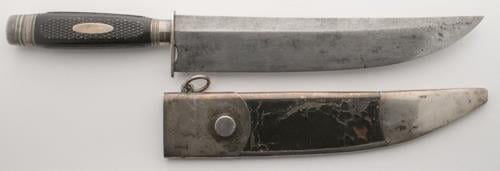
Born in 1796 in Kentucky, James Bowie made his name in Louisiana as a land speculator and slave trader before achieving notoriety at the Sandbar Fight, what began as a formal duel spiraled into a savage melee. Shot and stabbed, Bowie managed to kill the sheriff of Rapides Parish with his massive knife. In 1830, his brother designed the large blade that would become known as the Bowie knife.
That same year, Bowie moved to Mexican Texas. Like many American emigrants to Tejas, he renounced his U.S. citizenship and became a Mexican citizen. He spoke fluent Spanish and married into a prominent Mexican family; his wife and their two children died in a cholera epidemic in 1833. By the time revolution came, Bowie was a man of reputation with little left to lose.
In early 1836, Sam Houston sent him to dismantle the defenses at The Alamo, but Bowie was persuaded of the mission’s strategic value and chose to stay. He wrote to the provisional governor that he and Colonel Neill had resolved to “rather die in these ditches than give it up to the enemy.” The Alamo’s volunteers elected Bowie their commander, an honor he celebrated with a drunken spree in San Antonio, before agreeing to share command with Lt. Col. William B. Travis.
When the Mexican Army laid siege, Bowie fell gravely ill and was confined to bed, though accounts say he tried repeatedly to rise and fight. He is said to have died defending his position during the final assault.
The knife shown here, held in the Alamo’s museum collection, features an ebony handle with silver fixtures and checkered grip inlaid with silver inserts. The scabbard is silver-mounted with black leather.
If you’re interested, I go deeper into the Alamo here: https://open.substack.com/pub/aid2000/p/hare-brained-history-volume-72-the?r=4mmzre&utm\_medium=ios
by aid2000iscool