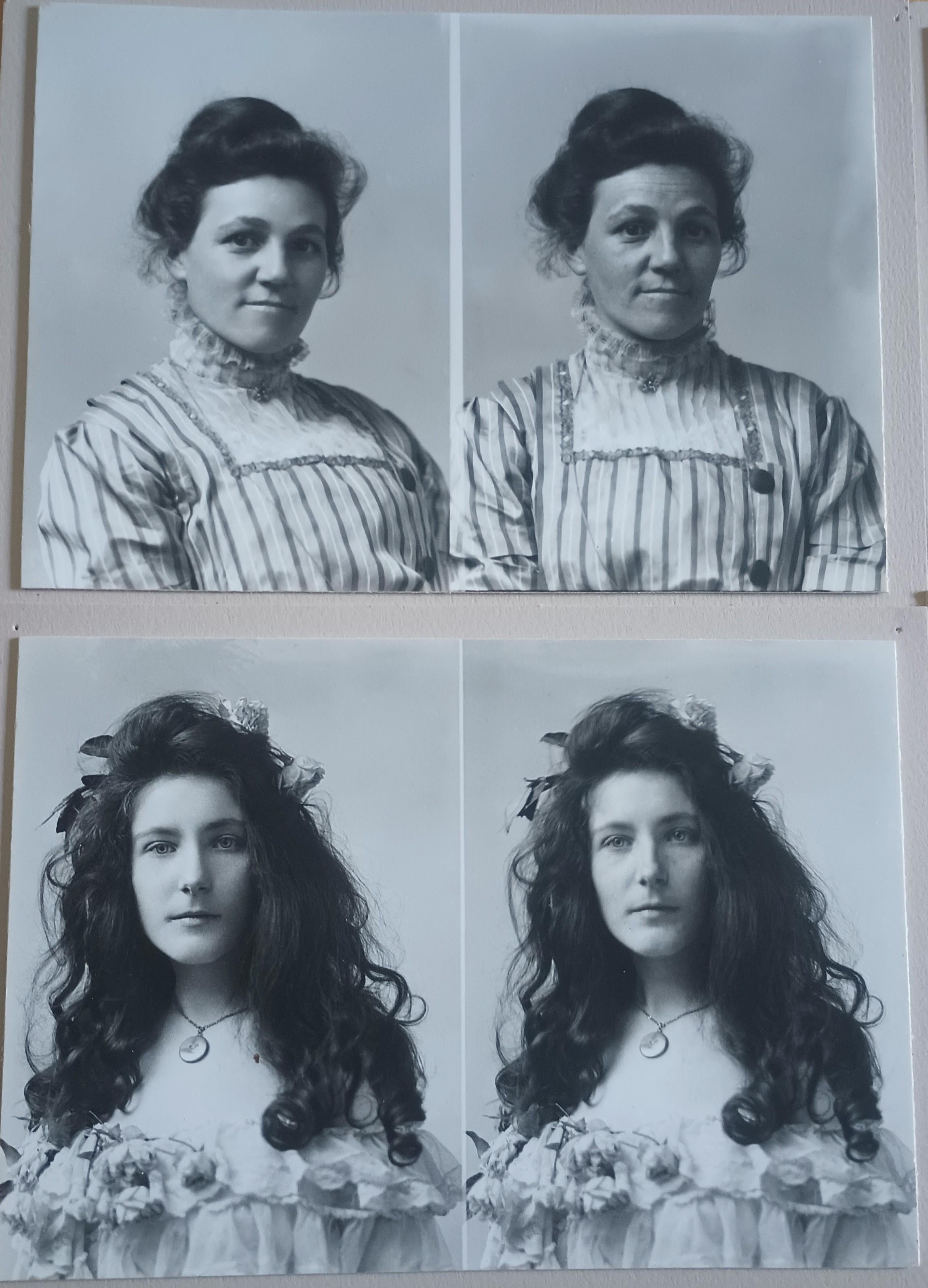
I have many of these photos from a museum. My last post got removed, idk why.
Pkittens on
What were these touch ups
[deleted] on
[deleted]
imyourdackelberry on
Is the left the touch up or the right??
RogueAngel87 on
But how did they do the touch ups? By hand with like paint?
Diligent-Candy4273 on
I thought the top was the before and the bottom was the after
haltiamreptaar on
Just like modern before and afters, the photos on the right are also shot in less flattering lighting and from a worse angle than the touched up ones, which helps the touched up ones look even better.
tivvelo on
And how did they do that?
cone5000 on
Ooh I wonder if the bottom photo is of a trans woman? Would be really cool to have a pic of a trans woman from so long ago.
uncertaincucumbers on
Some of these originals are very strange. The pupils, skin texture and especially the appearance of the children. I definitely realize that photography was new back then as were touch ups but I just can’t explain some of the details. Very weird
__Cmason__ on
Bottom right kind of looks like Paul Rudd.
mozebyc on
Filters used to be paper you put over a lens
TrynaCuddlePuppies on
My mom has a photo of my grandma where if you look from the side you can see the texture of the paint they used on her lips and eyes to for touch ups. Pretty neat.
PiingThiing on
You just know they sounded like Barbara Windsor and Patsy Palmer respectively.
TxDuster on
My step mother (now 86) grew up in a family with an uncle that had a portrait studio. Her mother was the person that did all the touch ups. This would have been in the 30’s -50s
saurdaux on
These look less like touch-ups and more like retakes. The subject on top is rotated like 20° between the two shots.
yarn_slinger on
My mom used to get so frustrated with my dad because he’d manage to close his eyes every single time and the photographer would have to paint eyes on him or they’d never get nice pix.
ExpiredPilot on
I wish I had the picture but one of the first instances of photoshop was from some guys in my fraternity.
They were able to layer photos on top of each other to make it look like Carrie Nation had a beer and cigarettes next to each other
ionertia on
Which is the before and which is the after?
aaffi332 on
It’s not possible to do this level of work solely by dodging and burning during printing.
To achieve this detailed result, the image was directly manipulated on the negative, prior to printing. Sharpened pencils, and fine brushes with ink or dyes could darken parts of the negative, lightening them in the print; and needles or fine blades could scrape away emulsion and silver to lighten areas, darkening them in the print.
Finally, last touches could be added to the print itself, using essentially the same techniques, often to blend or disguise any artifacts from the negative retouching.
If it sounds like this was slow, painstaking work, it was.
In the 1940s, the Adams Retouching Machine was invented. This featured a light-box to illuminate the negative from behind; a padded support ring for your hand, making it easier to work without touching the negative; and a holder for the negative which vibrated in tiny circles, making it easier to blend the brush and pencil work.
Look at a hi-res copy of any movie star portrait of that era, and you’ll quickly learn to spot the telltale texture of the hand retouching. It was even possible to manipulate the outline shape of bodies or faces with these same techniques, for the same result as with warping tools today.
shaun212 on
Looking at old year books I wouldn’t be surprised if the lady on top was 25 and the one on bottom was 16

22 Comments
I have many of these photos from a museum. My last post got removed, idk why.
What were these touch ups
[deleted]
Is the left the touch up or the right??
But how did they do the touch ups? By hand with like paint?
I thought the top was the before and the bottom was the after
Just like modern before and afters, the photos on the right are also shot in less flattering lighting and from a worse angle than the touched up ones, which helps the touched up ones look even better.
And how did they do that?
Ooh I wonder if the bottom photo is of a trans woman? Would be really cool to have a pic of a trans woman from so long ago.
Some of these originals are very strange. The pupils, skin texture and especially the appearance of the children. I definitely realize that photography was new back then as were touch ups but I just can’t explain some of the details. Very weird
Bottom right kind of looks like Paul Rudd.
Filters used to be paper you put over a lens
My mom has a photo of my grandma where if you look from the side you can see the texture of the paint they used on her lips and eyes to for touch ups. Pretty neat.
You just know they sounded like Barbara Windsor and Patsy Palmer respectively.
My step mother (now 86) grew up in a family with an uncle that had a portrait studio. Her mother was the person that did all the touch ups. This would have been in the 30’s -50s
These look less like touch-ups and more like retakes. The subject on top is rotated like 20° between the two shots.
My mom used to get so frustrated with my dad because he’d manage to close his eyes every single time and the photographer would have to paint eyes on him or they’d never get nice pix.
I wish I had the picture but one of the first instances of photoshop was from some guys in my fraternity.
They were able to layer photos on top of each other to make it look like Carrie Nation had a beer and cigarettes next to each other
Which is the before and which is the after?
It’s not possible to do this level of work solely by dodging and burning during printing.
To achieve this detailed result, the image was directly manipulated on the negative, prior to printing. Sharpened pencils, and fine brushes with ink or dyes could darken parts of the negative, lightening them in the print; and needles or fine blades could scrape away emulsion and silver to lighten areas, darkening them in the print.
Finally, last touches could be added to the print itself, using essentially the same techniques, often to blend or disguise any artifacts from the negative retouching.
If it sounds like this was slow, painstaking work, it was.
In the 1940s, the Adams Retouching Machine was invented. This featured a light-box to illuminate the negative from behind; a padded support ring for your hand, making it easier to work without touching the negative; and a holder for the negative which vibrated in tiny circles, making it easier to blend the brush and pencil work.
Look at a hi-res copy of any movie star portrait of that era, and you’ll quickly learn to spot the telltale texture of the hand retouching. It was even possible to manipulate the outline shape of bodies or faces with these same techniques, for the same result as with warping tools today.
Looking at old year books I wouldn’t be surprised if the lady on top was 25 and the one on bottom was 16
That woman on the bottom did not need anything