
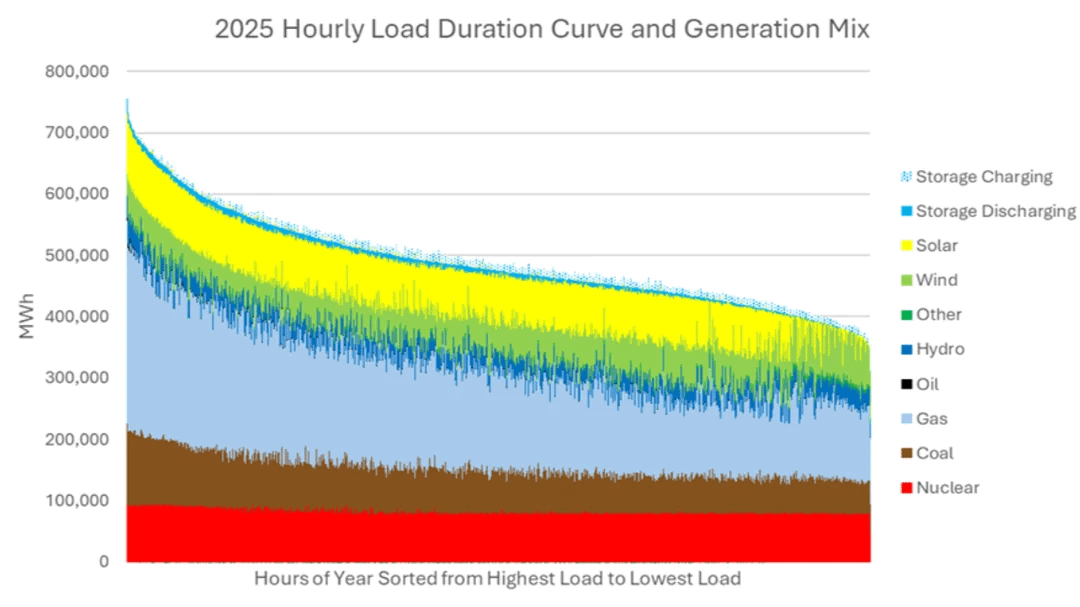
Solar, storage and wind were pretty reliable and helpfully correlated with demand in 2025 in the U.S. and solar is there when needed most.
by SunBaca
Solar, storage and wind were pretty reliable and helpfully correlated with demand in 2025 in the U.S. and solar is there when needed most.
by SunBaca
5 Comments
Original analysis at the link below. Data comes from the Energy Information Administration and was organized and charted in Excel.
[https://www.linkedin.com/pulse/how-grid-worked-2025-why-solar-storage-wind-energy-great-justin-baca-bwgpc/](https://www.linkedin.com/pulse/how-grid-worked-2025-why-solar-storage-wind-energy-great-justin-baca-bwgpc/)
“In 5 charts”
Posts 1 chart and a link to LinkedIn
One more of the charts from the article. Note that you don’t have to sign-in to LinkedIn to view the article, just close the pop-up.
https://preview.redd.it/v336x8w02hlg1.png?width=902&format=png&auto=webp&s=bd29a6c7b5b9bbe42c02c526ea9eaeba433d4ed3
Or you can have even fewer [gCO2/kWh](https://www.rte-france.com/en/data-publications/eco2mix/power-generation-energy-source#), if that’s something we care about.
This is going to be highly dependent on exactly where you are located.
Here in the Canadian prairies the highest grid demand is after dark on the coldest day of the year, and at higher latitudes there is huge variability in solar generation between winter and summer. Wind is generally more consistent but we’ve seen a week at a time with no wind across a thousand km. So if we want to go fully-decarbonized we need either massive transmission lines to areas with excess green power, or massive amounts of energy storage, or nuclear power.