I read “windows”, and just sat there wondering why.
aabccdg on
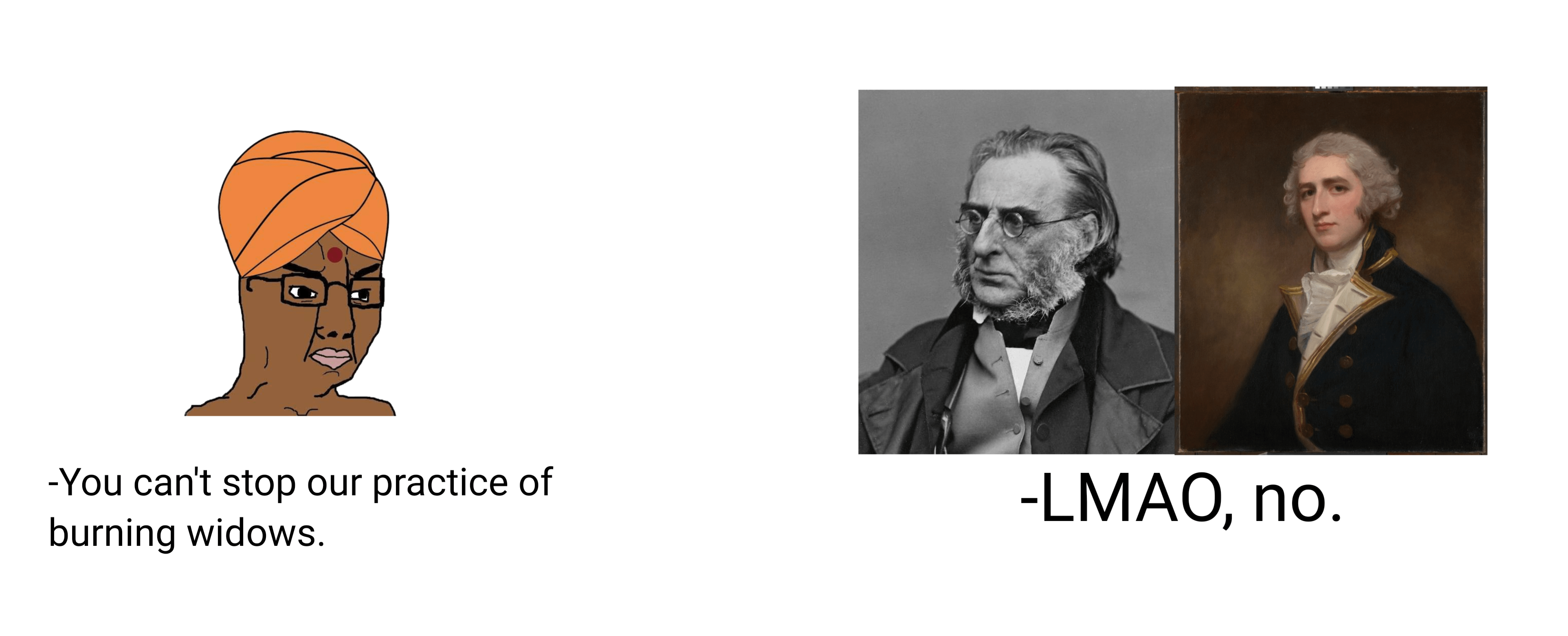
Well in fairness the East India Company allowed and regulated Sati for decades. And Sati was not a universal practice by any means.
The British ban came after decades of debate and as a way to frame imperialism as “morally necessary”, but either way it’s a rare imperialism positive.
Kaam4 on
yes ofc british civilised the barbaric endians
/s
szopatoszamuraj on
Sometimes the colonizers were right that they had some form of moral superiority over their subjects.
But its a case of being right once while being horribly wrong a thousand times
rishin_1765 on
Raja Ram Mohan Roy played a significant role in persuading the British government to ban Sati.
Mutchneyman on
Been seeing a few of these memes lately, like there’s an agenda being pushed.
I wonder why though? 🤔
sharpach on
We should also praise the efforts of activists like Raja Ram Mohan Roy – it wasn’t just the efforts of Britishers.
gobhifarmer777 on
Avg white women in middle ages if she did 1+1=2
Noncrediblepigeon on
Sorry but the transatlantic slave trade will stop.
SilverF4ng on
Haha. As if the British would have lifted one finger if it wasn’t for Raja Ram Mohan Roy. I ain’t saying at the individual level some Britishers didn’t help but as a whole the East India Company was very content to let it happen for decades before Roy came.
Robert_Grave on
The British were very culturally enriched by their Indian colonies, like “how to tie a prisoner to the nozzle of a cannon as punishment” and other such lovely practices.
Alvinyuu on
Because Raja Ram Mohan Roy is just a footnote right?
MVALforRed on
Everytime this comes up, I have to tap the sign.
Sati in India was a largely Northwest Indian tradition; and the push to Ban it came out of the Hindu reform movement in Bengal, where changes to Widow renumeration under British rule had seen the practice spreading. The letter of the act states as much:
The practice of suttee, or of burning or burying alive the widows of Hindus, is revolting to the feelings of human nature; it is nowhere enjoined by the religion of the Hindus as an imperative duty; on the contrary a life of purity and retirement on the part of the widow is more especially and preferably inculcated, and by a vast majority of that people throughout India the practice is not kept up, nor observed: in some extensive districts it does not exist: in those in which it has been most frequent it is notorious that in many instances acts of atrocity have been perpetrated which have been shocking to the Hindus themselves, and in their eyes unlawful and wicked.
Dejan05 on
Jesus Chris again? At least comments seem to be less full of imperialism apologists this time

15 Comments
Context?
I read “windows”, and just sat there wondering why.
Well in fairness the East India Company allowed and regulated Sati for decades. And Sati was not a universal practice by any means.
The British ban came after decades of debate and as a way to frame imperialism as “morally necessary”, but either way it’s a rare imperialism positive.
yes ofc british civilised the barbaric endians
/s
Sometimes the colonizers were right that they had some form of moral superiority over their subjects.
But its a case of being right once while being horribly wrong a thousand times
Raja Ram Mohan Roy played a significant role in persuading the British government to ban Sati.
Been seeing a few of these memes lately, like there’s an agenda being pushed.
I wonder why though? 🤔
We should also praise the efforts of activists like Raja Ram Mohan Roy – it wasn’t just the efforts of Britishers.
Avg white women in middle ages if she did 1+1=2
Sorry but the transatlantic slave trade will stop.
Haha. As if the British would have lifted one finger if it wasn’t for Raja Ram Mohan Roy. I ain’t saying at the individual level some Britishers didn’t help but as a whole the East India Company was very content to let it happen for decades before Roy came.
The British were very culturally enriched by their Indian colonies, like “how to tie a prisoner to the nozzle of a cannon as punishment” and other such lovely practices.
Because Raja Ram Mohan Roy is just a footnote right?
Everytime this comes up, I have to tap the sign.
Sati in India was a largely Northwest Indian tradition; and the push to Ban it came out of the Hindu reform movement in Bengal, where changes to Widow renumeration under British rule had seen the practice spreading. The letter of the act states as much:
The practice of suttee, or of burning or burying alive the widows of Hindus, is revolting to the feelings of human nature; it is nowhere enjoined by the religion of the Hindus as an imperative duty; on the contrary a life of purity and retirement on the part of the widow is more especially and preferably inculcated, and by a vast majority of that people throughout India the practice is not kept up, nor observed: in some extensive districts it does not exist: in those in which it has been most frequent it is notorious that in many instances acts of atrocity have been perpetrated which have been shocking to the Hindus themselves, and in their eyes unlawful and wicked.
Jesus Chris again? At least comments seem to be less full of imperialism apologists this time