Reality TV relationships not working out as expected? Shocker.
Pafbonk on
The idea of using attractive people to prove that « Love is blind » is still fucking stupid
mfdonuts on
Denver would pull these way down 😭
IndyEpi5127 on
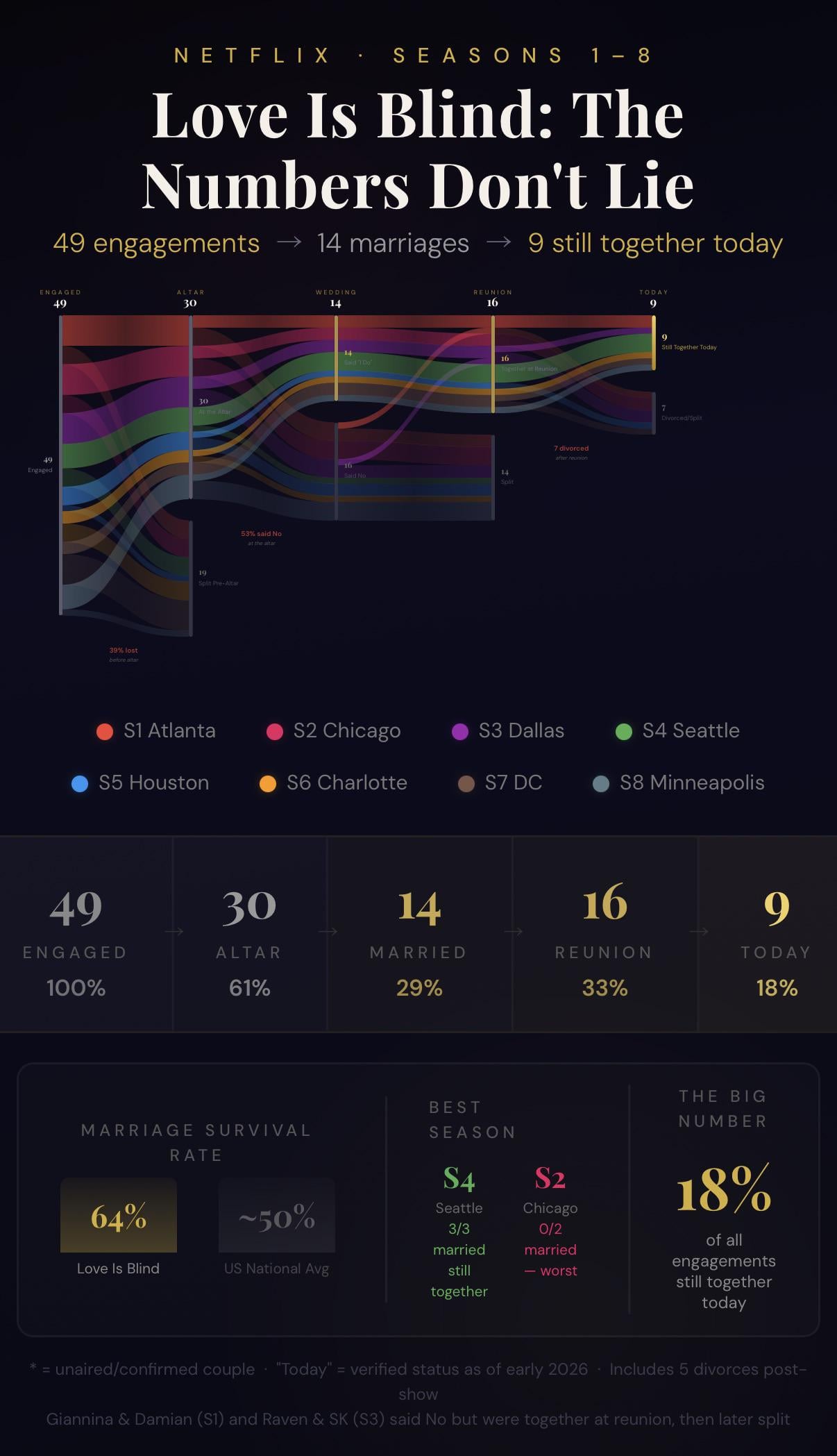
Aren’t most of these marriages first marriages of ‘older’ people (late 20’s/early 30’s) with college degrees? All of those would skew the ‘success’ rate much higher than the national average. Why would you compare a very specific demographic against the national average?
AbysmalScepter on
S2 was wild where like 4-5 couples got married and literally all of them split immediately after the reunion.
ExitingBear on
Where’d you get your US national average marriage survival rate? Or is that just a thing that everyone knows?
IIPorkinsII on
As someone who doesn’t watch the show, reunion is a couple that splits on the altar but then later marries outside of the show? There are 2 examples?
pleetf7 on
Higher divorce rates in Seattle vs Chicago might be an example of how higher home prices lead to more couples sticking it out.
Edit: I meant higher divorce rates in Chicago vs. Seattle. You are right /u/AshamedOfMyTypos, I am ashamed.
SwoleKing94 on
Season 4 was the best! I think a lot of the success was the more mature couples
Kosmo_Kramer_ on
That cumulative probability of divorce estimate of 50% for the general population flattens at like 30 years of marriage, these couples have a few years of observed marriage time, where the incidence of divorce is much lower in the general population.
It would be interesting to see these data compared against a ‘divorce survival curve’/cumulative incidence plot for the general population. My guess is the show would deviate pretty starkly from the general population in the opposite direction that the OP is suggesting.
Helpful-Jury-3908 on
The first season was like 7 years ago and the average length of marriage for couples that end in divorce is 8.5 years in the US, so not really a valid comparison.
B001eanChame1e0n on
Which visualising tool was used to make this Sankey diagram?

12 Comments
Reality TV relationships not working out as expected? Shocker.
The idea of using attractive people to prove that « Love is blind » is still fucking stupid
Denver would pull these way down 😭
Aren’t most of these marriages first marriages of ‘older’ people (late 20’s/early 30’s) with college degrees? All of those would skew the ‘success’ rate much higher than the national average. Why would you compare a very specific demographic against the national average?
S2 was wild where like 4-5 couples got married and literally all of them split immediately after the reunion.
Where’d you get your US national average marriage survival rate? Or is that just a thing that everyone knows?
As someone who doesn’t watch the show, reunion is a couple that splits on the altar but then later marries outside of the show? There are 2 examples?
Higher divorce rates in Seattle vs Chicago might be an example of how higher home prices lead to more couples sticking it out.
Edit: I meant higher divorce rates in Chicago vs. Seattle. You are right /u/AshamedOfMyTypos, I am ashamed.
Season 4 was the best! I think a lot of the success was the more mature couples
That cumulative probability of divorce estimate of 50% for the general population flattens at like 30 years of marriage, these couples have a few years of observed marriage time, where the incidence of divorce is much lower in the general population.
It would be interesting to see these data compared against a ‘divorce survival curve’/cumulative incidence plot for the general population. My guess is the show would deviate pretty starkly from the general population in the opposite direction that the OP is suggesting.
The first season was like 7 years ago and the average length of marriage for couples that end in divorce is 8.5 years in the US, so not really a valid comparison.
Which visualising tool was used to make this Sankey diagram?