
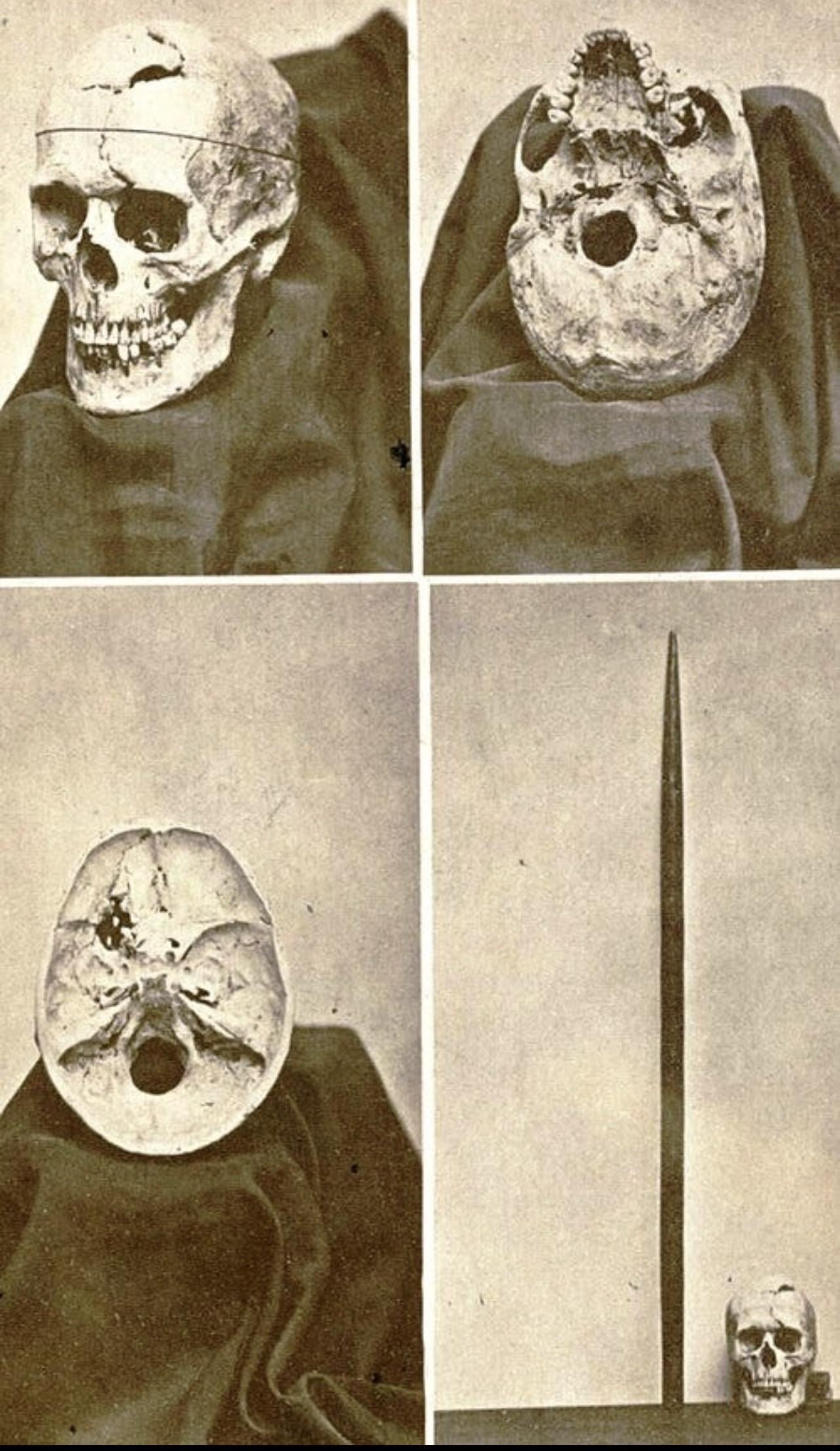
On September 13, 1848, 25-year-old Phineas P. Gage, a well-liked and capable blasting foreman, was working south of Cavendish, Vermont, setting a charge. He had poured the powder but hadn’t yet packed sand over it. Distracted, he turned to look over his right shoulder, bringing his head directly above the hole.
In that instant, his iron tamping rod, 3 feet 7 inches long, 1¼ inches in diameter, weighing over 12 pounds, struck rock and sparked. The gunpowder ignited.
As Gage opened his mouth to speak, the rod shot upward like a missile. It entered the left side of his face, passed behind his left eye, tore through the front of his brain, and exited the top of his skull. The iron landed some 80 feet away, “smeared with blood and brain.”
He was thrown onto his back, arms and legs convulsing, but within minutes he was conscious, speaking, and able to walk with assistance back to town. When the first doctor arrived and could see “the pulsations of the brain… very distinct,” Gage reportedly greeted him calmly: “Doctor, here is business enough for you.”
He spent weeks hovering near death but ultimately survived.
The story is famous. It’s often cited as a turning point in early neuroscience, supposedly helping move medicine beyond phrenology and toward the idea of localized brain function. It’s also commonly said that Gage was permanently transformed, violent, unreliable, “no longer Gage” and unable to work again.
The historical record tells a more complicated story.
Yes, he changed. But he was not the monstrous caricature later retellings invented. He worked for years after the accident, including seven years in Chile as a stagecoach driver, a demanding job requiring planning, coordination, and responsibility. He remained affectionate with family and functional in structured work. He ultimately died at 36 in 1860 from seizures likely related to his injury.
Gage’s case is real, dramatic, and important, but much of what people “know” about him is exaggerated or wrong.
If you’re interested, I wrote a deeper dive separating myth from documented history here: https://open.substack.com/pub/aid2000/p/hare-brained-history-volume-68-the?r=4mmzre&utm\\\_medium=ios
by aid2000iscool
2 Comments
Must have been a really skilled surgeon to be able to remove his entire skull without killing him.
Title reads like these photos were taken 12 years before his death.