
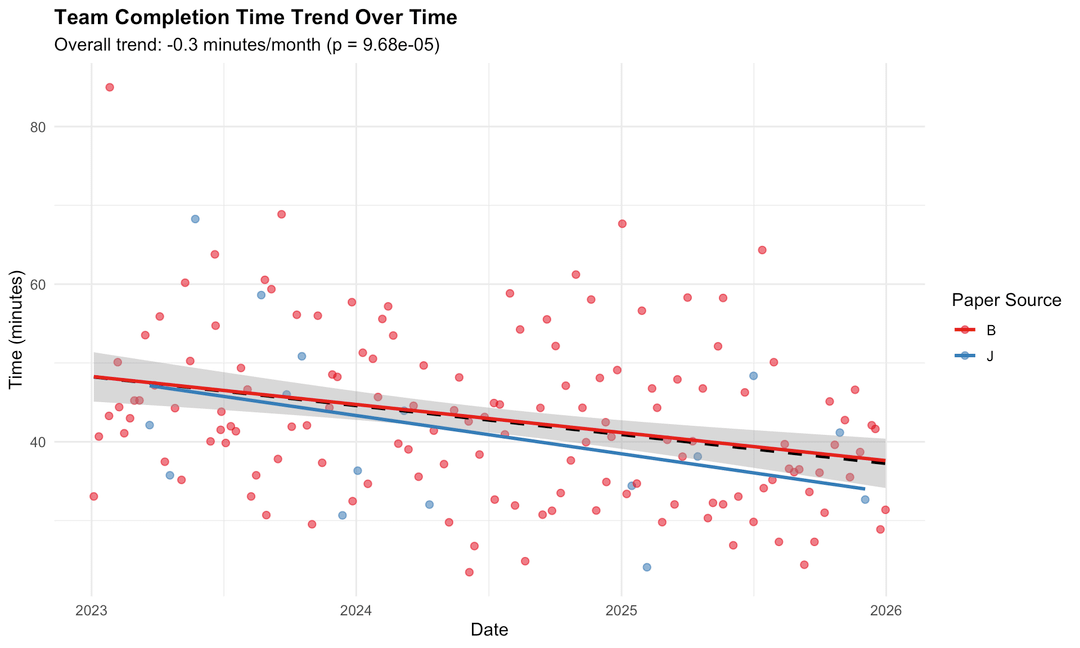
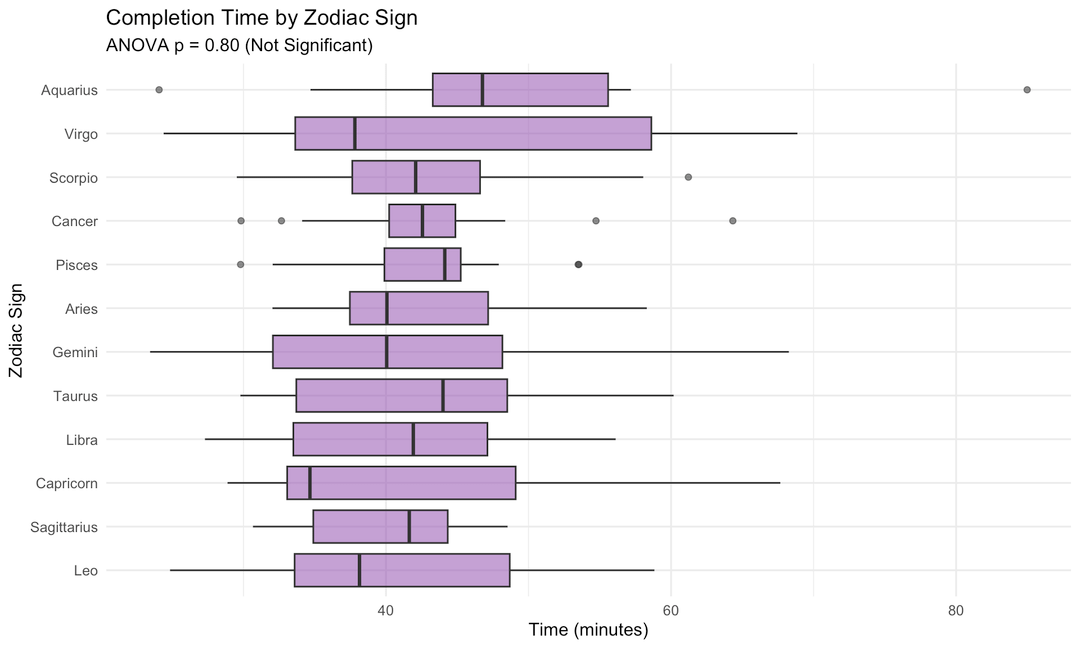
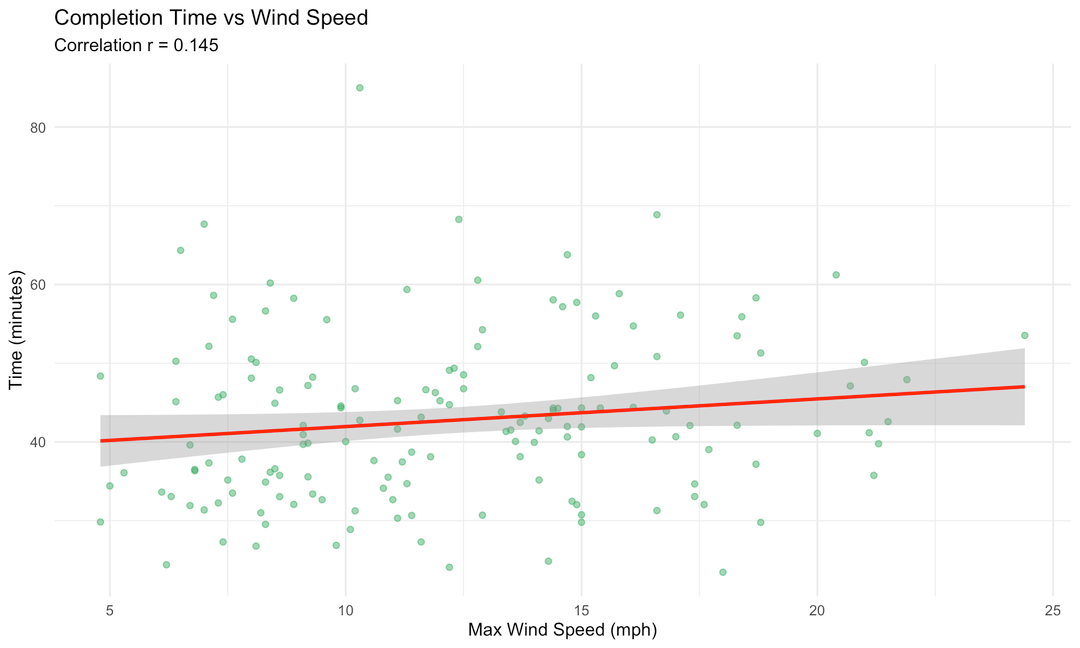
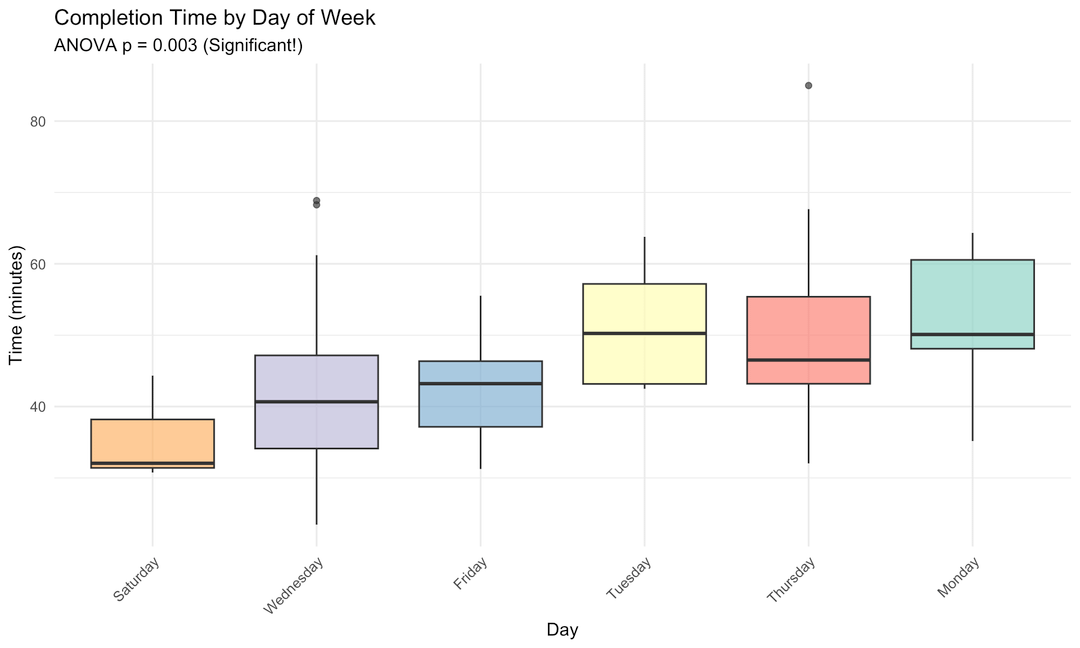
A few years ago I suggested to my buddy that we put the free Wednesday newspaper puzzle sections to good use instead of tossing them in the bin. What began as a casual, nerdy side quest quickly turned into a standing weekly ritual religiously observed every Wednesday—or as close to it as schedules allowed. Each session follows the same order: Sudoku first, then the New York Times crossword, and finally the United Media Daily Commuter crossword.
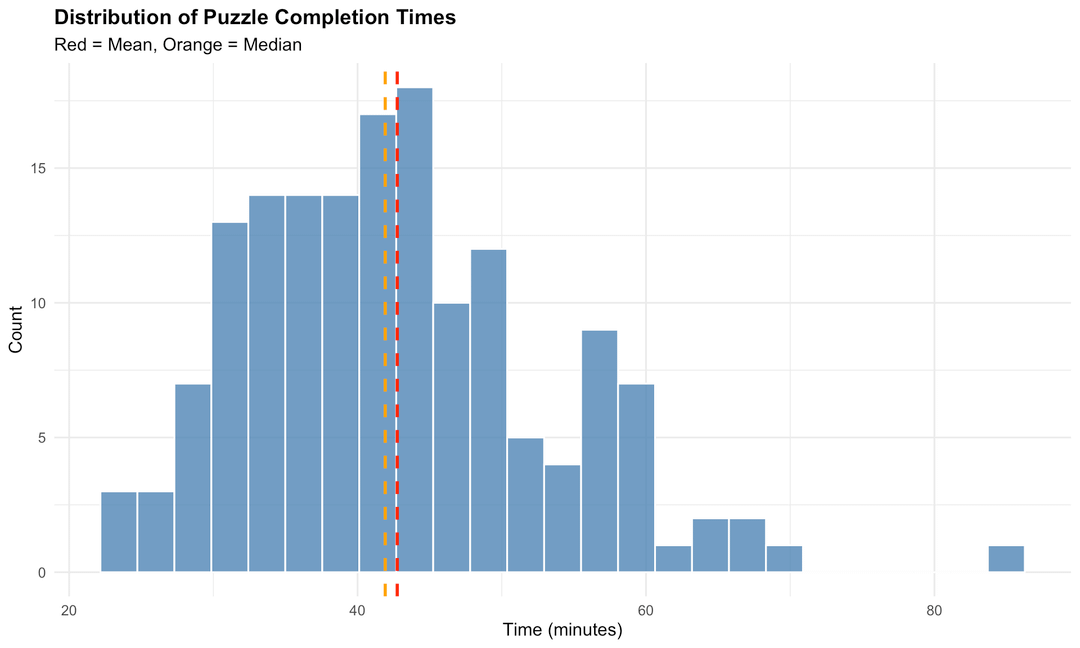
Then I had a silly idea: what if we timed ourselves every week and tracked it? At first it was just for fun. We documented dates, completion times, and a few notes about the puzzle. We ran some basic stats (mean, median, standard deviation) and made a simple graph.
At some point, this stopped being a joke spreadsheet. Highlights attached, and the full analysis on GitHub is here!
by Branden_Williams
6 Comments
Consider mapping solar activity against your performance. I would love to know the answer to that.
EDIT: I am aware of it being a factor in spontaneous reactions of people with specific genetic disorders across thousands of miles with varying local weather conditions.
there is a linear trend you need to control for in order to say anything about other covariates
It’s a cool thing to track, the weather and zodiac part doesn’t really show anything, but the day of week and over time trend is more convincing.
Questions:
1) are the puzzles the same level of difficulty each day? It’d be good to know if you just want to finish faster on Saturdays resulting in improved performance.
2) what happens if you plot year as a legend in the wind plot? Does this show 2023 is windier or something?
I always laugh when I come across a plot that looks like your wind speed plot in real literature. “This relatively uniform cloud of dots has slightly more outliers in one corner than the others, and therefore you should abstain from eating green M&M’s” or whatever conclusion they draw from it, couched in extremely dismissive statistical language that shows it is probably not to be trusted, and is only there to increase publish count. But that language gets dropped by science reporters for being to technical, meaning people believe the conclusion when they read it. Next thing you know there are proposed nationwide bans on green M&Ms.
Wonder if that’s because you do more puzzling during bad weather?
Wind speed? Is that another kind of esoterism I have never heard of?